


What Is Fusible Fleece A Guide for Sewing and Cosplay
If you've ever wondered how handmade bags get that perfect, professional-looking structure or how quilts feel so soft yet stable, you've likely encountered fusible fleece. It’s a soft, padded sewing material that comes with a secret weapon: a heat-activated adhesive on one side.
Think of it as a cozy, lightweight blanket you can permanently iron onto your fabric. This simple step gives your material instant body and stability, all without the need for heavy, complicated stitching. It's an absolute game-changer for creating polished-looking bags, quilts, and even garments.
Unpacking the Magic of Fusible Fleece
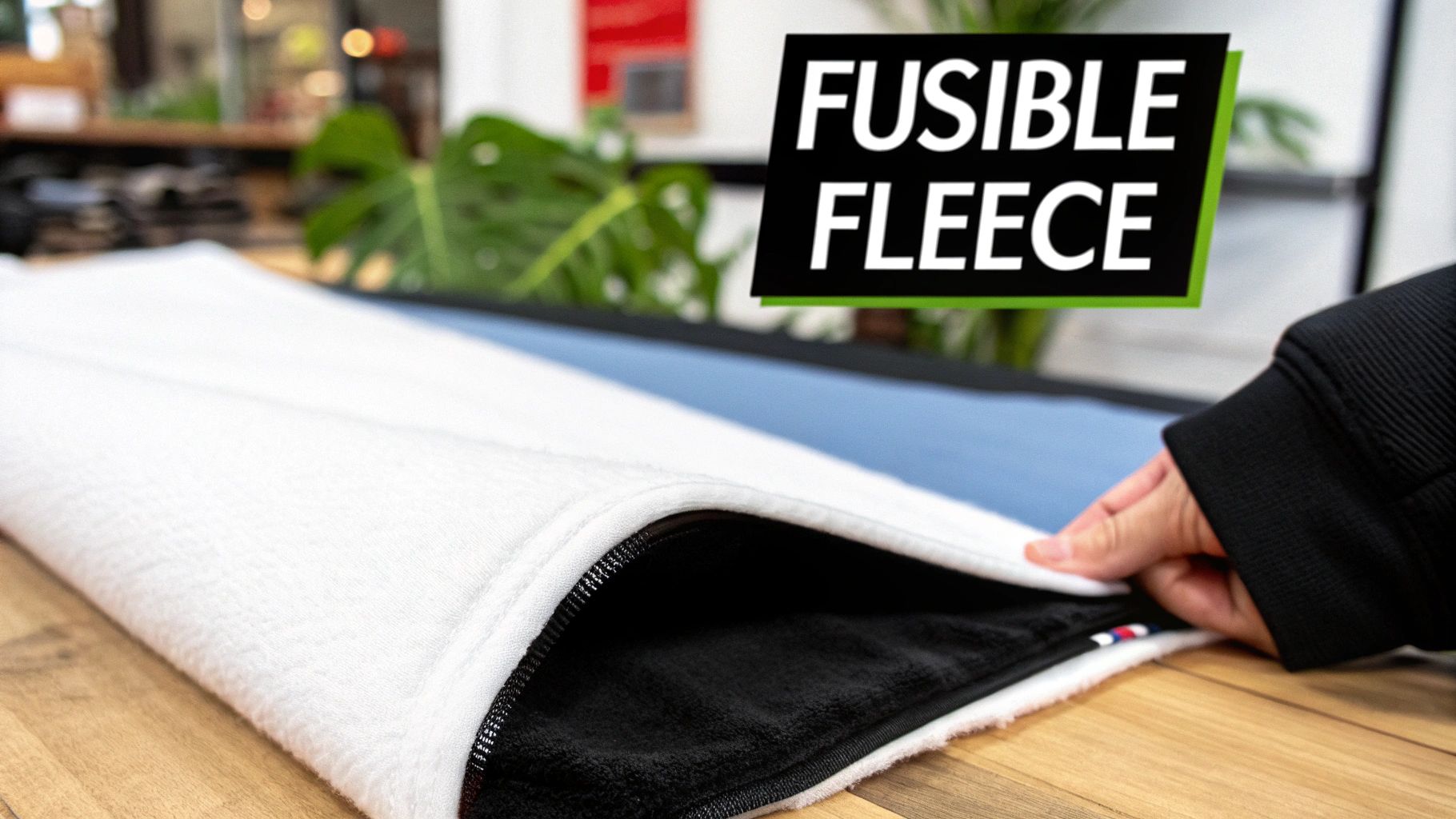
At its heart, fusible fleece is a hidden support system for your fabric. It’s like trying to build a tent—if you use flimsy poles, it will just collapse. But swap them out for sturdy ones, and suddenly you have a solid, reliable structure. Fusible fleece does exactly that for your sewing projects, turning a limp piece of cotton into something that can hold its shape.
It's typically made from polyester fleece, giving one side a soft, felt-like texture. The other side is where the magic happens; it’s covered in a bumpy adhesive surface. When you press it with a hot iron, that adhesive melts and creates a permanent bond with your fabric. This process adds a lovely layer of padding and gentle structure, making it a favorite for all sorts of projects.
What Makes It So Useful?
The real beauty of fusible fleece is how it streamlines your sewing while delivering a truly high-quality finish. It completely eliminates the need to pin or baste separate layers of batting, which not only saves a ton of time but also stops the layers from shifting around while you sew.
- Adds Body Without Bulk: It gives your fabric a soft, cushioned feel, which is perfect for items that need some substance without feeling overly stiff or heavy.
- Provides Stability: It reinforces the fabric, making it much easier to sew and giving the final product a more durable, professional shape.
- Saves Time: The simple iron-on application is worlds faster than pinning and stitching traditional batting, especially on smaller projects.
This kind of stability is essential in many different textile arts. If you're curious about how it fits into the broader world of crafting, understanding the basics of embroidery can show you other ways fabric is manipulated and stabilized for detailed work.
To sum it up, here’s a quick overview of what fusible fleece brings to the table.
Fusible Fleece at a Glance
| Characteristic | Description |
|---|---|
| Material | A needle-punched polyester fleece. |
| Adhesive | Heat-activated glue on one side. |
| Primary Use | To add soft structure, loft, and padding. |
| Benefits | Easy to apply, prevents shifting, and adds body. |
As you can see, it's a straightforward but incredibly effective tool for any sewer's arsenal.
Understanding the Science Behind the Bond
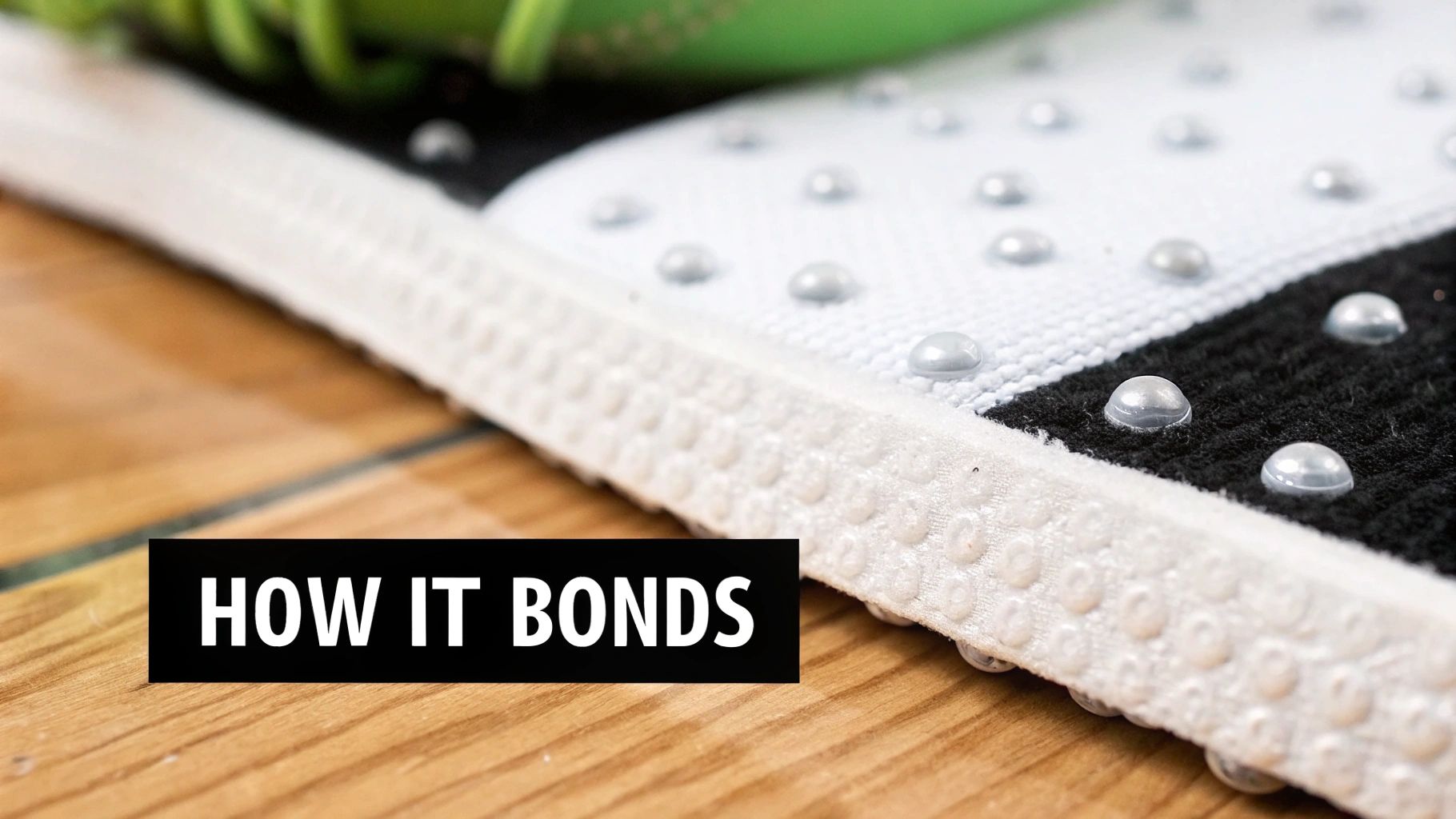
The "magic" behind fusible fleece isn't magic at all—it's just some clever material science. The base of the material is a soft, non-woven polyester fleece, which gets its loft through a process called needle punching. Imagine thousands of tiny, barbed needles tangling and interlocking polyester fibers until they form a dense, spongy sheet.
This process is what gives the fleece its familiar padded feel, perfect for quilts and bags. But the real trick is on the fusible side.
If you run your hand over it, you'll feel it's covered in tons of tiny, bumpy dots. Those bumps are beads of a special, heat-activated adhesive.
Think of them like microscopic dots of hot glue. When you press the fleece with a hot iron, these beads melt just enough to sink into the weave of your fabric. As everything cools down, the adhesive hardens again, creating a solid, lasting bond.
This design is what makes fusible fleece so reliable. The bond is spread out evenly across the entire surface, so you don't get the bubbling or shifting you might see with spray glues or other methods.
From Workshop to Home Sewing
While it feels modern, this technology has been around for a while. Fusible interlinings, the broader family that fusible fleece belongs to, have been a staple in industrial garment factories for decades. They’re used to give sharp structure to collars, cuffs, and waistbands quickly and consistently. Making this tech available to home sewers has been a complete game-changer, letting us create professional-looking projects without factory-grade equipment.
The demand for these materials is huge and tells a story of its own. The global market for interlining fabrics was valued at USD 3.5 billion in 2023 and is expected to hit USD 5.7 billion by 2032. That growth isn't just from clothing; it's also from industries like automotive interiors and home furnishings. You can explore more data on the interlinings fabric market to see just how essential these materials have become.
Connecting Form and Function
The science here directly impacts how fusible fleece performs in your projects. It’s a two-part system where each side has a distinct job:
- The Fleece Side: This is all about softness, padding, and loft. It’s what gives a tote bag its structure or a quilt its cozy weight.
- The Adhesive Side: This side provides stability. It fuses the fleece to your fabric, turning two separate pieces into one thicker, more manageable piece of material that’s a breeze to cut and sew.
This dual-action approach is precisely why fusible fleece is such a go-to for so many crafters. It solves two common problems—the need for both padding and stability—in one simple, iron-on step. Once you understand how it works, you can really start to get a feel for how it will behave with different fabrics and pick the perfect weight for whatever you're making next.
How to Choose the Right Fusible Fleece
Walking into a fabric store and seeing a wall of fusible fleece can feel a bit like staring at a dozen kinds of vanilla ice cream. They all look pretty much the same, but you know the final result will be completely different depending on which one you pick. Choosing the right fleece isn't just a small detail; it's a make-or-break decision that will define the feel, shape, and overall success of your project.
The secret to getting it right lies in two key terms: loft and density. Think of loft as the puffiness or thickness, while density is all about how firm it feels. A fluffy, low-loft fleece is perfect for giving a t-shirt quilt a soft hug, whereas a firm, high-loft version is what you need for a tote bag that can stand proudly on its own.
Matching Fleece to Your Project
You wouldn't use delicate cake flour to make a crusty artisan loaf, right? The same logic applies here. Picking the right fusible fleece is like choosing the perfect ingredient for your recipe. Let's break down which type works best for some common projects to ensure you get a flawless finish every single time.
- For Quilts and Wall Hangings: Reach for a low-loft fusible fleece. It adds just enough soft padding for that cozy quilt feel without making it stiff or heavy. It’s also a lifesaver for keeping your layers from shifting while you quilt, making it perfect for smaller projects like baby quilts, table runners, and intricate wall art.
- For Structured Bags and Purses: Stability is the name of the game. A high-loft, dense fusible fleece is your best friend here. It gives a bag enough body to hold its shape, stops it from sagging, and helps you achieve that polished, professional look. It's the secret sauce behind a handbag that doesn't flop over the second you set it down.
- For Cosplay and Costumes: This is where versatility really matters. A medium-loft, firm fleece is a fantastic all-rounder for creating structured armor or adding padded details to a costume. But if you need something more flexible, a low-loft fleece might be the better choice. It all comes down to whether you’re aiming for rigid structure or a soft, moveable shape.
Comparing Popular Brands
As you browse, you'll likely run into two big names: Pellon and Vilene (often sold as Vlieseline in different regions). While they both get the job done, their products have distinct personalities. For instance, Pellon 987F Fusible Fleece is known for being quite dense and almost felt-like, making it a powerhouse for projects that need serious structure.
On the other hand, options like Vilene H630 and H640 tend to be softer and less rigid. Knowing these little differences is key, because a lighter fleece will give you just a whisper of support, while a denser one delivers a real punch. If you want to dive deeper, you can find a great comparison of Pellon and Vilene products to see how they stack up in real-world use.
To help you get a quick handle on what's what, I've put together a simple guide.
Fusible Fleece Comparison Guide
This table breaks down some of the most common options you'll find, helping you match the right fleece to your creative vision.
| Fleece Type/Brand | Common Weight | Best For | Key Feature |
|---|---|---|---|
| Pellon 987F | High-Loft, Dense | Structured Tote Bags, Fabric Baskets | Provides significant stiffness and body. |
| Vilene H640 | Medium-Loft, Soft | Padded Garments, Quilted Jackets | Offers substantial volume with a soft drape. |
| Vilene H630 | Low-Loft, Lightweight | T-Shirt Quilts, Table Runners | Adds gentle support without bulk. |
Ultimately, choosing the right fusible fleece comes down to thinking about your end goal. Do you want the soft drape of a quilt, the sturdy form of a bag, or the dramatic shape of a cosplay piece? Once you know that, you can pick your fleece with confidence and get on with the fun part—sewing
Mastering the Perfect Application Technique
Getting that smooth, professional finish with fusible fleece isn't about some secret, complicated skill—it all comes down to technique. When you get it right, you sidestep all the common frustrations like wrinkles and weak bonds, giving your projects a polished look from the very start. The trick is to think of it less like ironing and more like a deliberate fusion of two materials.
Before you even plug in your iron, a little prep work goes a long way. Always start by pre-washing and pressing your main fabric, especially if it's a cotton. This simple step gets rid of any sizing from the factory and pre-shrinks the material, which is your best defense against puckering later on. But here's a crucial tip: never pre-wash the fusible fleece itself. Getting it wet will ruin the adhesive before you even begin.
With your fabric ready, lay it wrong side up on your pressing surface. Next, place the fusible fleece on top, making sure its adhesive side is facing down against the fabric. You can usually tell which side is which by the feel—the adhesive side is the bumpy or gritty one. When in doubt, a quick peek at the manufacturer's instructions will clear things up.
The Press and Hold Method
If there's one golden rule for applying fusible fleece, it's this: press, don't iron. It’s so easy to fall into the habit of gliding the iron back and forth, but that’s the number one mistake. Sliding the iron around stretches the fabric and just pushes the melted adhesive everywhere, creating bubbles and uneven patches. What you want is a steady, press-and-hold motion.
Here’s how to do it step-by-step:
- Set Your Iron: Turn your iron to a medium-hot, dry setting. And this is non-negotiable: turn the steam function completely off. Steam is the enemy here; it introduces moisture that can stop the adhesive from creating a strong, even bond.
- Use a Press Cloth: Always place a press cloth over the fleece before you bring the iron down. A spare piece of cotton fabric or a Teflon sheet works perfectly. This protects your project from getting scorched and, just as importantly, saves your iron from getting gunked up with melted glue.
- Press and Hold: Start in the middle of your piece. Place the iron down and hold it there with firm, even pressure for about 10-15 seconds. Resist the urge to move or wiggle the iron.
- Lift and Overlap: Once the time is up, lift the iron straight up. Don't slide it. Move it to an adjacent spot, overlapping the previously pressed area just slightly, and press down again for another 10-15 seconds.
- Work Your Way Out: Keep up this lift-and-press pattern, working from the center out toward the edges. This systematic approach is fantastic because it pushes any trapped air out to the sides, leaving you with a beautifully smooth finish.
Think of it this way: you're trying to melt the little dots of adhesive so they sink right into the fabric's fibers. Pressing with consistent heat and pressure does exactly that. Gliding the iron just smears the melted glue across the surface, but a good press creates a deep, secure connection right where you want it.
After you’ve pressed the entire surface, you’ve reached the final—and easiest—step: just be patient. Let the piece cool down completely on a flat surface before you even think about moving it. If you handle it while it's still warm, you risk weakening the bond and watching your layers start to peel apart.
The diagram below gives you a great visual for how different projects call for different types of fusible fleece, from soft quilts to structured cosplay pieces.
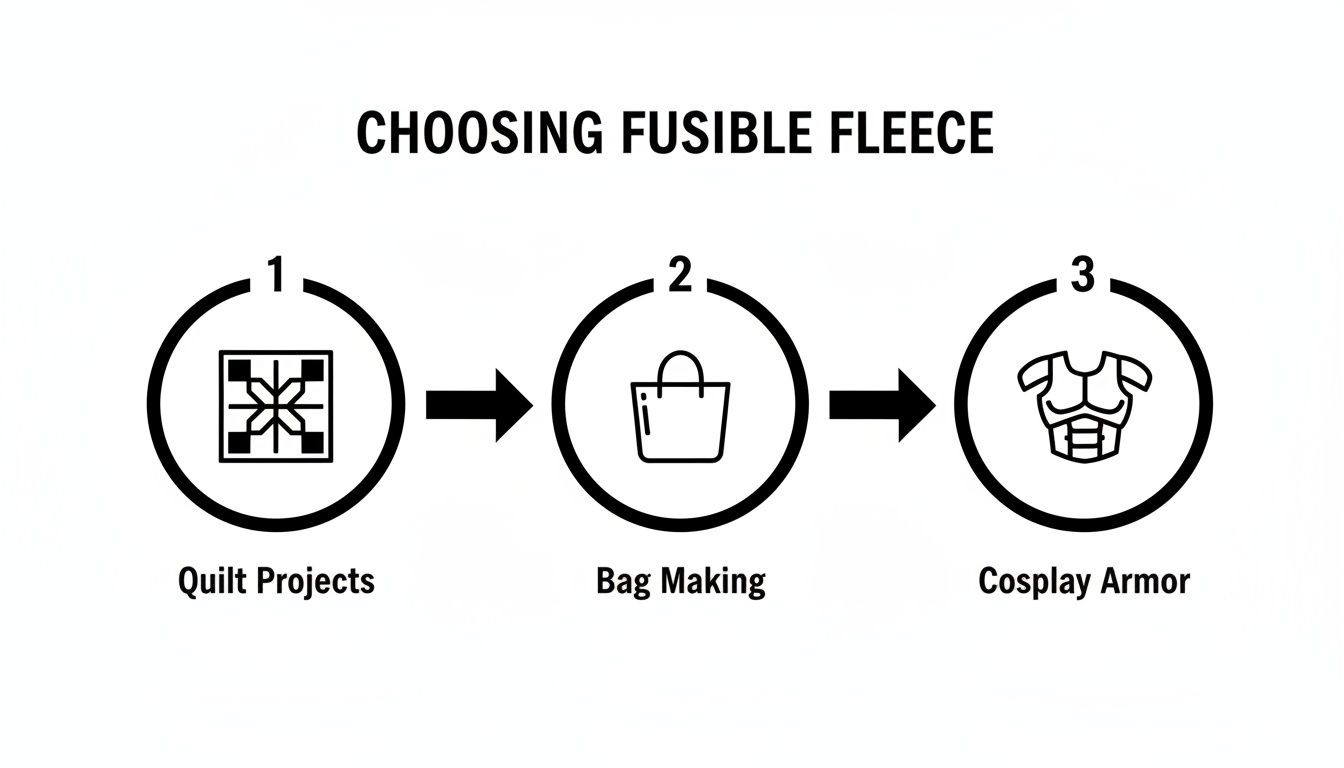
As you can see, the structure a project needs—be it the soft drape of a quilt, the sturdiness of a bag, or the firmness of armor—is what guides your fleece choice. By mastering the application technique, you ensure you get the absolute best results from whichever fleece you're using, achieving that perfect structure every single time.
Troubleshooting Common Fusible Fleece Problems
Let's be honest, even when you follow the instructions to a T, fusible fleece can sometimes decide to have a mind of its own. But don't throw in the towel just yet! Most of the little hiccups you'll run into are surprisingly simple to fix once you know what to look for.
Here’s a quick video that walks through some of the most common issues you might face.
Now, let's break down the most frequent frustrations and get you back to sewing.
When the Fleece Just Won’t Stick
This is probably the most common complaint. You press and press, but the fleece just peels right off or the bond feels weak. Nine times out of ten, the problem is one of these three things: heat, pressure, or steam.
- Not Enough Heat: Your iron simply might not be hot enough. That fusible adhesive needs to reach a specific temperature to melt properly and really grab onto the fabric fibers. If your setting is too low, the glue never gets a chance to activate.
- Not Enough Pressure: Just letting the iron rest on the fleece won't cut it. You need to apply firm, steady pressure. Think of it as pushing the melted adhesive down into the fabric weave, not just letting it sit on the surface.
- The Steam is On: This is a huge one! Steam is the enemy of fusible adhesive. All that moisture gets in the way and prevents the glue from setting up and forming a strong, permanent bond. Always, always use a dry iron.
Tackling Wrinkles and Bubbles
Another soul-crushing moment is peeling back your pressing cloth to find a landscape of wrinkles or bubbles on your beautiful fabric. It’s a frustrating sight, but the culprit is almost always the same: you’re ironing instead of pressing.
When you glide the iron back and forth, you’re actually stretching the fabric and smearing the melted adhesive around. This movement traps little pockets of air between the layers, which creates those dreaded bubbles. Stick to the "press and hold" method we talked about earlier—it’s the best way to prevent this.
The goal is to melt the adhesive dots straight down, letting them fuse directly into the fabric below. An ironing motion just creates a mess, but a steady press gives you that secure, flat bond you're after.
When Your Project Feels Too Stiff
What if you finish and the whole piece feels stiff as a board? This usually means the fleece you chose was too dense or high-loft for your fabric.
Unfortunately, you can't really undo the fusion once it's done. You can try to gently work the piece with your hands to soften it up a bit, but the real fix is for next time. Before starting your next project, take a moment to match the fleece weight to your fabric's drape. A little planning goes a long way
You've poured your heart and soul into your project, so let's make sure it stands the test of time. A little know-how is all it takes to keep your fusible fleece creations looking their best.
The main thing to remember is that high heat is the enemy. It can reactivate the adhesive, causing the fleece to shift or even detach from your fabric. You worked hard to get that perfect bond, so let's keep it that way.
When it's time for a wash, treat your project gently. Stick to a cool or cold water cycle to prevent the adhesive from softening. Think of it like a delicate sweater—a little extra care goes a long way.
Drying and Pressing Without the Stress
For drying, you've got a couple of great, safe choices. Tossing it in the dryer on a low-heat or air-only setting is usually fine. But for items where shape is everything, like a structured handbag or a piece of wall art, laying it flat to air dry is your best bet.
What if you spot a few wrinkles down the road? No problem, just grab your iron and follow these simple rules:
- Always use a press cloth. A scrap of cotton fabric between the iron and your project will protect it from direct heat.
- Turn the heat way down. A cool or warm setting is plenty to smooth out wrinkles without melting the glue.
Following these simple steps will ensure your handmade treasures last for years. It's this kind of reliability that has made fusible materials a powerhouse in the textile world. In fact, it's projected that fusible interlinings will make up about 68.40% of the market's revenue by 2025, thanks to how well they perform. You can explore more market insights on this trend to see just why materials like these have become so essential.
Common Questions About Fusible Fleece
Even after you get the hang of it, a few questions always seem to pop up. Let's tackle some of the most common ones so you can get back to your project with confidence.
Can I Just Use Fusible Fleece Instead of Quilt Batting?
You absolutely can, and for smaller projects, it's often a fantastic choice. Think table runners, placemats, wall hangings, or even baby quilts. The fusible adhesive is a game-changer here—it keeps your quilt sandwich from shifting around, which can save you a lot of time and frustration.
When you get to larger, bed-sized quilts, you might want to stick with traditional batting. It generally has a better drape and is more breathable. But for any quilted item that could use a little extra body and structure, fusible fleece is an excellent go-to.
What's the Difference Between Fusible Fleece and Fusible Interfacing?
This is a great question, and the answer comes down to texture and purpose. The simplest way to think about it is this: interfacing adds crispness, while fleece adds soft body.
Fusible interfacing is a much thinner material that you'd use to add stiffness and stability to specific areas, like a shirt collar or a button placket. Fusible fleece, on the other hand, is thick, lofty, and soft. It’s all about adding padding and a gentle structure, perfect for giving a tote bag its shape or lining a cozy jacket.
Do I Need to Pre-Wash Fusible Fleece?
Definitely not! In fact, you should never pre-wash fusible fleece. Tossing it in the wash will wreck the heat-activated adhesive, making it completely useless when you try to fuse it. It’s made from polyester, so you don't have to worry about shrinkage.
What you should pre-wash, however, is your main fabric, especially if it's cotton. Getting any factory sizing out and pre-shrinking the fabric is key. This simple step prevents any weird puckering or distortion after you've fused all your layers and finished your project.
At Famcut.com, we're here to help the Cosplay and Sewing community find not just the right materials, but also the knowledge to make your projects shine. Ready to get started? Explore our full selection of fusible fleece and find the perfect match for your next creation at https://famcut.com.