


What Is a Layer Cake in Quilting Explained
Ever walked into a quilt shop and seen those beautifully stacked, ribbon-tied bundles of fabric squares? Chances are, you were looking at a layer cake, a quilter’s secret weapon for creating stunning projects with incredible ease.
What Is a Layer Cake in Quilting
A layer cake in quilting is simply a curated bundle of pre-cut 10x10 inch fabric squares. The real magic is that they come from a single designer's collection, so all the colors and prints are guaranteed to look fantastic together. It takes all the guesswork out of matching fabrics, which can be one of the most time-consuming parts of starting a new quilt.
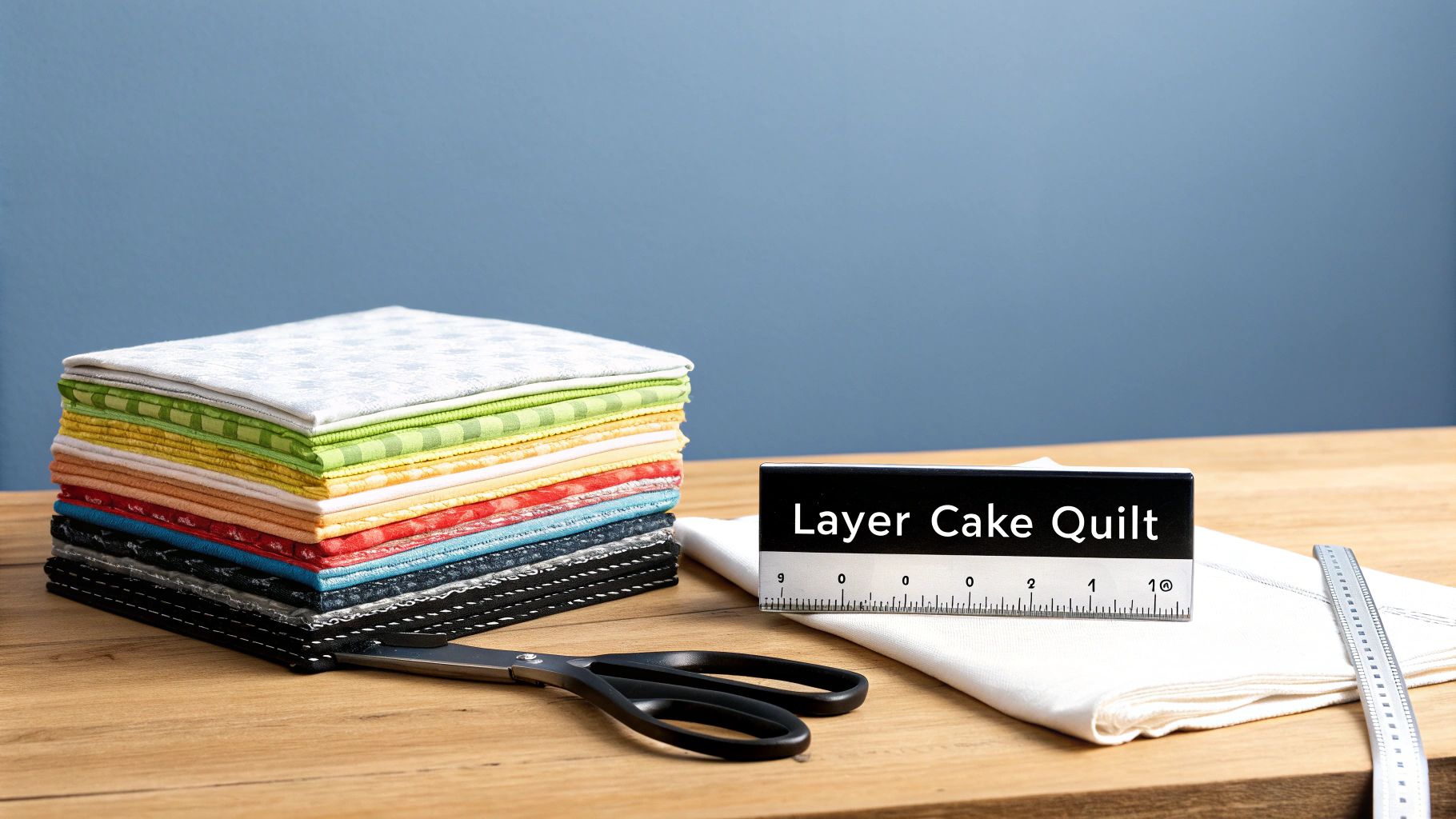
Think about it: you get to skip the hours of measuring, rotary cutting, and second-guessing your fabric choices. With a layer cake, you can unwrap the bundle and get right to the fun part—sewing your quilt top.
This precut format really took off in the quilting world in the early 2000s. The term 'Layer Cake' was actually trademarked by Moda Fabrics around 2005. By 2010, quilters everywhere had fallen in love with them, as they could cut down project prep time by as much as 80%. It was a game-changer!
The Anatomy of a Typical Layer Cake
A layer cake isn’t just a random pile of fabric. It’s a thoughtfully constructed kit designed for creativity and convenience. Once you know what’s inside, you’ll see why they're so popular with quilters of all skill levels.
Here’s a quick look at what makes up a standard layer cake:
- Precise Dimensions: Every single piece is a perfect 10x10 inch square. This size is super versatile—big enough to stand on its own or be easily sliced into smaller units like charm squares or half-square triangles.
- Coordinated Collection: A typical bundle includes around 42 fabric squares, giving you a taste of nearly every print in a designer's line. You might get a few duplicates of the most popular designs, which is great for creating balance.
- Time-Saving Convenience: The cutting is done for you. Seriously, this is a huge plus. It means you can start a weekend project on a whim without spending your Friday night at the cutting mat.
For a beginner, a layer cake is a perfect entry point, taking the pressure off fabric selection. For a seasoned quilter, it's a fantastic shortcut to test-driving a new collection or whipping up a quick gift.
To give you a clear picture, here's a simple breakdown of what you're getting.
Layer Cake At a Glance
| Characteristic | Standard Specification |
|---|---|
| Dimensions | 10 x 10 inches (25.4 x 25.4 cm) |
| Quantity | Typically 42 squares per bundle |
| Fabric Content | 100% cotton quilting-weight fabric |
| Coordination | Features most or all prints from a single designer collection |
| Total Yardage | Approximately 2.9 yards of fabric |
This little chart makes it easy to see the value packed into one of these bundles.
Whether you're just starting your quilting journey or you’ve been at it for years, a layer cake is an amazing tool to have in your stash. If you're looking to sharpen your core skills before diving into a new project, exploring some free sewing lessons can be a great way to build confidence.
What’s Actually Inside a Layer Cake?
Opening a new layer cake is one of the simple joys of quilting—it feels like unwrapping the perfect gift. Each bundle is a neatly stacked, thoughtfully chosen package designed to give you variety, convenience, and a coordinated palette right out of the box.
So, what exactly do you get when you peel back that ribbon?
At its heart, a standard layer cake is a stack of 42 fabric squares, each one precision-cut to a perfect 10x10 inches. But it’s not just a random jumble of fabric. These squares represent an entire designer fabric collection, meaning every single print and color was designed to harmonize. It completely takes the guesswork out of matching fabrics.
A Curated Collection in Your Hands
Think of a layer cake as the ultimate sampler pack for a new fabric line. Instead of buying a yard or two of just a few prints you like, you get a perfectly usable piece of almost everything the designer created.
- The Whole Story: Most layer cakes give you at least one square of every single print in the collection.
- Helpful Duplicates: You'll almost always find a few duplicates of the more foundational or versatile prints. This is done on purpose to help you create balance and add repeating elements to your design.
- Quilter-Grade Quality: These precuts are made from high-quality, 100% quilting cotton, so you know your finished project will have that soft, durable feel we all love. While quilting cotton is the star here, it's always fun to learn about different fabric types for home projects for other creative pursuits.
This expert curation is the layer cake's secret weapon. It hands you a broad, pre-matched, and thematically cohesive palette to play with.
The Magic of Precision and Less Waste
There's more to these squares than just pretty fabric. The way they're made is a big part of their appeal. Each piece is die-cut using laser guides, resulting in an incredible level of accuracy that’s tough to replicate with a rotary cutter and mat at home. This precision makes piecing a breeze and gives your finished quilt a much more professional look.
This process is also surprisingly eco-friendly. Moda Fabrics originally coined the term 'layer cake,' and it quickly became the go-to name across the industry. This format is brilliant at minimizing fabric waste, trimming it down to less than 4%. Compare that to the 15-20% of fabric that can be lost when cutting from yardage off the bolt. It’s a small change that aligns with the growing push for more sustainable crafting.
If you're curious to learn more, you can discover more insights about quilting precuts on stitchinheaven.com.
Comparing Layer Cakes To Other Precuts
Walking into the precut section of a quilt shop can feel a bit overwhelming at first. You'll see all sorts of fun names—charm packs, jelly rolls, honey buns—and it can be tricky to know which one is right for your project. Let's break down how a layer cake stacks up against the other popular options.
Think of it this way: precuts are just different tools for different jobs. A Charm Pack, for example, is a stack of 5x5 inch squares. They're fantastic for detailed patchwork or making lots of small half-square triangles. But a layer cake square is four times bigger, giving you much more fabric to play with. This makes it a much better choice for quilt patterns that feature larger blocks or showcase a beautiful, big print.
That size difference really changes how you work. With a layer cake, you can piece together a pretty big quilt top with far fewer seams than you'd need with smaller squares. That means less time piecing and more time quilting!
Layer Cakes Versus Other Popular Precuts
To really get a feel for a layer cake's strengths, it helps to put it side-by-side with its precut cousins. Each one has its own personality and is cut for a specific kind of creative work.
- Jelly Rolls: These are my go-to for certain projects! They're bundles of 2.5-inch wide strips of fabric. If you're making a strip quilt, a log cabin design, or even your own binding, jelly rolls are a dream. The downside is you have to do a lot more sewing to create a large block. If you're curious about what you can do with them, checking out some fun Jelly Roll animal quilts is a great way to see those strips in action.
- Fat Quarters: The workhorse of the quilting world! A fat quarter is a quarter-yard of fabric, but cut wide (18x22 inches) instead of long and skinny. It's perfect when you need a big, uncut piece for something like appliqué or a large, fussy-cut block. A layer cake, on the other hand, gives you a taste of an entire fabric collection in perfectly coordinated, ready-to-sew squares.
A layer cake hits that perfect sweet spot between size and variety. You get enough fabric in each square to really make an impact, but you also get the beautifully coordinated prints of a full designer line.
This simple diagram shows you exactly what you’re getting inside that neatly wrapped package.
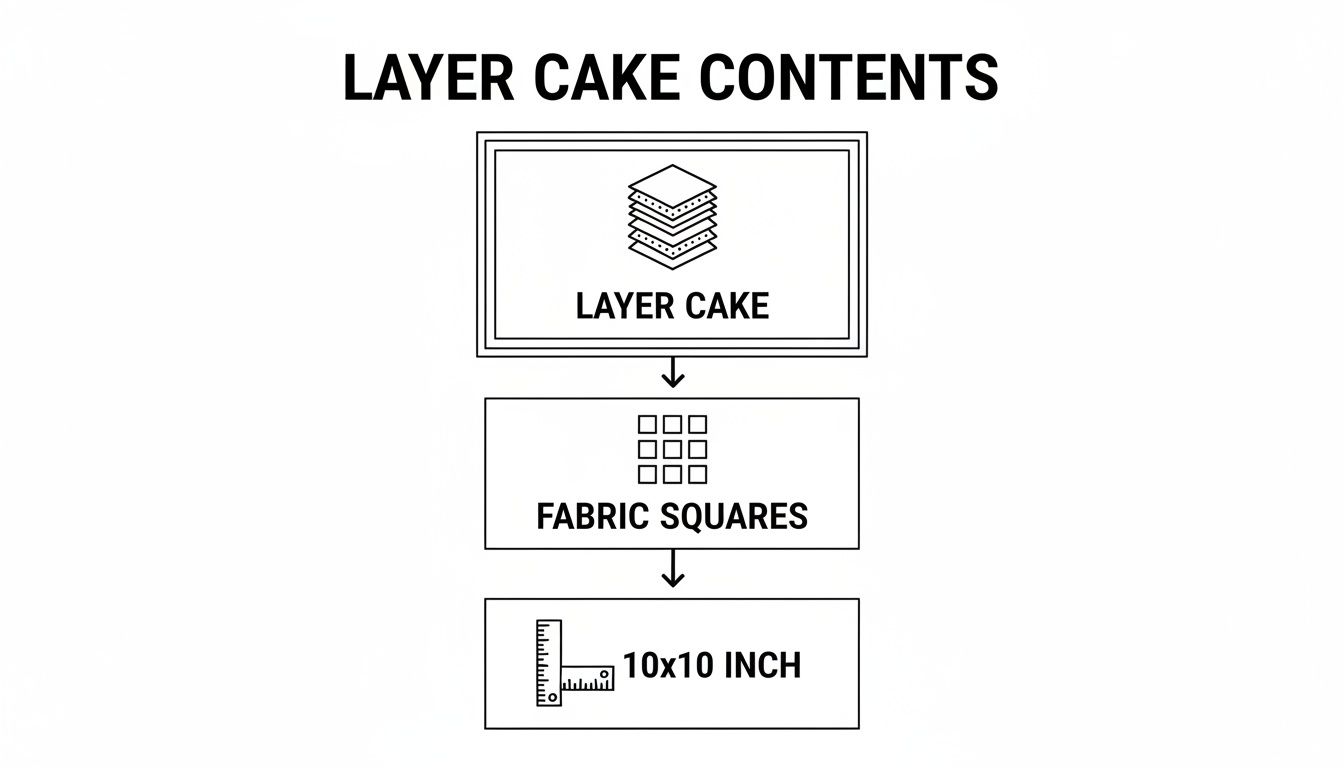
It’s really that straightforward—a stack of uniform 10-inch squares, just waiting for you to get creative.
Quilting Precut Comparison
To make things even clearer, here's a quick comparison of the most common precuts you'll find.
| Precut Name | Standard Size | Typical Piece Count | Best For |
|---|---|---|---|
| Layer Cake | 10 x 10 inches | 42 squares | Large blocks, easy patchwork, efficient cutting into smaller units. |
| Charm Pack | 5 x 5 inches | 42 squares | Small patchwork, postage stamp quilts, half-square triangles. |
| Jelly Roll | 2.5 inches wide strips | 40 strips | Strip quilts, log cabins, sashing, and binding. |
| Fat Quarter | 18 x 22 inches | Varies by bundle | Appliqué, patterns needing larger fabric pieces, building a stash. |
Seeing them all laid out like this really helps highlight why a layer cake is such a versatile choice for so many different kinds of quilts.
Making The Right Choice For Your Quilt
So, how do you pick? It always comes back to your pattern. If you need to make a ton of 2.5-inch squares, a layer cake is an incredibly smart buy. You can get sixteen of them out of a single 10-inch square with absolutely zero waste. That kind of efficiency is exactly why so many quilters love them.
When you choose a layer cake, you're choosing flexibility. You can use the squares whole for a bold and beautiful quilt that comes together in a weekend, or you can slice and dice them into all sorts of shapes for more complex patterns. That versatility, combined with the built-in color coordination, means you can jump right into sewing with total confidence.
Creative Quilt Patterns for Layer Cakes
Okay, so you’ve got a layer cake in your hands. Now the real fun begins! These versatile 10-inch squares are the perfect launchpad for an incredible range of quilt patterns. You can create everything from stunningly simple designs that let the fabric do all the talking to more elaborate quilts that look like they took months to piece.
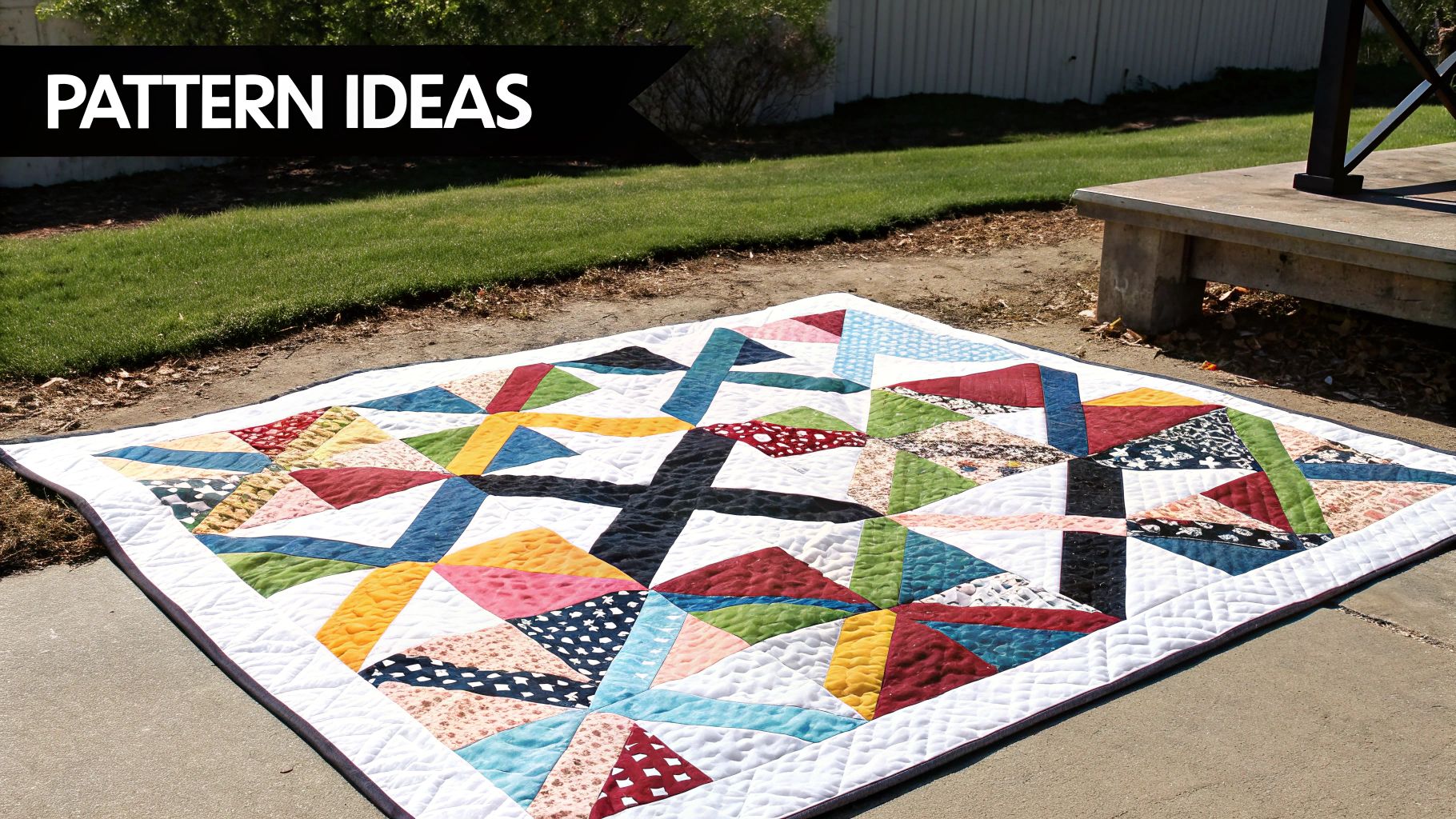
The beauty of working with such large squares is that you can assemble a generously sized quilt top with far fewer seams. This makes them absolutely perfect for those quick, satisfying projects. Whether you're whipping up a cozy lap throw, a sweet baby quilt, or just getting a head start on a bigger bed quilt, a layer cake is a quilter’s best friend.
Popular Patterns Perfect for 10-Inch Squares
Let's dive into a few classic and well-loved patterns that are practically made for layer cakes. There’s a good reason these designs are so popular—they’re approachable for quilters of all skill levels and the results are gorgeous every single time.
- Simple Patchwork Quilt: This is the most direct way to a finished quilt top. Just arrange your 10-inch squares in a grid you like—say, 6 squares across by 7 squares down—and sew them together. It’s incredibly fast and creates a bold, modern quilt that puts every single print from the collection on beautiful display.
- Disappearing Nine Patch: This pattern is pure quilting magic. You start by making a standard nine-patch block from nine of your squares. Then, with just a couple of strategic cuts and a clever twist of the new pieces, you create a wonderfully complex block that will have everyone asking, "How did you do that?"
- Giant Hunter’s Star: If you're looking to make a big visual impact, this is your pattern. The large scale of the star points is perfectly suited for 10-inch squares, which means you get that striking, graphic design without all the fussy, difficult piecing.
The real beauty of a layer cake is its flexibility. One bundle can easily become a lovely lap-sized quilt, roughly 54x63 inches, but you can stretch it even further by adding sashing or borders to create a much larger project.
Getting Creative With Your Squares
Don't feel like you have to stick to a specific pattern. Think of a layer cake as an invitation to play with color, shape, and design.
You can slice the squares right down the middle to make 10x5 inch rectangles, or cut them on the diagonal to create large, easy-to-handle half-square triangles (HSTs). Since the squares are already precisely cut, you have a reliable starting point for making more accurate cuts. Using a good tool, like a Quilter's Select non-slip ruler, really helps keep those secondary cuts clean and exact.
Another technique I love is the "snowball" block. You just sew smaller squares onto the corners of a layer cake square, press them out, and trim away the excess. This creates a really cool octagon shape that adds a ton of movement to a quilt top. It’s also a fantastic way to bring in a solid background fabric to make your layer cake prints pop even more.
Honestly, the possibilities are only limited by your imagination and how adventurous you're feeling.
Essential Tips for Sewing With Layer Cakes
Working with layer cakes is a ton of fun, but a few tricks of the trade can make the whole process go that much smoother. Think of these as little secrets to help you handle those 10-inch squares like a pro, making sure your final quilt is something you're truly proud of. We'll cover everything from taming fuzzy edges to slicing up your squares for brand-new patterns.
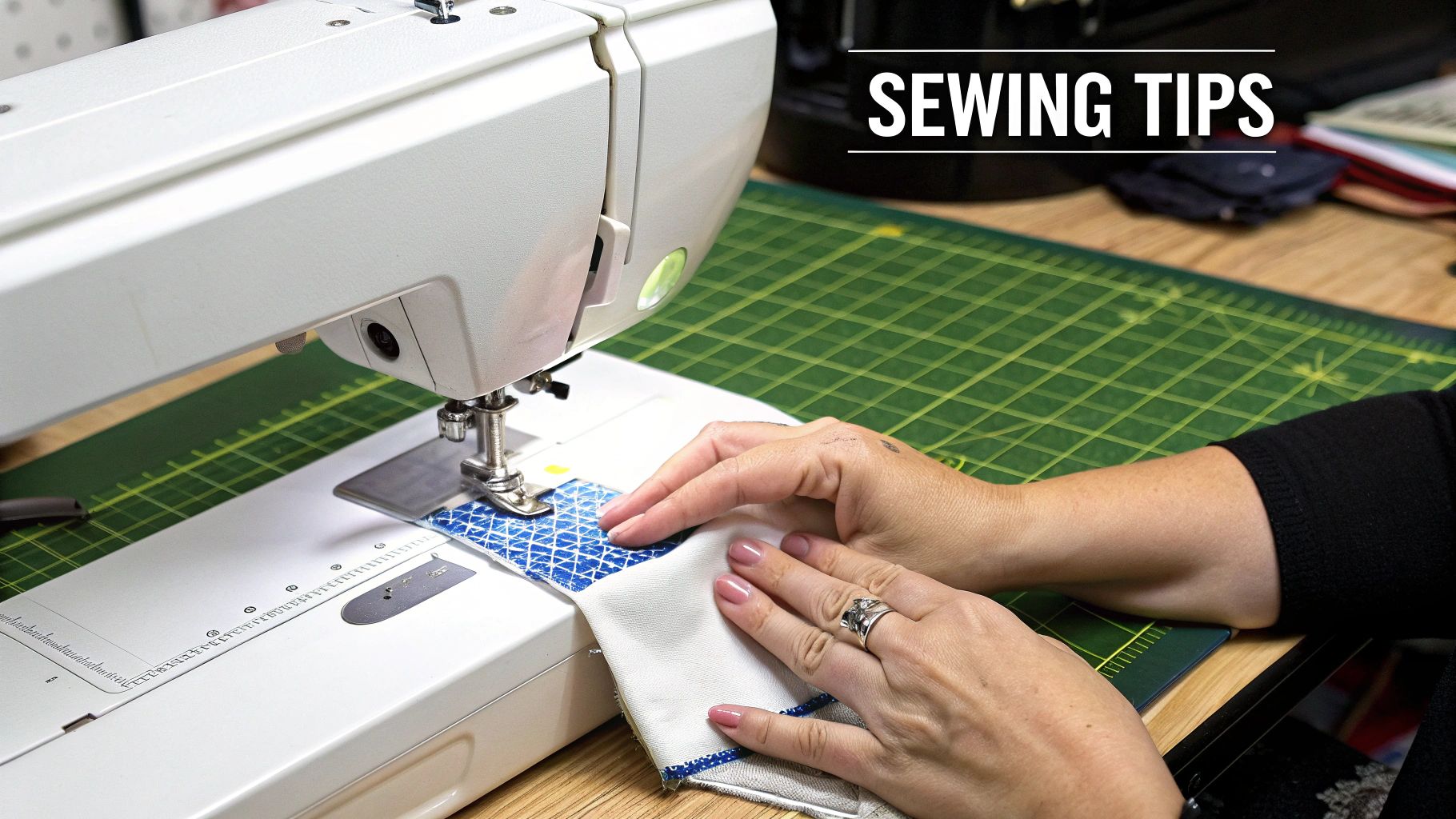
The first question I always hear is, "Should I pre-wash my layer cake squares?" My answer is almost always a firm "no." The short answer is do not pre-wash layer cakes. Those pinked edges are there to keep fraying at bay, but sending them for a spin in the washer and dryer is just asking for trouble—they'll shrink, get distorted, and the edges will unravel anyway. It's best to work with them right out of the package to keep them crisp and true to size.
For the best results, handle the squares gently and give them a good press before you even think about cutting or sewing. A quick pass with a hot, dry iron will get rid of any folds or wrinkles from the packaging. And as you piece your blocks, pressing your seams consistently (either open or to one side) is the key to getting a quilt top that lays beautifully flat. A great little iron makes this so much easier; something like the Oliso M3Pro Mini Iron is perfect to keep right by your machine for pressing as you go.
Smart Cutting and Piecing Strategies
One of the best things about the 10-inch square is how easily it can be broken down into other common quilting sizes. This versatility is what makes a layer cake a super economical and creative buy.
- Make Your Own Charm Packs: You can slice a single layer cake square into four perfect 5x5 inch squares. This is a great trick for patterns that call for both large and small squares from the same fabric line.
- Cut Your Own Strips: Need some 2.5-inch strips? A layer cake square yields four 2.5x10 inch strips, which are fantastic for sashing, borders, or creating your own mini "jelly roll" designs.
A quick note on sewing: those zig-zag pinked edges can be a little confusing. Just remember that the outermost "hills" or "points" of the zig-zag mark the true edge of your fabric. Always line up your ruler or your quarter-inch presser foot with those points to keep your seams accurate.
Pro Tip: Starching your layer cake squares before cutting can be a total game-changer. A light mist of spray starch gives the fabric extra body and stability, which really helps prevent stretching—especially when you're cutting on the bias. It makes the fabric feel almost like paper, giving you much more control for incredibly precise piecing.
Planning Your First Layer Cake Quilt
You've got a beautiful layer cake in hand—now for the fun part! Let's walk through how to map out your quilt so the entire process, from the first cut to the last stitch, is pure joy. A little planning now saves you from that dreaded mid-project run to the fabric store.
First, let's figure out what you can make with just the layer cake itself. Most layer cakes come with 42 squares. If you simply stitch them together in a 6x7 grid, you’ll create a quilt top that measures about 54x63 inches once you account for your quarter-inch seams. That's a perfect, generous lap quilt right out of the box.
Figuring Out Your Fabric "Extras"
Of course, many quilt patterns use more than just the precut squares. Elements like sashing and borders are what can really make your design sing, and they also help you make the quilt bigger.
- Sashing: Think of these as the frames for your fabric squares. Sashing strips are sewn between the blocks, helping each print stand out and adding to the quilt's final dimensions.
- Borders: This is the easiest trick in the book for adding size. A simple 4-inch border, for instance, adds a total of 8 inches to both the length and width of your quilt.
- Background Fabric: Some designs, like a classic Giant Hunter's Star, pair the layer cake squares with a background fabric to create a more intricate pattern.
Once you've settled on a pattern and your ideal finished size, you can calculate how much extra yardage you'll need. But don't stop there! Remember the essential final layers: the backing, batting, and binding. Your backing fabric needs to be 4-6 inches larger on all sides than your quilt top to give you enough room for the quilting process.
The batting is the cozy middle of your quilt sandwich, and it also needs to be a bit larger than your top. If you're not sure what kind to get, playing with a Hobbs batting sample pack is a fantastic way to feel the different options and find the perfect one for your project.
Finally, you’ll need fabric for the binding—the strip that gives your quilt a clean, finished edge. Most quilters use 2.5-inch wide strips for this. By thinking through all these pieces before you start, you're setting yourself up for a smooth, rewarding quilting adventure.
Your Top Layer Cake Questions, Answered
Once you start thinking about bringing a layer cake into your sewing room, you'll probably have a few questions pop into your head. It happens to all of us! Getting those questions answered is the key to quilting with confidence, so let's dive into some of the most common things quilters ask.
How Much Fabric Is in a Layer Cake, Really?
This is probably the most practical question of all. A standard layer cake, with its stack of 42 10-inch squares, gives you about 2.75 yards of fabric to play with. Knowing this little bit of math is incredibly helpful when you're trying to swap a layer cake into a pattern that calls for yardage.
How Many Layer Cakes Do I Need for a Queen Quilt?
Going big? I love it. For a queen-sized quilt, you'll generally want to grab two to three layer cakes. The final number really boils down to your pattern. A simple, straightforward patchwork design might only need two. But if your pattern involves more complex cuts or leaves a lot of open space, you'll likely need that third cake to be safe—especially if you aren't planning on adding much sashing or big borders.
Should I Bother Starching My Layer Cake Squares?
I'm going to give you the advice that seasoned quilters gave me: yes! While you can technically skip it, starching is a game-changer.
Think of starch as a little bit of insurance for your fabric. A light pressing with starch gives the squares some body and keeps them from stretching out of shape when you're cutting and sewing. It's a small step that pays off big with more accurate blocks and a flatter, neater quilt top.
Can I Mix and Match Layer Cakes?
You absolutely can, and you should! This is one of the best ways to build a one-of-a-kind, scrappy quilt. Combining different collections lets you create a color palette that's completely your own.
Here’s a pro tip, though: for the smoothest experience, try to stick with layer cakes from the same manufacturer (like Moda Fabrics or Riley Blake Designs). This helps ensure the feel of the fabric and the richness of the dyes are consistent, which makes sewing them together a total breeze.