


8 Inspiring Small Quilting Projects to Try in 2025
Why You’ll Love These Small Quilting Projects
Small quilting projects deliver big satisfaction in just a few hours or days. Whether you’re a beginner or an experienced quilter, this roundup shows how to turn scraps into practical, giftable pieces without committing to a bulky blanket. You’ll learn techniques that sharpen your skills and fill your home with handmade charm.
Key benefits of these small quilting projects:
- Quick turnaround for instant gratification
- Minimal materials—perfect for using stash or fat quarters
- Ideal gifts for hosts, teachers, and friends
- Skill-building through diverse techniques like patchwork and appliqué
Each of the eight projects—pot holders and trivets, coasters and mug rugs, table runners, wall hangings and fiber art, patchwork pillows, baby quilts and receiving blankets, placemats, and zippered pouches—includes:
- Brief overview and project scope
- Materials list with yardage estimates
- Difficulty rating and time estimate
- Mini instructions or pattern pointers
- Variation ideas to customize your design
- Suggestions for local sewing classes or Famcut product tie-ins
By the end of this article, you’ll have fresh inspiration and clear steps to start your next small quilting project. Dive in for actionable tips, real examples, and plenty of room to experiment with color, texture, and pattern.
1. Pot Holders and Trivets
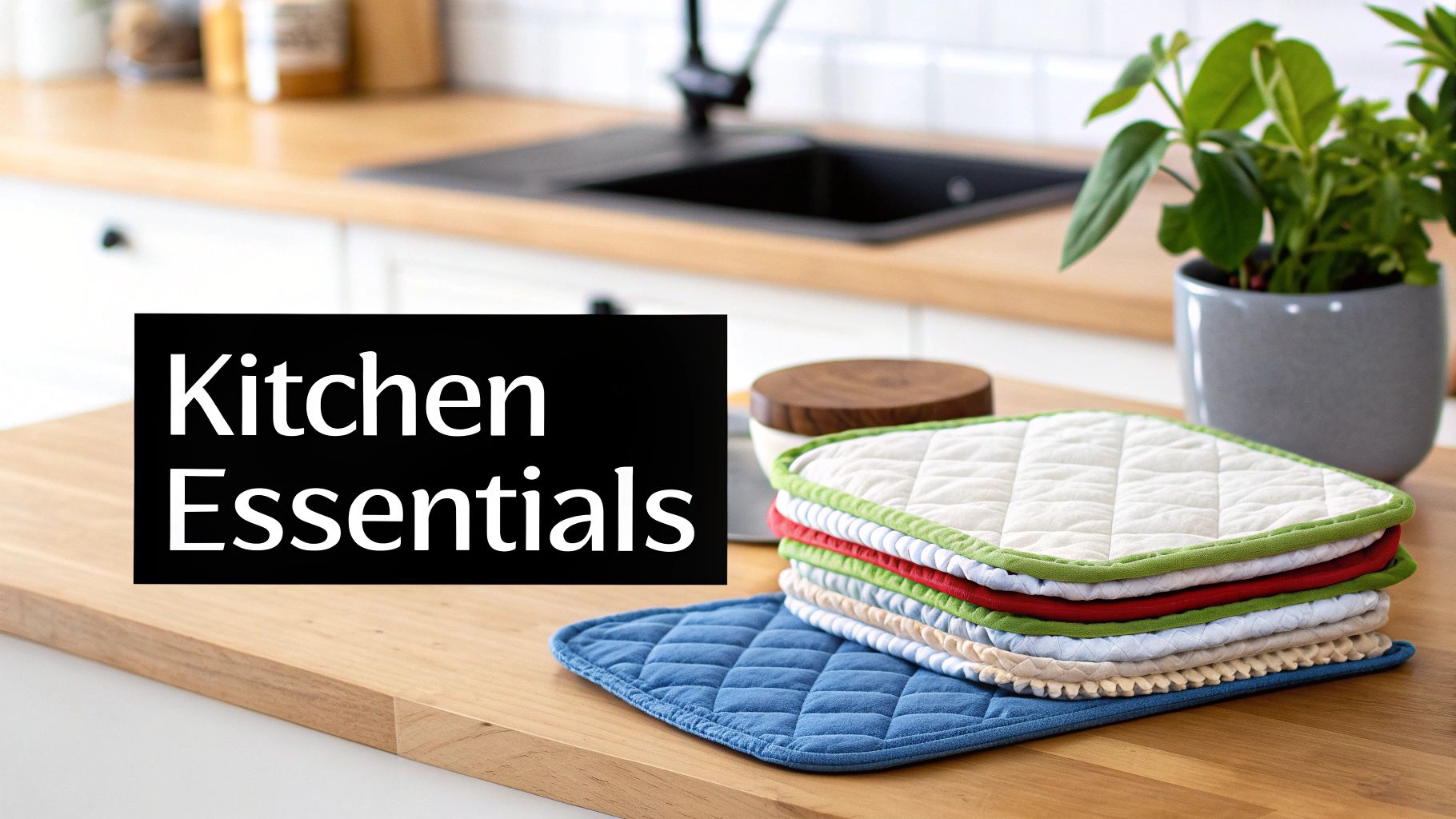
Pot holders and trivets are small quilted squares designed to protect surfaces from hot cookware. They combine two or three fabric layers with batting and can be quilted in decorative patterns to add kitchen flair.
What Are Pot Holders and Trivets?
Pot holders are hand-sized squares or circles you slip under a hot pan. Trivets are slightly larger, protecting countertops and table surfaces. Both are essential small quilting projects that require minimal fabric yet deliver high utility.
Materials & Actionable Tips
- Fabric: 100% cotton for heat resistance and durability
- Batting: Standard cotton plus a layer of Insul-Bright for extra insulation
- Thread: Contrasting color to highlight quilting lines
- Binding: Pre-cut bias tape or fabric strips for clean edges
- Prewash all fabrics to avoid shrinkage after the first wash
- Stitch a hanging loop into one corner for easy storage
Real-World Examples
- Bestseller sets on Etsy featuring seasonal prints (pumpkins, snowflakes)
- Charity auctions where kitchens groups raise funds with handmade pot holders
- Craft fair vendors pairing matching trivets and mug rugs in gift bundles
Quick Mini‐Instructions
- Cut two 8" squares of cotton and one 8" batting square
- Layer fabrics right sides out, quilt straight lines or crosshatch
- Trim edges, apply binding, and add corner loop
When and Why to Choose This Project
Pot holders and trivets make perfect first projects for beginners. They finish in under two hours, teach basic quilt-as-you-go or traditional piecing, and provide an immediate, functional result.
For step-by-step guidance, check the free tutorial on FaveQuilts.com or sign up for a local sewing class at your neighborhood Famcut Craft Studio.
2. Coasters and Mug Rugs
Coasters and mug rugs are decorative small quilting projects designed to protect furniture and showcase fabric art. Coasters are typically 4–5 inch squares, while mug rugs measure about 5×10 inches to hold both a drink and a snack. These mini quilts teach basic piecing, quilting, and binding in a single sitting.
What Are Coasters and Mug Rugs?
Coasters are compact quilted pads that shield tables from moisture and heat marks. Mug rugs are slightly larger, offering space for a cup plus a cookie or spoon. Both count as small quilting projects that build foundational quilting skills while yielding functional results.
Materials & Actionable Tips
- Fabric: Use 100% cotton scraps or coordinated fat quarters
- Batting: Thin cotton or wool batting for minimal bulk
- Backing: Add felt or vinyl for non slip and water resistance
- Thread: Pick bright colors to highlight quilting motifs
- Extras: Try paper piecing for intricate patterns or applique for monograms
- Prewash all fabrics to prevent puckering after your first wash
Real-World Examples
- Quilted coaster sets on Etsy featuring botanical and geometric prints
- Custom corporate gifting with branded fabric logos for client giveaways
- Charity crafting circles making bulk coasters for senior centers
- Local coffee shops retailing artisan mug rugs alongside specialty brews
Quick Mini‐Instructions
- Cut two 5×5 inch squares (or 5×10 for mug rugs) and one batting piece
- Layer fabrics right sides out, quilt simple lines or decorative motifs
- Trim to size, sew on binding, then press flat for finished edges
When and Why to Choose This Project
Coasters and mug rugs are perfect first projects or quick gifts. They finish in 60–90 minutes, require minimal yardage, and let you experiment with color combinations. For step-by-step patterns, visit QuiltyFun.com or join a workshop at your local Famcut Craft Studio.
3. Table Runners
Table runners are long, narrow quilted pieces (approximately 12–16 inches wide by 36–54 inches long) that add both decorative flair and surface protection to dining tables. They’re ideal small quilting projects for practicing strip piecing, basic quilting patterns, and binding techniques while showcasing seasonal or themed fabrics.
What Are Table Runners?
Table runners are elongated quilted strips designed to run the length of a dining table. They let quilters explore strip-piecing methods, focal-point designs, and borders, all in a project that finishes in a few hours to a weekend.
Materials & Actionable Tips
- Fabric: Mix and match 5" charm packs or yardage in seasonal prints
- Batting: Lightweight cotton or cotton-poly blend for drape
- Thread: Contrasting color to highlight quilting motifs
- Binding: 2¼" bias binding for clean edges
- Use strip piecing for fast assembly
- Plan a central medallion or fussy-cut focal fabric
- Add 1–2" borders to frame the main design
- Pre-cut charm packs speed up layout planning
- Make multiple runners in complimentary colorways for gift sets
Real-World Examples
- Seasonal runners sold at local craft markets featuring autumn leaves or spring florals
- Holiday-themed table toppers from Robert Kaufman Fabrics tutorials
- Scrappy charm pack runners on Etsy shops like “Charm Quilts Galore”
- Innovative bed-runner adaptations by modern quilting influencers
Quick Mini‐Instructions
- Cut strips or charm squares to 2½" widths; stitch end to end
- Press seams open and arrange into a balanced layout
- Add narrow inner border and wider outer border units
- Layer top, batting, backing; quilt straight lines or stitch-in-the-ditch
- Trim edges square and apply bias binding
When and Why to Choose This Project
Table runners are perfect for quilters seeking a high-impact home decor piece that remains a manageable small quilting project. You’ll refine piecing skills, experiment with quilting motifs, and end up with a practical accent for gifts or seasonal décor.
For detailed step-by-step guidance, visit Robert Kaufman Fabrics’ free table runner tutorial or sign up for a workshop at your neighborhood Famcut Craft Studio.
4. Wall Hangings and Fiber Art
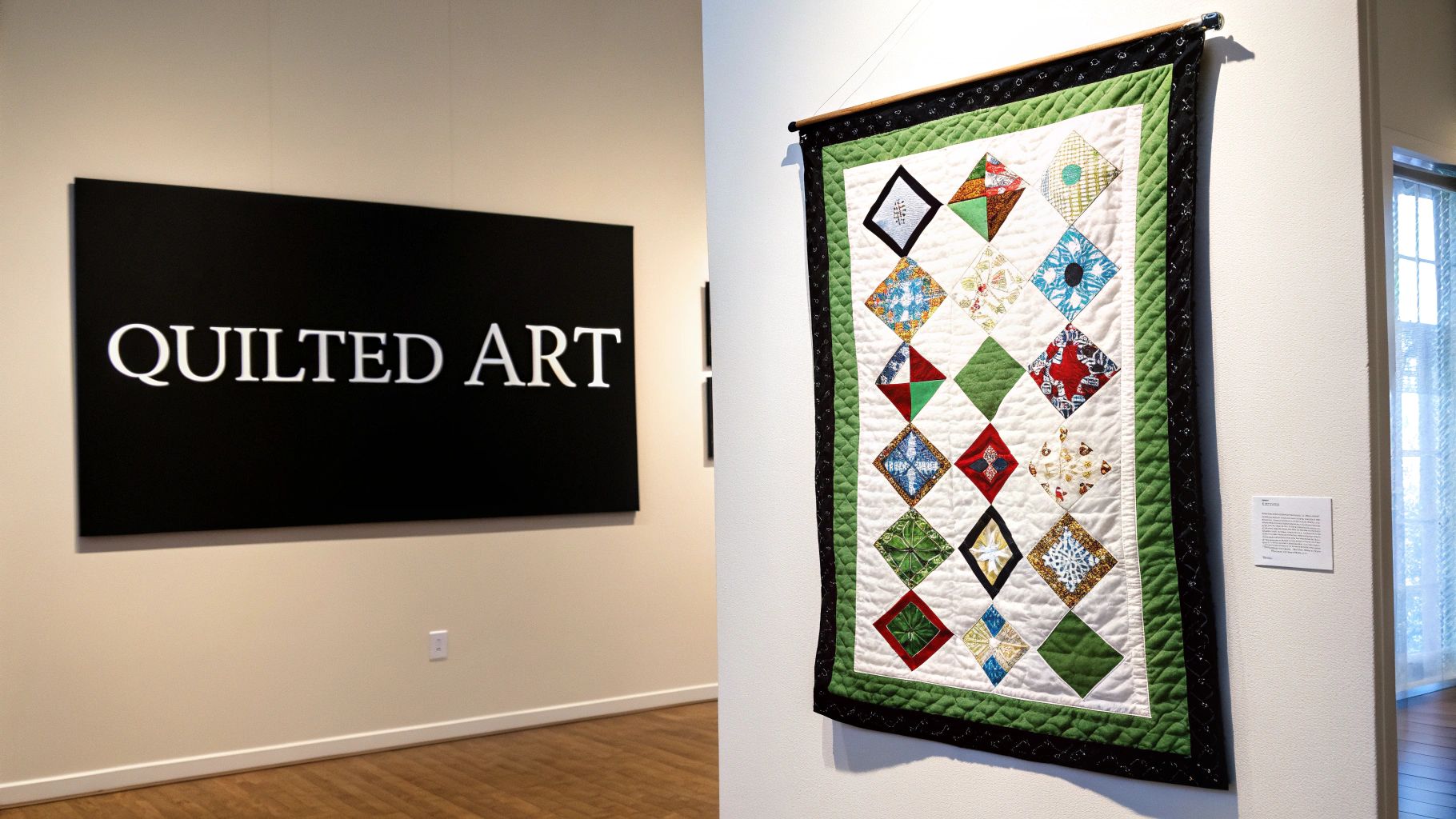
Wall hangings and fiber art are small quilted pieces designed specifically for wall display, typically ranging from 12×12 inches to 20×24 inches. These art quilts showcase piecing, appliqué, embroidery, and innovative quilting techniques, making them perfect small quilting projects for exploring creative design without committing to large bed-size quilts.
What Are Wall Hangings and Fiber Art?
Wall hangings are miniature quilted canvases combining fabric, batting, and backing into a cohesive artwork. Fiber art quilts go beyond traditional blocks to include narrative themes, abstract improvisation, and hand-stitched texture. Both forms let quilters treat fabric as fine art on a manageable scale.
Materials & Actionable Tips
- Fabric: Mix solids and tonal prints for strong value contrast
- Batting: Lightweight cotton or wool batt for crisp quilting definition
- Thread: Variegated quilting threads, embroidery floss for hand-stitch details
- Stabilizer: Fusible interfacing to support delicate appliqué
- Tools: Design wall for layout, free-motion foot, embroidery hoop
- Start with a clear theme or color story to guide block placement
- Experiment with thread painting for painterly effects
Real-World Examples
- Art quilts at the International Quilt Festival showcasing social narratives
- Melody Johnson’s abstract fiber panels using bold geometry
- Hollis Chatelain’s narrative quilts addressing cultural identity
- SAQA (Studio Art Quilt Associates) member exhibitions
Quick Mini‐Instructions
- Cut top fabrics and batting to 14×18 inches, arrange on a design wall
- Layer top, batting, backing; quilt motifs with free-motion or thread painting
- Add hand-stitched embroidery or appliqué accents, attach a hanging sleeve, then bind
When and Why to Choose This Project
Wall hangings and fiber art quilts are ideal for quilters wanting an artistic showcase without the time investment of a large quilt. You’ll learn composition, value contrast, and specialty quilting techniques in just a few hours, making this a standout small quilting project for gift-giving or home décor.
5. Patchwork Pillows
Patchwork pillows are decorative cushion covers featuring pieced, appliquéd, or quilted patchwork designs on the front. These projects typically finish at 16×16 or 18×18 inches, providing a manageable scale for practice and display. Quilters can complete one in 3–5 hours, making it a satisfying addition to any collection of small quilting projects.
What Are Patchwork Pillows?
Patchwork pillows combine multiple fabric scraps into one cohesive design, teaching basic piecing fundamentals. Some patterns incorporate appliqué motifs or mosaic-style blocks, while others highlight quilting stitches for added texture. The finished cover slips over a pillow form, transforming sewing remnants into a colorful accent for living rooms, bedrooms, or reading nooks.
Materials & Actionable Tips
- Charm Packs: Pre-coordinated 5″ squares speed up color planning
- Fabric: 100% cotton for structure and washability
- Batting: Lightweight cotton or wool for subtle puffiness
- Piping or Binding: Adds a polished edge—use contrasting prints for flair
- Closure: Envelope back or invisible zipper for easy laundering
- Pillow Form: Prewash to prevent shrinkage issues later
- Quilt Front First: Assemble and quilt the front panel before sewing the envelope
Real-World Examples
- Etsy boutiques offering custom patchwork pillows in farmhouse or modern styles
- Home décor retailers showcasing quilted pillow collections for seasonal displays
- Charity auctions featuring handmade pillows donated by local quilting guilds
- Interior designers mixing patchwork pillows with solid cushions for texture contrast
Quick Mini‐Instructions
- Select and arrange ten to twelve charm squares into a 4×4 grid
- Sew rows together, press seams open, then baste batting and backing to front panel
- Quilt simple straight lines or echo patterns, trim to exact square
- Attach piping, stitch front to back panels, insert pillow form
When and Why to Choose This Project
Patchwork pillows are perfect for quilters who want a decorative yet functional outcome in a single afternoon. They showcase skill progression—from piecing to quilting—while using scrap fabrics efficiently. Ideal for gift-giving, home staging, or introducing new stitch techniques, these pillows elevate everyday décor. For step-by-step patterns, explore Moda Fabrics’ pillow tutorials or join a local sewing class at Famcut Craft Studio.
6. Baby Quilts and Receiving Blankets
Baby quilts and receiving blankets are small lap-sized quilts (about 36" × 48") designed for infants and toddlers. These projects balance simplicity with sentimentality, using baby-safe fabrics and gentle color palettes to create lasting keepsakes.
What Are Baby Quilts and Receiving Blankets?
Baby quilts are lightweight, machine-quilted blankets sized to swaddle or drape over strollers and cribs. Receiving blankets are simpler, typically unquilted or lightly quilted, meant for wrapping newborns. Both fall under small quilting projects ideal for heartfelt gifts.
Materials & Actionable Tips
- Fabric: 100% cotton prints and solids, pre-washed to prevent shrinkage
- Batting: Lightweight cotton or bamboo blend for drape and easy washing
- Embroidery: Soft, colorfast thread for adding names or birth dates
- Appliqué: Use fusible web for safe, fray-free shapes
- Safety: Skip loose ribbons or buttons; secure all embellishments
Real-World Examples
- Traditional quilts embroidered with baby’s name and birthdate
- Modern, gender-neutral geometric designs from Moda or Riley Blake collections
- Donation drives by local quilting guilds supplying neonatal units
- Heirloom quilts handed down through three generations
Quick Mini-Instructions
- Cut 6" blocks of assorted cotton prints; arrange into a 6 × 8 grid.
- Sew blocks together, press seams open, then layer top, batting, and backing.
- Machine-quilt straight lines 1" apart, trim edges, attach 2" bias binding, add a fabric label.
When and Why to Choose This Project
Choose a baby quilt when you want a meaningful, functional gift that wraps up in one afternoon or two evenings. It teaches basic piecing, simple machine quilting, and binding skills. Perfect for beginners and those seeking small quilting projects with big emotional impact. For detailed patterns, check local classes at Famcut Craft Studio or free tutorials on FaveQuilts.com.
7. Placemats
Placemats are individual quilted table settings, typically around 14×18 inches, that blend function and decoration. These projects teach precise piecing, accurate measurement, and binding application in a quick batch-production format ideal for small quilting projects.
What Are Placemats?
Placemats are flat, lightly padded fabric rectangles placed under dishes to protect and dress a table. They combine three layers—top fabric, batting, and backing—to create a durable surface. This project sharpens measurement accuracy and binding skills while offering a high-utility finished piece.
Materials & Actionable Tips
- Fabric: 100% cotton for easy care and crisp piecing
- Batting: Low-loft cotton or cotton-poly blend for stability
- Thread: Strong polyester or cotton-wrapped polyester for longevity
- Binding: 2½-inch bias strips or pre-cut bias tape
- Batch-cut all top, batting, and backing pieces together for efficiency
- Use assembly-line quilting (chain-piecing patches, then quilting all at once)
- Make sets of 4, 6, or 8 for coordinated table settings or gift bundles
- Select reversible designs so each placemat offers two prints or colorways
Real-World Examples
- Handmade placemat sets sold at local craft fairs
- Seasonal placemat collections featured on Etsy shops
- Charity fundraising sales where quilt guilds support local causes
- Restaurant and hotel wholesale orders for durable table linens
Quick Mini‐Instructions
- Cut two 15×19-inch fabric rectangles and one 15×19-inch batting piece
- Layer top, batting, and backing; baste with pins or spray adhesive
- Quilt straight lines, crosshatch, or simple motifs 1–2 inches apart
- Trim to 14×18 inches, then attach binding around all edges
- Press seams flat and group into sets for storage or sale
When and Why to Choose This Project
Placemats are perfect for quilters seeking to improve speed and consistency. They finish in 2–4 hours each and make superb gifts, retail items, or staples for your own home. Enroll in a local sewing class at Famcut Craft Studio for in-depth guidance and pattern ideas.
8. Zippered Pouches and Fabric Bags
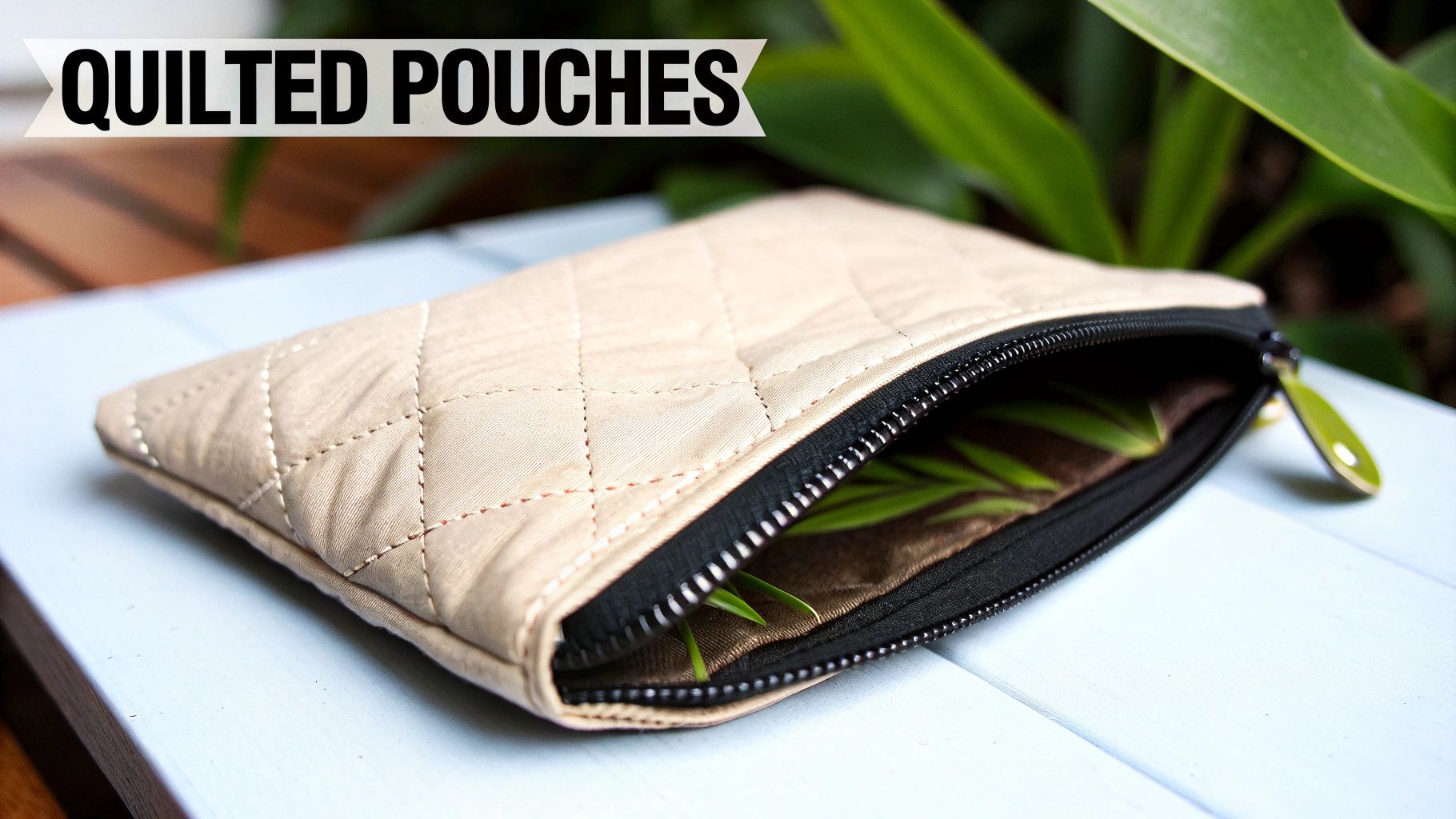
Zippered pouches and fabric bags are small quilted storage pieces (4×6 inches to 8×10 inches) ideal for organizing supplies, cosmetics, or small items. They introduce basic bag construction, zipper installation, and finishing techniques while using up fabric scraps and leftover batting.
What Are Zippered Pouches and Fabric Bags?
These projects are versatile mini-bags made by quilting two outer fabric layers to a batting base, then adding a zipper closure. Sizes range from card-holder dimensions up to makeup-bag scale. They teach seam alignment, topstitching, and clean edge techniques in a compact format.
Materials & Actionable Tips
- Fabric: 100% cotton or light canvas for structure
- Batting: Low-loft cotton or scrap batting pieces
- Zipper: Pre-wash before sewing to avoid stiffness
- Tools: Zipper foot, fabric shears, rotary cutter
- Tip: Backstitch at zipper ends for extra durability
- Tip: Create a simple cardboard template for uniform sizes
- Tip: Add an interior pocket for cards or lipstick
- Tip: Use contrasting thread to showcase quilting lines
Real-World Examples
- Etsy bestsellers with custom print collections
- Coordinated cosmetic bag sets featured in boutiques
- Charity craft bundles supporting local schools
- Teacher appreciation pouches personalized with names
Quick Mini‐Instructions
- Cut two 8×6-inch fabric rectangles and one batting piece
- Quilt layers together in straight or decorative lines
- Center and pin zipper between top edges, stitch with zipper foot
- Sew side seams, trim corners, turn right side out
- Press edges, topstitch around zipper for a polished finish
When and Why to Choose This Project
Zippered pouches are perfect for intermediate sewers seeking a quick bag project under two hours. They make thoughtful gifts, help bust your scrap stash, and hone precision sewing skills. For step-by-step guidance, visit your local Famcut Craft Studio or watch the full tutorial on YouTube.
Small Quilting Projects: 8-Item Comparison
| Item | Implementation Complexity 🔄 | Resources & Time ⚡ | Expected Outcome ⭐ / Impact 📊 | Ideal Use Cases | Key Advantages & Tips 💡 |
|---|---|---|---|---|---|
| Pot Holders and Trivets | Very low 🔄 — basic piecing & straight quilting | Minimal ⚡ — small scraps, 1–3 hrs; heat‑resistant batting | Functional kitchen protectors; quick to produce ⭐⭐ 📊 Practical utility | Beginner practice, small gifts, craft-fair stock | Low cost; prewash fabrics; use Insul‑Bright for safety 💡 |
| Coasters and Mug Rugs | Low 🔄 — precise small piecing and binding | Minimal ⚡ — scrap-friendly, 30–60 min each | Attractive tabletop items; ideal for set sales ⭐⭐⭐ 📊 High turnover | Gifts, fundraisers, coffee-shop retail | Uses scraps efficiently; add backing or vinyl for water resistance 💡 |
| Table Runners | Medium 🔄 — strip piecing, longer binding work | Moderate ⚡ — moderate yardage, 4–8 hrs | Decorative centerpiece; good home-decor appeal ⭐⭐⭐ 📊 Seasonal sales | Seasonal decor, gifts, home staging | Strip piecing speeds assembly; plan a central focal point 💡 |
| Wall Hangings and Fiber Art | High 🔄 — advanced techniques, mixed media possible | Variable ⚡ — small size but design/time intensive | Gallery-ready art; high artistic value ⭐⭐⭐⭐ 📊 Exhibit & commission potential | Exhibitions, commissions, creative exploration | Start with clear theme; use a design wall and value contrast 💡 |
| Patchwork Pillows | Medium 🔄 — piecing plus closures (zip/envelope) | Moderate ⚡ — fat quarters, 3–5 hrs; pillow form needed | Functional décor with strong retail appeal ⭐⭐⭐ 📊 Visible, quick results | Home accents, boutique sales, gifts | Pre-quilt front; add piping or contrasting binding for polish 💡 |
| Baby Quilts and Receiving Blankets | Medium 🔄 — full quilt sandwich, simple layouts | Moderate ⚡ — yardage for small quilt, 4–6 hrs; lightweight batting | Meaningful keepsake; practical for infants ⭐⭐⭐⭐ 📊 High sentimental value | Baby showers, charity, heirloom projects | Use 100% pre-washed cotton; avoid loose embellishments for safety 💡 |
| Placemats | Low–Medium 🔄 — repetitive precision and binding | Moderate ⚡ — ~1–2 hrs each; batch-friendly | Practical dining sets; strong sell potential for sets ⭐⭐⭐ 📊 Good for batch production | Batch production, holiday sets, restaurant orders | Batch-cut and assembly-line methods; consider reversible designs 💡 |
| Zippered Pouches and Fabric Bags | Medium 🔄 — zipper insertion and small-scale construction | Low–Moderate ⚡ — 45–90 min; excellent scrap use | High utility and profit margin; popular seller ⭐⭐⭐⭐ 📊 Great for retail/gifts | Gift sets, retail, organization accessories | Use a zipper foot; backstitch zipper ends; add maker labels 💡 |
Your Next Steps to Quilt Something Small Today
Key Takeaways
- We explored eight small quilting projects that fit any skill level, from mug rugs to zippered pouches
- Each project includes materials lists, time estimates, and pattern pointers for quick implementation
- You learned variations and local class or Famcut.com product tie-ins for extra inspiration
“Starting with a small quilting project builds confidence and skills faster than you might expect”
Actionable Next Steps
- Pick One Project
- Review the list above and choose a pot holder, coaster set, or mini quilt that excites you
- Gather Materials
- Download our printable supply checklist and shop for quality fabrics, batting, and notions
- Schedule Dedicated Time
- Block out 1–3 hours this week for unbroken sewing—consistency fuels progress
- Access Learning Resources
- Follow step-by-step video tutorials or sign up for a local class at Famcut.com
- Share and Celebrate
- Post your finished piece on social media with #SmallQuiltingWins to connect with fellow quilters
Why Mastering Small Quilts Matters
Small quilting projects are more than quick wins—they sharpen your patchwork precision, boost your design eye, and let you test new techniques without a large time or fabric investment. Each completed coaster or pouch reinforces foundational quilting skills you can scale up to larger works. By focusing on these bite-sized creations, you’ll build momentum and confidence to tackle complex quilts in the future.
Broader Impact
Embracing small quilting projects strengthens your creative community ties. As you share your work and participate in online forums or local meetups, you inspire others and discover fresh ideas. This collaborative spirit transforms solitary sewing time into a supportive journey of continuous improvement.
Final Thought
Start today with one manageable piece, and watch how these quick projects boost your sewing confidence, expand your skills, and enrich your creative routine. Your next masterpiece begins with a single patchwork block—let’s sew something small and amazing right now!
Ready to level up your small quilting journey? Visit Famcut.com for premium fabrics, tools, and local class sign-ups. Check out Famcut.com to find everything you need to get started on your next small quilting project!