


Essential Quilting Supplies for Beginners | Get Started Today
Diving into a new hobby like quilting can feel like learning a whole new language. Walk into any craft store, and the sheer number of gadgets, fabrics, and gizmos can be overwhelming. But here's the good news: you don't need all of it to get started.
You really only need a handful of key items to make your first quilt. Think of it in four main categories: things for cutting, things for measuring, your basic sewing supplies, and, of course, the fabric. Getting good-quality basics from the get-go will save you a ton of frustration and make the whole process a lot more fun.
Starting Your Quilting Journey With Confidence
Welcome to the wonderful world of quilting! This guide is here to cut through the noise and show you exactly what you need to begin. It's just like cooking a new recipe—having the right ingredients and tools on hand makes everything go so much more smoothly.
We're going to focus on the absolute essentials. The goal is to get you set up and ready to sew with confidence, not to send you on a wild goose chase for every tool under the sun.
Understanding the Supply Categories
To make things simple, let's break down the beginner quilting supplies into a few logical groups. This way, you can make sure you have all your bases covered without accidentally buying things you won't use for years.
- Cutting Tools: These are your non-negotiables for accurate quilt blocks. A rotary cutter, a self-healing mat to protect your table, and a clear acrylic ruler are the trio that will give you clean, straight cuts every time. Precision here is the foundation of a great quilt.
- Sewing Supplies: You'll obviously need a sewing machine that you're comfortable with. Beyond that, grab some good quality 100% cotton thread, a tin of sharp pins or some wonder clips, and a seam ripper. Trust me, every quilter, from novice to expert, keeps a seam ripper handy!
- Fabric and Materials: This is the fun part! You'll need fabric for your quilt top (go with 100% cotton—it's the easiest to work with), batting for that fluffy middle layer, and a piece of backing fabric to complete your quilt "sandwich."
This handy infographic gives you a great visual of the core supplies you'll be gathering.
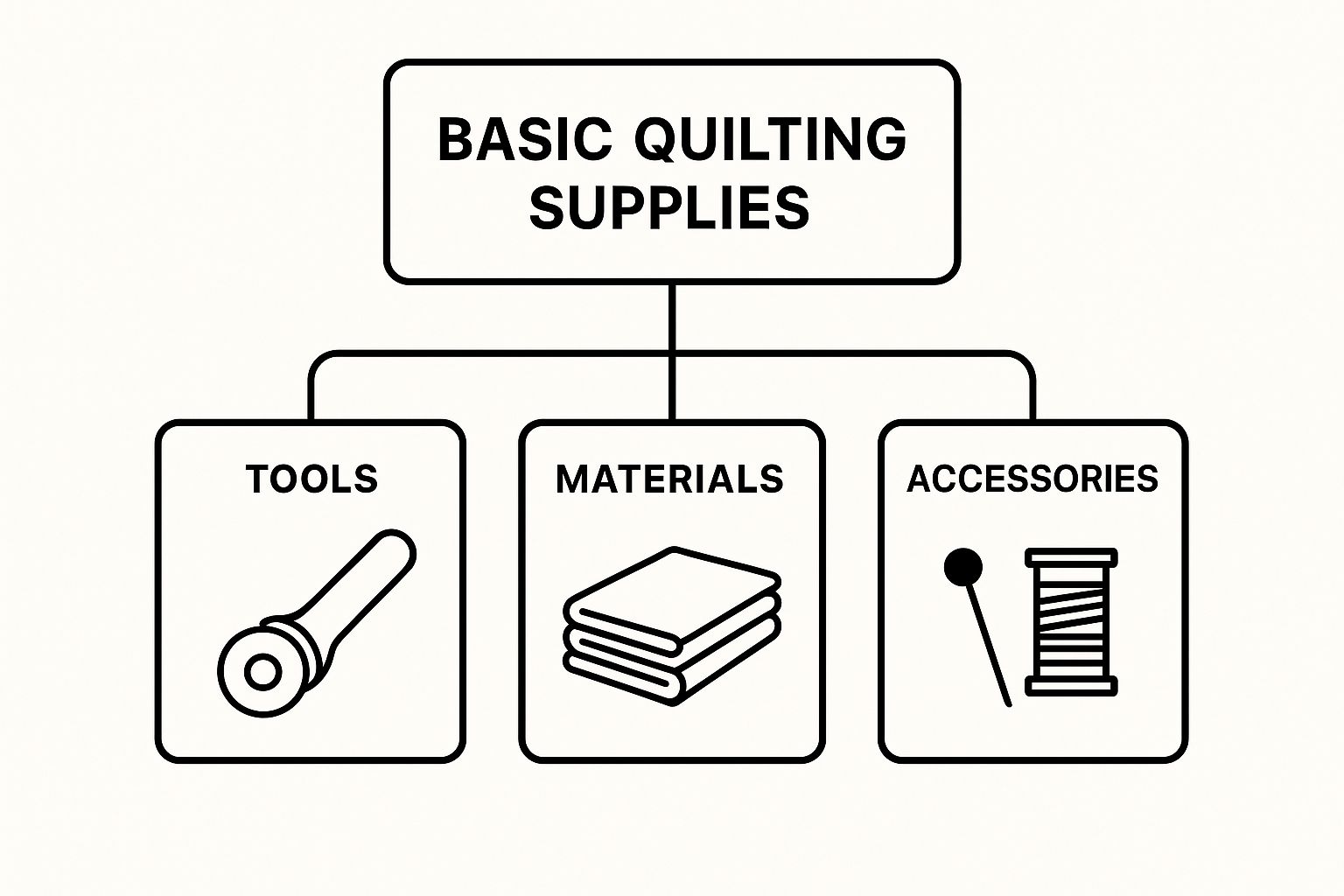
As you can see, everything fits neatly into a few key areas. Focusing on these essentials will get your quilting adventure started on the right foot, with less stress and more creativity.
To make your first shopping trip even easier, here's a quick checklist of the must-haves.
Beginner Quilting Supplies Checklist
| Category | Essential Item | Why You Need It |
|---|---|---|
| Cutting Tools | Rotary Cutter & Self-Healing Mat | Allows for precise, straight cuts through multiple layers of fabric safely. |
| Measuring Tools | Clear Acrylic Ruler (6" x 24") | Essential for measuring and cutting accurate squares, strips, and shapes. |
| Sewing Supplies | Sewing Machine | The workhorse for piecing your quilt top and finishing the project. |
| Sewing Supplies | 100% Cotton Thread | Strong, reliable, and won't damage your cotton fabric like polyester can. |
| Sewing Supplies | Pins or Quilting Clips | Holds fabric pieces together securely while you sew for perfect seams. |
| Materials | Cotton Fabric | The best choice for beginners—it's stable, easy to press, and comes in endless designs. |
| Materials | Batting | The middle layer of your quilt that provides warmth and dimension. |
| Materials | Seam Ripper | Your best friend for fixing inevitable mistakes quickly and easily. |
This list covers the bare essentials you'll need for that very first project. As you gain more experience, you'll naturally discover other tools you might want to add to your collection, but this is the perfect starting point.
Mastering Precision with Essential Cutting Tools
If you think of a quilt as a story told with fabric, then clean, accurate cuts are the grammar that holds it all together. You might think a good pair of scissors is enough, but the real secret to those crisp, professional-looking quilt blocks is a specific trio of tools: the rotary cutter, the self-healing mat, and the quilting ruler.
Imagine a pizza cutter, but designed for fabric. That's a rotary cutter. It glides through multiple layers of cotton with a level of ease and precision that scissors just can't touch. This is the tool that will give you those perfectly straight lines and uniform shapes—the fundamental building blocks of any quilt you make.
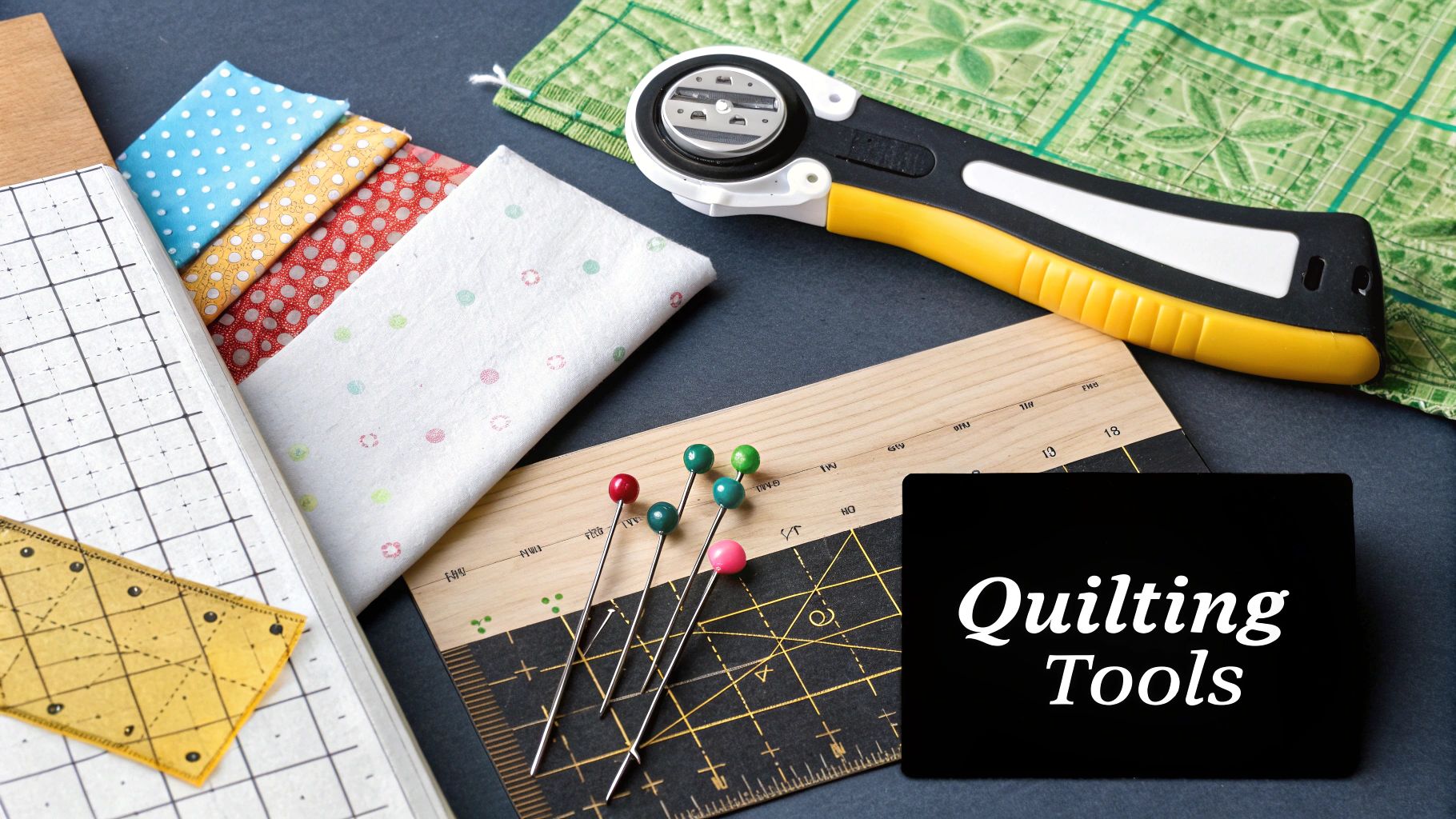
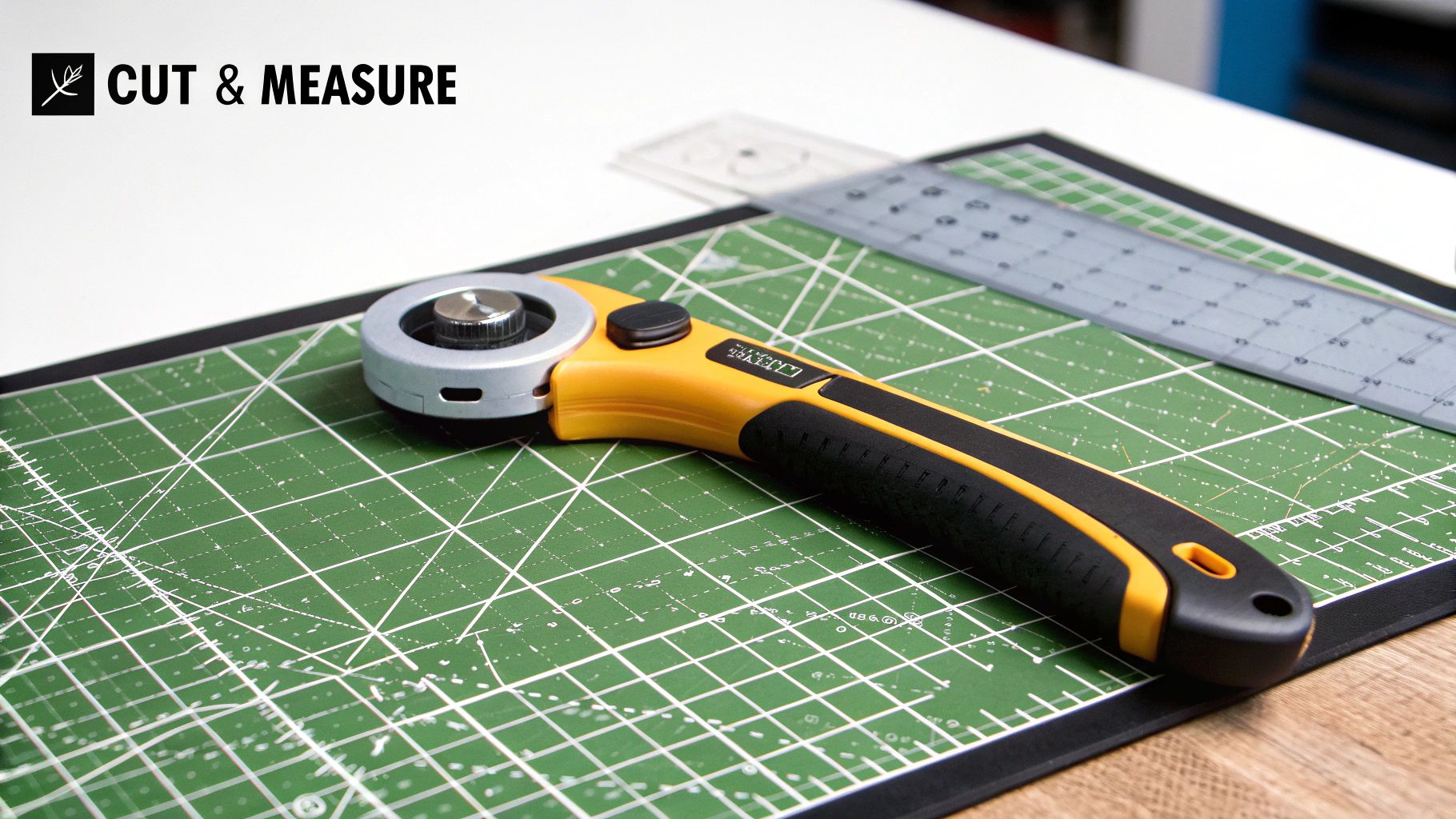
Of course, a rotary cutter can't work its magic alone. A self-healing cutting mat is its essential partner, and it's non-negotiable. This gridded surface does two crucial things: it protects your table from the blade, and it protects the blade from your table. The "self-healing" magic is real—the tiny nicks from the blade seem to close right up, giving you a consistently smooth surface for every cut.
Choosing Your First Cutting Tools
You don't need to buy out the store to get started. Just a few smart choices will see you through almost all of your first projects. By investing in these core items, you'll build good habits right from the very first snip.
- Rotary Cutter: A 45mm rotary cutter is the gold standard for a reason. It’s the most versatile size for a beginner—big enough to slice through several layers of fabric but still nimble enough for easy control.
- Self-Healing Mat: Aim for a mat that’s at least 18 x 24 inches. This gives you enough real estate to cut larger pieces of fabric without having to constantly shift things around.
- Quilting Ruler: The one ruler every quilter needs is a 6 x 24-inch clear acrylic ruler. Its length is perfect for cutting strips straight from folded fabric, and the transparent markings are your best friend for unshakable accuracy.
The good news is that as quilting has grown in popularity, so has the availability of great tools. The entire industry is booming. To give you an idea, global fiber production—the stuff our quilting fabric is made from—is projected to hit 147 million tons by 2030. This growth makes it easier than ever to find fantastic beginner quilting supplies. If you're curious, you can learn more about the growth of the quilting industry and its market trends.
Key Takeaway: The combination of a rotary cutter, self-healing mat, and a long acrylic ruler is a true game-changer. This trio works as a system to give you the speed, safety, and precision required for beautiful, professional-looking quilts.
Getting comfortable with this set of tools is your first big step toward achieving the kind of accuracy that makes quilting so deeply satisfying. When you start with this essential trio, you're setting yourself up for success and avoiding the frustration that always comes from wobbly, imprecise cuts.
Choosing Fabric: The Heart of Your Quilt
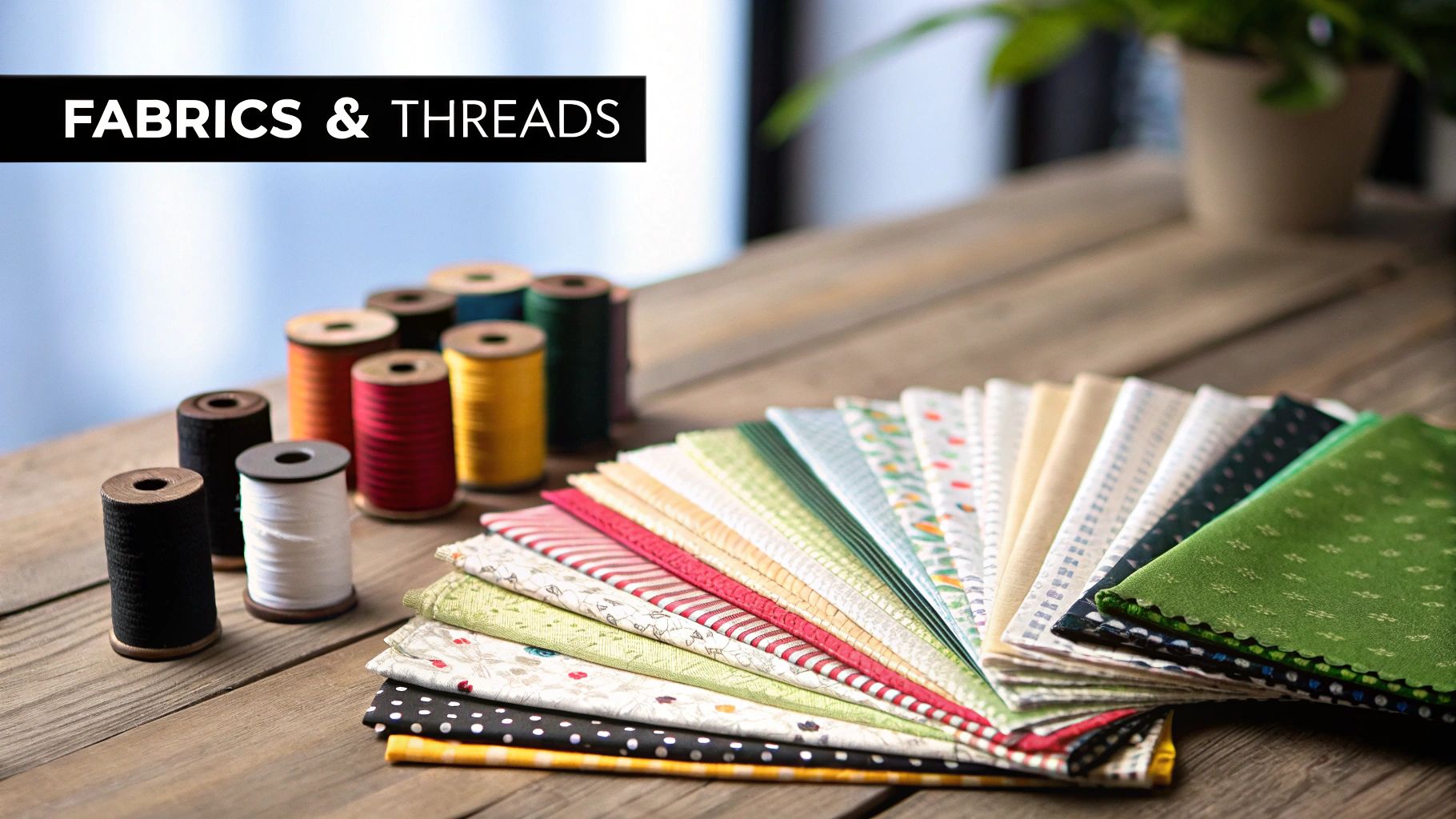
The fabrics you choose are where your quilt's personality really begins to shine. It's more than just picking pretty colors and patterns; it’s about finding materials that are a dream to work with, especially when you're just starting out. For beginners, the choice is clear: 100% quilting cotton is, without a doubt, the best place to start.
Think of quilting cotton as the perfect partner for your first project. It behaves exactly how you want it to—it doesn't stretch or slip around, it holds a nice, crisp press when you iron it, and it's sturdy enough to handle a little trial and error. This stability makes your cutting and sewing so much more accurate, which saves a ton of frustration. Plus, the sheer variety of prints and solids available is absolutely staggering.
The Magic of Pre-Cuts
Walking into a fabric shop for the first time can feel a bit like sensory overload. How do you possibly choose fabrics that look good together? And how much of each do you even need? This is where pre-cut fabric bundles come to the rescue. They are a beginner's best friend.
Imagine a paint-by-numbers kit, but for quilters. A professional designer has already done all the hard work of coordinating colors and patterns for you. Pre-cuts are simply bundles of fabric from a single collection, all cut into handy, standardized shapes. This guarantees everything will match perfectly.
Here are the most common types you’ll run into:
- Fat Quarter Bundles: These are generous 18 x 21-inch cuts. They give you a good-sized piece of each fabric in a collection, making them incredibly versatile for all kinds of quilt patterns.
- Jelly Rolls: Think of a roll of wrapping paper, but made of fabric! These are long, 2.5-inch wide strips all rolled up together. They're an absolute lifesaver for any pattern that uses strip piecing.
- Charm Packs: These are little stacks of 5-inch squares. They’re a fantastic and affordable way to get a little piece of every single print in a designer's line, perfect for classic patchwork.
Honestly, starting with pre-cuts is one of the smartest things a new quilter can do. You’ll save hours of cutting time and feel confident that your finished quilt will look cohesive and professionally designed right from the get-go.
A Simple Trick for Choosing Colors
Even if you start with a pre-cut bundle, you'll likely need to pick out a background or binding fabric. Don't panic! The goal here is simply to create contrast so all your hard work stands out. A great rule of thumb is to balance busy prints with simple solids. If your pre-cut bundle is packed with vibrant, detailed patterns, a solid neutral like white, cream, or a soft gray will make those beautiful prints sing.
Here's an old-school quilter's trick: when you're in the fabric store, hold up your potential choices, take a few steps back, and squint your eyes. This blurs the specific patterns and lets you see the "value" of the colors. You'll immediately notice which fabrics pop and which ones fade into the background.
With these simple ideas, picking fabrics becomes one of the most fun and creative parts of making a quilt, not a source of stress. Sticking with high-quality quilting cotton and leaning on the convenience of pre-cuts sets you up for success and a much more enjoyable journey.
Essential Sewing and Finishing Tools
Okay, your fabric is cut and ready to go. Now for the fun part: actually sewing the pieces together and finishing your quilt. This is where all those carefully cut squares and triangles start to look like the real thing. And the best part? You don't need a super complicated setup to get started.
The biggest player here is, of course, your sewing machine. I can't stress this enough: you do not need a high-end, computerized machine that costs a fortune. A solid, reliable workhorse that sews a straight stitch is all you really need to piece a beautiful quilt top. Look for a machine that feels sturdy, runs smoothly, and doesn't intimidate you.
Key Machine Accessories and Notions
While a basic machine is fine, a few specific accessories and notions will make your quilting life so much easier. Think of these as the essential upgrades that help you sidestep common frustrations and get a much cleaner result from day one.
One of the most important add-ons is a walking foot. Picture a little set of tank treads for your sewing machine's presser foot. It has its own feed dogs that grip the top layer of fabric, pulling it through at the exact same speed as the machine's feed dogs are pulling the bottom layer. This simple action prevents the fabric from shifting and puckering, especially when you're quilting through the thick layers of your "quilt sandwich."
A walking foot is a beginner’s best friend for quilting straight lines. It ensures all three layers of your quilt move together smoothly, preventing frustrating fabric bunching and resulting in a much more professional finish.
Beyond the walking foot, you'll want to have a few other key items on hand:
- Thread: I always recommend starting with a good quality, 50-weight 100% cotton thread. A neutral color like white, cream, or light gray will blend in with almost anything. It’s strong enough for piecing but won’t add a lot of bulk to your seams.
- Needles: Always start a new project with a fresh needle! For piecing quilting cotton, a universal size 80/12 is a perfect starting point.
- Seam Ripper: Welcome to the club! Every quilter, no matter how experienced, makes mistakes. A good, sharp seam ripper is your get-out-of-jail-free card, letting you undo stitches without tearing your precious fabric. Don’t be afraid to use it.
Assembling the Quilt Sandwich
After your quilt top is all pieced together, it's time to build your "quilt sandwich." This is the term we use for the three layers that make up a finished quilt.
- Backing Fabric: This is the fabric for the back of your quilt. You'll want to cut it about 4-6 inches larger on all sides than your quilt top. This extra fabric gives you some wiggle room when you're quilting.
- Batting: This is the cozy middle layer that gives your quilt its warmth and puffiness. For beginners, a cotton or an 80/20 cotton-poly blend is easy to work with and gives a great result.
- Quilt Top: This is the beautiful, patterned front you just spent all that time sewing.
To hold all three layers together while you quilt them (a step called basting), you’ll need pins. Most quilters use special curved safety pins that are much easier to push through the thick layers and close than regular safety pins.
Interestingly, the demand for these simple supplies is a huge global business. In the Asia Pacific region alone, the four seasons quilt market is projected to hit around $4.8 billion by 2025, largely because more people are picking up crafts like quilting. This just goes to show how many people are discovering the joy of making something by hand. If you're curious, you can get more details about the quilting market growth in this report from Cognitive Market Research.
Where to Find Your First Quilting Supplies
Knowing what tools you need is one thing, but figuring out where to get them is a whole different puzzle. The right shop can be more than just a place to buy thread; it can be a source of inspiration, a lifeline for expert advice, and your entry into a vibrant community. You’ll generally find yourself choosing between local quilt shops, big-box craft stores, and the endless aisles of online retailers.
Each one offers a completely different vibe and set of perks. The best spot for you really boils down to what you're looking for. Do you crave personal guidance, need to stick to a tight budget, or just want the convenience of shopping from your couch? Let's break down the pros and cons to get you stocked up and ready for the fun part—actually quilting.
The Charm of Local Quilt Shops
Think of a local quilt shop (or LQS, as you'll see it called) as your quilting home base. These places are true gems, usually run by incredibly passionate and experienced quilters who live and breathe this craft. They're the ones who can help you find that perfect shade of blue, recommend a tool that will change your life, and talk you through a sewing machine hiccup.
Sure, their prices might be a little higher than the big chain stores, but you're paying for exceptional quality and curated fabric collections you won't find elsewhere. The personalized support is honestly priceless when you're just starting out.
Visiting a local quilt shop is about more than just shopping; it's about connecting with a community. You'll find inspiration in the samples on display and might even learn about local quilting classes or groups to join.
Big-Box Stores and Online Retailers
Big-box craft stores are another fantastic option, especially if you're watching your budget. They're convenient, almost always have a sale running, and those weekly coupons can make a real difference when you're buying everything for the first time. You’ll find all the basic tools and a solid selection of fabric all in one place.
The trade-off? The staff might not have that deep, specialized quilting knowledge, and the fabric quality can sometimes be a bit of a mixed bag compared to what you'd find at an LQS.
Then you have the vast universe of online shopping, where the selection is practically infinite. From huge marketplaces to specialty sites like Famcut.com, you can track down any gadget or fabric imaginable, often at great prices. This easy access has absolutely fueled the modern quilting boom.
In fact, the global quilt market is projected to hit around USD 5.61 billion by 2025, and a lot of that growth comes from e-commerce making it so easy for newcomers to get started. You can discover more insights about the global quilting market on Archive Market Research. The only real catch with shopping online is that you can’t see or feel the fabric firsthand, which can make matching colors and textures a bit of a gamble.
To make the decision a little easier, here's a quick breakdown of where to shop and what to expect.
Comparing Where to Buy Quilting Supplies
| Retailer Type | Best For | Things to Consider |
|---|---|---|
| Local Quilt Shop | High-quality fabrics, expert advice, and building community connections. | Can be more expensive; selection might be smaller and more curated. |
| Big-Box Store | Budget-friendly basics, one-stop shopping, and frequent sales/coupons. | Staff may lack specialized knowledge; fabric quality can be inconsistent. |
| Online Retailer | The largest selection, competitive pricing, and 24/7 convenience. | You can't see or touch fabric before buying; shipping times vary. |
Ultimately, many quilters use a mix of all three. You might pop into your LQS for that special fabric and a dose of inspiration, swing by the big-box store for batting and thread, and then hop online to find a specific ruler you can't get anywhere else. There's no wrong way to do it
Common Beginner Quilting Questions Answered
Starting your first quilt is a huge thrill, but let's be honest, it also comes with a lot of questions. Getting these common worries ironed out beforehand can give you the confidence to just relax and enjoy the process. So, let's dive into a few things that trip up most new quilters.
https://www.youtube.com/embed/sWmxOF0zwXk
Feeling like you have the right tools and the right know-how is the secret to making sure your first quilting experience is a fantastic one.
Do I Really Need a Rotary Cutter?
You've got scissors, so why bother with a whole new set of tools? While you can technically get by with scissors, a rotary cutter, mat, and ruler are what I'd call a beginner’s best friend. Think of them as a single, powerful system for precision.
A rotary cutter just glides through the fabric, leaving you with perfectly straight, crisp edges every single time. That’s a level of accuracy you just can't get with scissors, especially over longer cuts. This isn't just about making things look neat—it's the foundation of your entire quilt. When every piece is cut just right, they all fit together like a dream, your quilt blocks come out the right size, and your seams line up beautifully. Trust me, investing in this basic cutting trio is one of the smartest moves you can make to save yourself a ton of frustration down the road.
How Much Fabric Do I Need for My First Quilt?
Ah, the "how much fabric" puzzle. The easiest way to solve this is to let a pattern do the work for you. Find a beginner-friendly quilt pattern you love before you go shopping. A good pattern will spell out exactly what you need, right down to the yardage for each color, taking all the guesswork out of the equation.
Now, if you're feeling adventurous and want to make a simple patchwork quilt without a pattern, here’s a rough guide for a small lap quilt (something around 40 x 50 inches):
- For the Quilt Top: Grab about 3-4 yards of assorted fabrics.
- For the Backing Fabric: You'll need around 1.5 yards.
- For the Binding: A half-yard should do the trick.
Here's a golden rule every quilter learns (sometimes the hard way): always buy a little extra fabric. A simple cutting mistake or a last-minute design change feels a lot less stressful when you have some backup material ready to go.
What Is the Most Common Beginner Mistake?
If I had to narrow it down, the two biggest hurdles for new quilters are almost always inaccurate cutting and an inconsistent seam allowance. Quilting is all about precision. If the pieces you cut at the very beginning are even a tiny bit off, those little errors add up and get magnified with every seam you sew. Before you know it, your quilt blocks won't line up.
The same goes for your seam allowance. The vast majority of quilt patterns are built around a perfect quarter-inch seam. It’s the magic number. Getting a special 1/4" presser foot for your sewing machine is a game-changer. Another great trick is to just place a strip of painter's tape on your machine to use as a guide. Don't aim for absolute perfection on day one, but really focus on being as precise as you can. It truly makes all the difference in the final product.
Can I Quilt Without a Sewing Machine?
Absolutely! Hand quilting is a beautiful, traditional craft that doesn't require a machine at all. It's a completely different experience—calm, meditative, and something you can do almost anywhere. Techniques like English Paper Piecing (EPP), where you baste fabric around paper shapes and stitch them together by hand, are incredibly relaxing and portable.
A machine is definitely faster for piecing a top together, but hand sewing offers a unique, tactile connection to your work. If you go this route, your supply list will just look a little different. You'll focus more on things like great-quality needles, a thimble that fits you comfortably, and thread specifically made for handwork.
Ready to gather your supplies and start your quilting adventure? At Famcut.com, we have everything you need, from beginner-friendly fabric bundles to the essential tools that will make your first project a success. Check out our curated selection today