


Master quilting cotton thread: A Quick Guide for Perfect Seams
When you're piecing a quilt top, the thread you choose is just as important as the fabric. For most quilters, 100% cotton thread is the go-to choice, and for good reason. It’s made from the same natural fibers as your quilt top, meaning it behaves in exactly the same way.
Think about it: your thread and fabric will shrink, stretch, and age together over time. This beautiful harmony creates a strong, cohesive quilt that can truly stand the test of time, destined to become a family heirloom. It's the secret ingredient for perfectly flat seams and stitches that last a lifetime.
Why Quilting Cotton Thread Is Your Most Important Tool
It’s easy to get lost in the excitement of beautiful fabrics and intricate patterns, but your thread is the unsung hero of your quilt. It's the invisible architecture holding everything together, providing strength and integrity to every single seam. Choosing the right thread isn’t just a small detail; it’s a critical decision that defines the texture, durability, and overall story of your work.
The Perfect Partner for Cotton Fabric
One of the best qualities of cotton thread is that it has very little stretch. This is a huge advantage when you're piecing, as it helps you create incredibly accurate and flat seams without any fuss.
Polyester thread, while strong, has more "give." When you pair a stretchy thread with a non-stretchy cotton fabric, you can run into trouble. The polyester can actually pull on the cotton fibers, causing puckering or even cutting into the fabric over decades of washing and use. Cotton thread, on the other hand, works in perfect harmony with its fabric counterpart.
Choosing cotton thread for a cotton quilt is like building a house where all the materials expand and contract at the same rate. This compatibility prevents stress on the seams, ensuring the structure remains sound for years to come.
A Growing Craft and Community
We're not the only ones who appreciate quality materials! The global cotton quilting threads market was valued at US$89.7 million and is expected to grow to US$109 million by 2031. This isn't just a number; it reflects a passionate, growing community of quilters who know that specialized supplies make all the difference. You can explore more data on the quilting threads market and its growth to see just how vibrant our craft is.
This commitment to quality craftsmanship is what transforms a simple blanket into a cherished heirloom. When you understand why cotton thread is the standard, you're empowered to make choices that honor your time, skill, and creative vision.
Getting to Know Your Thread: Fibers and Finishes
When you walk down the thread aisle, it's easy to get overwhelmed. But understanding what makes each spool unique really comes down to two things: what it’s made of (the fiber) and how it’s treated (the finish). For quilters, choosing a quilting cotton thread is like pairing the right wine with a meal—it complements your fabric and ensures the final result is harmonious and long-lasting.
Why 100 Percent Cotton is King
For most quilters, 100% cotton thread is the undisputed champion, and for a good reason. It shares the same "DNA" as our cotton fabrics. Think about it: they'll shrink, stretch, and age together. This shared behavior means your seams won't pucker or pull strangely after years of love and washing.
This is especially true when you bring heat into the equation. Cotton thread can handle a hot iron without a problem. You can press your seams nice and flat without worrying about your thread melting, which is a real risk with some synthetics. It’s this kind of reliability that makes pure cotton the workhorse of the quilting world.
The quilting community's reliance on cotton is huge. In fact, the global market for cotton quilting fabric was valued at around USD 5.6 billion in 2023 and is only expected to grow. It's a testament to how perfect this natural fiber is for our craft. If you're curious about the bigger picture, you can learn more about cotton's role in the industry in this comprehensive market report.
Other Fibers in the Mix
While cotton is the go-to, other fibers have their own unique strengths that are worth considering.
- Polyester Thread: This stuff is strong. Seriously strong. It’s known for its durability and for producing very little lint, which is always a plus. The only catch is that its strength can be a bit of a bully; over many decades, a tough polyester thread could potentially wear away at softer cotton fabric.
- Cotton-Polyester Blends: These hybrids try to give you the best of both worlds. You get the soft, natural feel of cotton combined with the strength and low-lint qualities of polyester. They’re a solid, versatile choice for a wide range of projects.
Matte vs. Sheen: A Question of Finish
The fiber is the foundation, but the finish is what gives a thread its personality. It's a bit like choosing between a matte or a glossy paint for a room—each one creates a completely different mood.
Think of the mercerization process as a spa day for cotton thread. It gets a special bath that plumps it up, making it stronger, smoother, and better at soaking up dye. The result is a vibrant, lustrous thread that glides through fabric like a dream.
A mercerized finish gives your quilting cotton a subtle, beautiful sheen. This little bit of luster not only looks elegant but also makes the thread stronger and less linty. It’s perfect when you want your quilting stitches to pop just a little.
If you’re after a more traditional, understated look, a matte finish thread is your answer. It has a soft, non-reflective surface that seems to melt right into the fabric. This makes it ideal for piecing, where you want your seams to be invisible, or for quilting where the texture, not the thread, is the star of the show.
Decoding Thread Weight for Perfect Results
Walking into the thread aisle can be a bit overwhelming. You're faced with spools labeled 50wt, 40wt, 28wt, and it’s easy to think the bigger number means a thicker, stronger thread. In quilting, however, it’s the exact opposite.
Here’s the golden rule you need to remember: the higher the weight number, the finer and thinner the thread. I like to think of it like sandpaper—a high number like 220-grit is super fine for finishing, while a low 60-grit is coarse and heavy-duty. Once you get that straight, choosing the right quilting cotton thread for every stage of your project becomes so much easier.
The Best Thread for Piecing Your Quilt Top
When you're piecing a quilt top, precision is everything. The goal is to create seams that are strong but lay incredibly flat, helping all your points match up without adding any bulk. A bulky seam can throw off your entire block.
This is why a 50wt cotton thread is the go-to choice for quilters everywhere. Because it's so fine, it nests down into the fabric, creating flat seams that press like a dream. Using a 50wt thread for piecing is your best bet for keeping your quilt top smooth and your block measurements accurate.
Choosing Thread for the Quilting Stitches
After your top is pieced, it's time to quilt! This is where you stitch through all three layers of the quilt sandwich (top, batting, and backing). Now, your thread choice becomes less about structure and more about artistry. The weight you choose here directly impacts how much your quilting stitches will pop.
This quick diagram shows how a thread’s basic makeup—its fiber and how it's finished—plays a role in how it looks and performs.
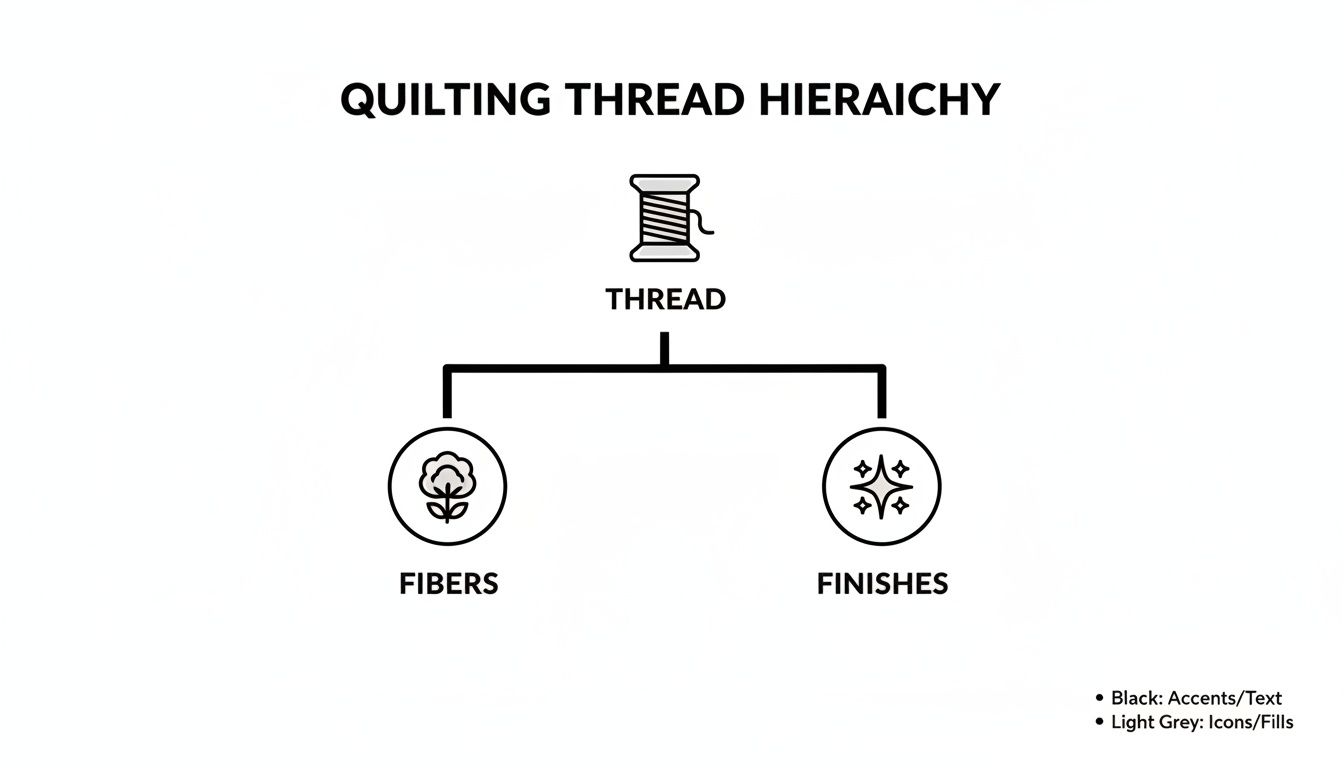
As you can see, the thread you pull from the spool is a product of both its raw material and its surface treatment, which together define its character.
What kind of look are you going for with your quilting? Your answer will point you to the right thread weight:
- For Subtle Texture: If you want your quilting to blend in and create a soft, crinkly texture, stick with that same 50wt thread. It will secure the layers beautifully without distracting from your piecing.
- For Gentle Definition: A 40wt thread is just a little bit thicker, making it perfect when you want your stitches to be more visible. It gives your quilting design a lovely, subtle definition.
- For a Bold Statement: When you want the quilting itself to be a major design element, go bold with a heavier thread. A 28wt or even a 12wt thread creates a thick, satisfying stitch that really stands out, especially for decorative machine quilting or big-stitch hand quilting.
Think of thread weight as the volume control for your quilting stitches. A 50wt is a soft whisper that creates texture, while a 12wt is a loud, clear voice that demands to be seen and admired.
By understanding this simple inverse relationship, you're in the driver's seat. You get to decide if your stitches will be quiet workhorses or the celebrated stars of the show.
How to Pair Needles and Adjust Machine Tension
Even the most beautiful, high-quality quilting cotton thread can become a source of major frustration if it isn’t paired with the right needle and machine settings. I like to think of them as a team of three—thread, needle, and machine. If one isn't pulling its weight, the whole project can start to unravel.
Getting these three elements to work in harmony is the real secret to those flawless, beautiful stitches we all strive for.
The first, and maybe most important, step is picking the right needle. Your thread has to glide through that tiny needle eye thousands upon thousands of times. If the eye is too small, it creates friction that will shred, fray, and eventually snap your thread. It’s a recipe for a headache.
A good rule of thumb is that your thread should take up about 40% of the needle's eye. This gives it just enough room to move freely without getting roughed up.
Selecting the Right Needle Type
Needles aren’t a one-size-fits-all situation. While a Universal needle might get the job done in a pinch, you'll see a huge difference when you use a needle designed specifically for quilting.
- Universal Needles: These are the jacks-of-all-trades. They have a slightly rounded point that works for a lot of fabrics, but they aren't specialized enough for the demands of quilting.
- Quilting Needles: These are your best friend for both piecing and quilting. They have a special tapered point that pierces through multiple layers of fabric and batting cleanly, which means less fabric damage and much more even stitches.
- Microtex (Sharp) Needles: With their extra-fine, sharp point, these are my go-to for precision work. They’re fantastic for piecing with those lovely high-thread-count cottons or for getting perfectly straight topstitching.
And here’s a tip from experience: change your needle often! A fresh needle for every new quilt is a small investment that pays off big by preventing skipped stitches and fabric snags. A dull needle is one of the most common culprits behind breaking thread.
Balancing Your Machine Tension
With the right needle in place, it's time to talk about tension. Honestly, machine tension is just a gentle tug-of-war between your top thread and your bobbin thread. When the tension is perfectly balanced, those two threads meet right in the middle of your fabric layers, creating a stitch that looks identical on both the top and the bottom.
Think of it like this: your top and bobbin threads should be shaking hands perfectly in the center of your fabric. If the top thread is yanking the bobbin thread upward, your top tension is too tight. If the bobbin thread is pulling the top thread down, it’s too loose.
Here’s a quick guide to spotting and fixing an imbalance:
- Spotting "Railroad Tracks": If you see little dots of your bobbin thread showing on the quilt top, your top tension is probably too tight. Try lowering the tension setting in very small steps (for example, from a 4.5 down to a 4.2).
- Looking for Loops Below: If you flip your project over and see messy loops of the top thread on the back, your top tension is too loose. Nudge the tension setting up just a bit.
Before you ever touch your main project, always test your settings on a small "quilt sandwich" made from scraps of the exact same fabric and batting. Patience is key here—making tiny, gradual adjustments is how you'll dial in that perfect, frustration-free stitch.
Choosing Thread Colors to Enhance Your Quilt
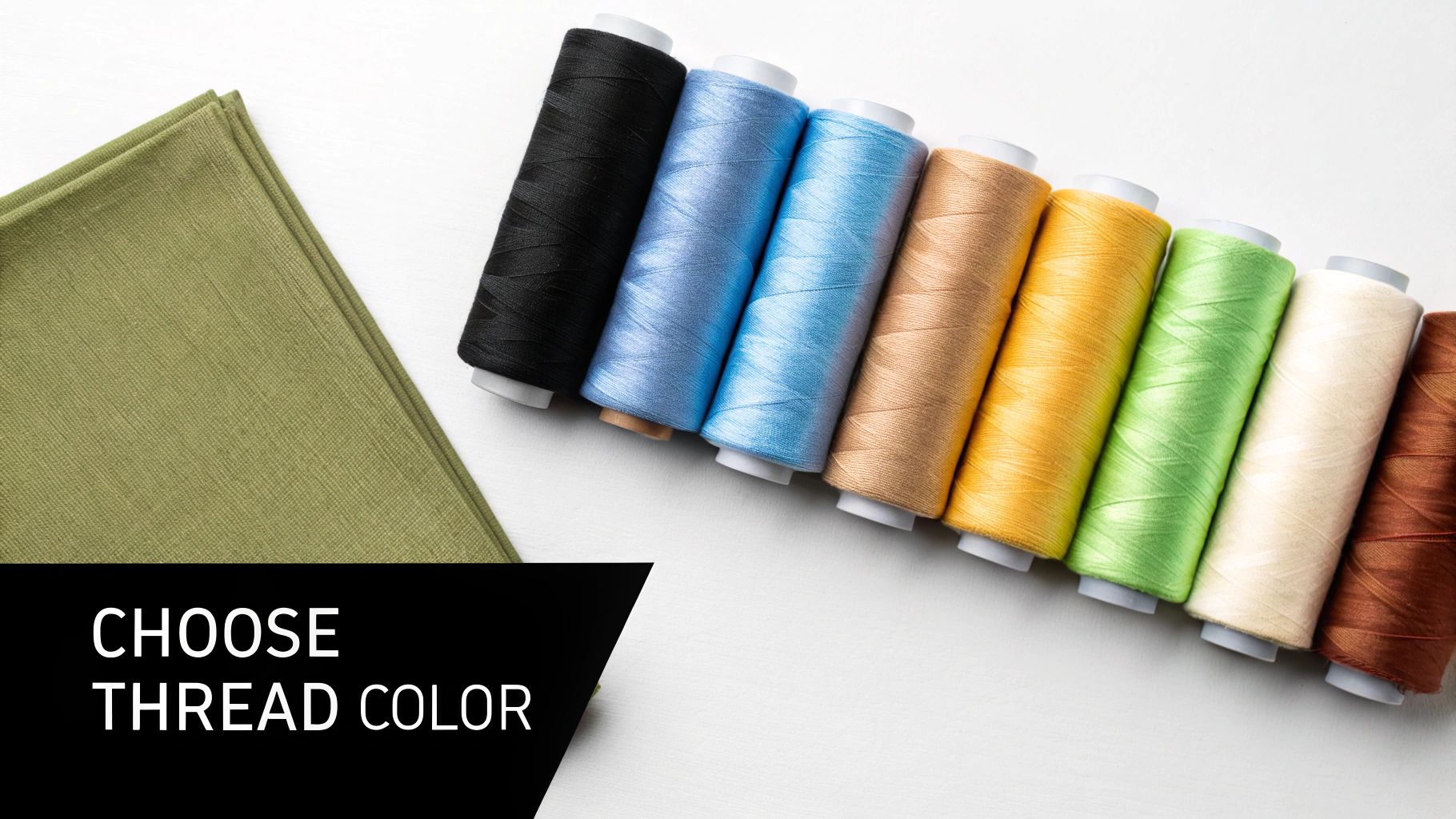
Alright, we've navigated the technical stuff about fibers and weights. Now for the fun part—color! This is where you really get to play and let your personality shine through. Picking the right color for your quilting cotton thread is what elevates a quilt from a functional blanket to a piece of art.
For piecing your quilt top together, the rule of thumb is to make the thread disappear. Your best bet is almost always a neutral color. Tones like light gray, beige, or off-white are workhorses because they blend right into the seam allowances of most fabrics without showing through. A good neutral thread for piecing is like a great actor in a supporting role—it does its job perfectly without stealing the show.
Strategies for Your Quilting Stitches
When it’s time to quilt the layers together, the thread you choose for those top stitches can completely transform the final piece. You've got a few different paths you can take, and each one creates a totally different vibe.
- Blending for Texture: If you want that soft, crinkly texture to be the main event, pick a thread that matches your fabric. This lets the quilting design add subtle depth and dimension, while the patchwork of your quilt top remains the star.
- Contrasting for Pop: Want your quilting stitches to make a statement? Go bold with a contrasting color. A light thread on a dark background (or the other way around) makes every single stitch pop, showcasing your intricate quilting pattern.
- Variegated for Dynamics: For a fun, artistic effect, grab a spool of variegated thread. This type of thread changes color every few inches, which adds a beautiful, flowing energy across your quilt. It's a fantastic way to tie together all the different colors in your fabric.
Think of your quilting thread as the final brushstroke on a painting. It can either whisper in the background to create subtle texture or shout from the foreground to become a key feature of the design.
Building Your Thread Collection
As you get deeper into quilting, you'll find your thread collection starts to grow all on its own. It's a natural part of the craft, and it reflects a bigger trend! The global quilting market was valued at about USD 6.2 billion in 2024 and is expected to climb to USD 9.4 billion by 2032, fueled by people like us who love creating unique things for our homes. You can even read more about quilt market trends if you're curious about how our hobby is growing worldwide.
To build a solid thread stash without getting overwhelmed, just start with the basics. Get a few spools of high-quality, 50wt cotton thread in essential neutral shades: white, cream, light gray, and dark gray or black. That handful of spools will handle almost all your piecing needs. After that, you can slowly add colors that you find yourself drawn to or that match the fabric you buy most often.
Let's Play Detective: Solving Common Thread Problems
We've all been there. You're in the zone, piecing together a beautiful quilt top, and suddenly your machine throws a fit. It feels personal, but trust me, the solution is usually a simple fix. Let's walk through the three most common frustrations quilters face with their thread: constant breaking, a storm of lint, and dreaded fabric puckering.
Why Is My Thread Constantly Breaking?
There's nothing that kills your sewing rhythm faster than the constant snap of breaking thread. Before you get frustrated and blame the thread spool, take a deep breath and check your setup. Most of the time, the thread isn't the real culprit.
- The Number One Suspect: Your Needle. I can't say this enough: a dull needle is the enemy of good stitches. After hours of work, that tiny point gets worn down and starts punching jagged holes in your fabric instead of piercing it cleanly. That extra friction is often what shreds and breaks your thread. A fresh needle for every new quilt is a small investment that prevents big headaches.
- Tension Troubles. If your top thread tension is cranked up too high, it's literally stretching the thread to its breaking point with every single stitch.
- A Wrong Turn. Take a moment to re-thread your machine from scratch. It's surprisingly easy for the thread to pop out of a guide, creating just enough drag to cause a snap.
Taming the Lint Monster
Let's get one thing straight: lint is a completely normal byproduct of sewing with cotton thread. Since cotton is a natural staple fiber (made from lots of short pieces spun together), some of those tiny fibers will always work their way loose.
However, if your machine looks like it's been snowing inside, you've got a problem. Too much lint can jam up your machine and mess with your stitch quality.
Think of your sewing machine's bobbin area like the lint trap in your dryer. You have to clean it out regularly! This isn't optional—it's essential maintenance that keeps your machine humming along happily.
Get into the habit of grabbing a small, soft brush and giving the bobbin case and feed dogs a quick sweep after every few bobbins. While higher-quality, long-staple cotton threads produce less fuzz, no 100% cotton thread is truly lint-free.
How to Stop Fabric From Puckering
You know that awful moment when you pull your fabric away from the needle and see it's all bunched and rippled? That's puckering, and it's almost always a sign of a tension imbalance.
Puckering is basically a tug-of-war between your top thread and your bobbin thread. If the stitches are gathering up your quilt top, it's a safe bet that your top tension is the bully, pulling way too tight.
Try lowering your top tension setting one number at a time, stitching on a scrap of fabric after each adjustment. Keep going until your stitches lie perfectly flat. Sometimes, a stitch length that's too short can also cause bunching, so try making your stitch just a little bit longer to give the thread more room to settle into the fabric.
Got Questions About Cotton Thread? We've Got Answers.
When you're diving into the world of quilting, a few common questions always seem to pop up. Let's tackle some of the ones we hear most often so you can choose your thread with confidence and get back to sewing.
Can I really use all-purpose polyester thread for my cotton quilt?
You can, but it’s not always the best idea for a quilt you hope becomes a family heirloom. Think of it this way: cotton fabric and quilting cotton thread are like old friends. They age together, they shrink at about the same rate, and they wear gracefully over time.
Polyester, on the other hand, is much stronger. Over decades of washing and loving use, that tough polyester thread can actually act like a tiny saw, slowly cutting through the softer cotton fibers of your quilt. For seams that press crisp and flat and play nicely with your fabric for years to come, a 50wt cotton thread is still the top choice for piecing.
My cotton thread is so linty! Am I doing something wrong?
Not at all! Lint is just part of the deal when you're working with cotton. Cotton is a staple fiber, which means it's made from lots of short, natural fibers spun together. A little bit of shedding is completely normal. While higher-end, long-staple cotton threads will definitely produce less lint, you’ll never find a 100% cotton thread that's totally lint-free.
Think of your machine's bobbin case like the lint trap in your dryer. It's designed to catch fluff! Just give it a quick sweep with a small brush after every few bobbin changes to keep your stitches looking clean and prevent any tension troubles.
I'm just starting out. What's the one thread I should buy?
If you're building your first quilting toolkit and want one spool that does it all, you can't go wrong with a high-quality 50wt 100% cotton thread in a neutral color. A nice medium gray, a soft cream, or a warm beige will be your new best friend.
This single spool is a true workhorse. It’s perfect for piecing because neutral colors blend right into the seam allowance of almost any fabric you choose. Plus, you can use that same thread for the actual quilting stitches if you’re going for a subtle, textural finish where the stitches blend in. It's the most versatile choice for getting your first few projects under your belt.