


Your Guide to Free Sewing Lessons for Beginners
Thinking about picking up sewing but worried about the cost of classes? Good news: you can absolutely learn to sew without spending a dime on lessons. The internet is brimming with high-quality, free sewing lessons from passionate creators who genuinely want to help you get started.
This guide will point you straight to the best resources out there.
Start Your Sewing Journey Without Spending a Dime
The dream of making your own clothes or custom home decor is exciting, but formal classes can definitely feel like a barrier. Thankfully, that barrier has all but disappeared. There's a huge community of skilled sewists sharing a wealth of knowledge online, simply because they love what they do.
This isn't about sifting through low-quality videos. We're talking about tapping into a vibrant, global community. The rise of free tutorials on platforms like YouTube and dedicated sewing blogs has empowered millions to learn from home—a trend that exploded as people looked for new creative outlets. It's a testament to the massive demand for accessible, high-quality sewing education.
Where to Find the Best Free Resources
Knowing where to look is half the battle. Instead of getting lost in a sea of random search results, it's best to focus on platforms known for their clear, reliable instruction.
Here’s where I’d recommend starting:
- YouTube Channels: This is your visual classroom. The key is to find creators who provide crystal-clear, close-up shots of their machine and hands. Look for channels that offer a dedicated "beginner series" and explain concepts slowly and thoroughly.
- Sewing Blogs: Don't underestimate the power of a good blog. Many experienced sewists run sites packed with photo-heavy tutorials, free patterns, and detailed explanations of techniques that videos sometimes skim over.
- Online Sewing Communities: Joining a group on Facebook or a subreddit like r/sewing gives you a place to ask those "silly" beginner questions, show off your first wobbly stitches, and get a ton of encouragement from people who've been there.
A great free tutorial doesn't just show you what to do—it explains why you're doing it. Understanding the logic behind a technique is what really builds skill and gives you the confidence to tackle new projects.
For a fantastic all-in-one starting point, check out these free sewing lessons tailored for beginners, which walk you through everything from setting up your machine to mastering essential stitches. And, of course, our own guide provides a complete roadmap for finding the best free sewing lessons to get your creative journey off the ground.
Where to Find the Best Free Sewing Lessons
Here's a quick look at the top online platforms offering quality, free sewing tutorials and resources perfect for beginners.
| Platform Type | What You Will Find | Best For |
|---|---|---|
| YouTube | Video tutorials, sew-alongs, machine reviews, beginner series. | Visual learners who need to see techniques in action. |
| Sewing Blogs | Photo tutorials, free downloadable patterns, in-depth articles. | Detailed, step-by-step instructions you can reference at your own pace. |
| Online Communities | Q&A forums, project showcases, peer support and encouragement. | Getting quick answers to specific problems and connecting with others. |
These platforms offer different learning styles, so I always recommend exploring all three to see what combination works best for you.
Getting Your Sewing Toolkit Together Without Breaking the Bank
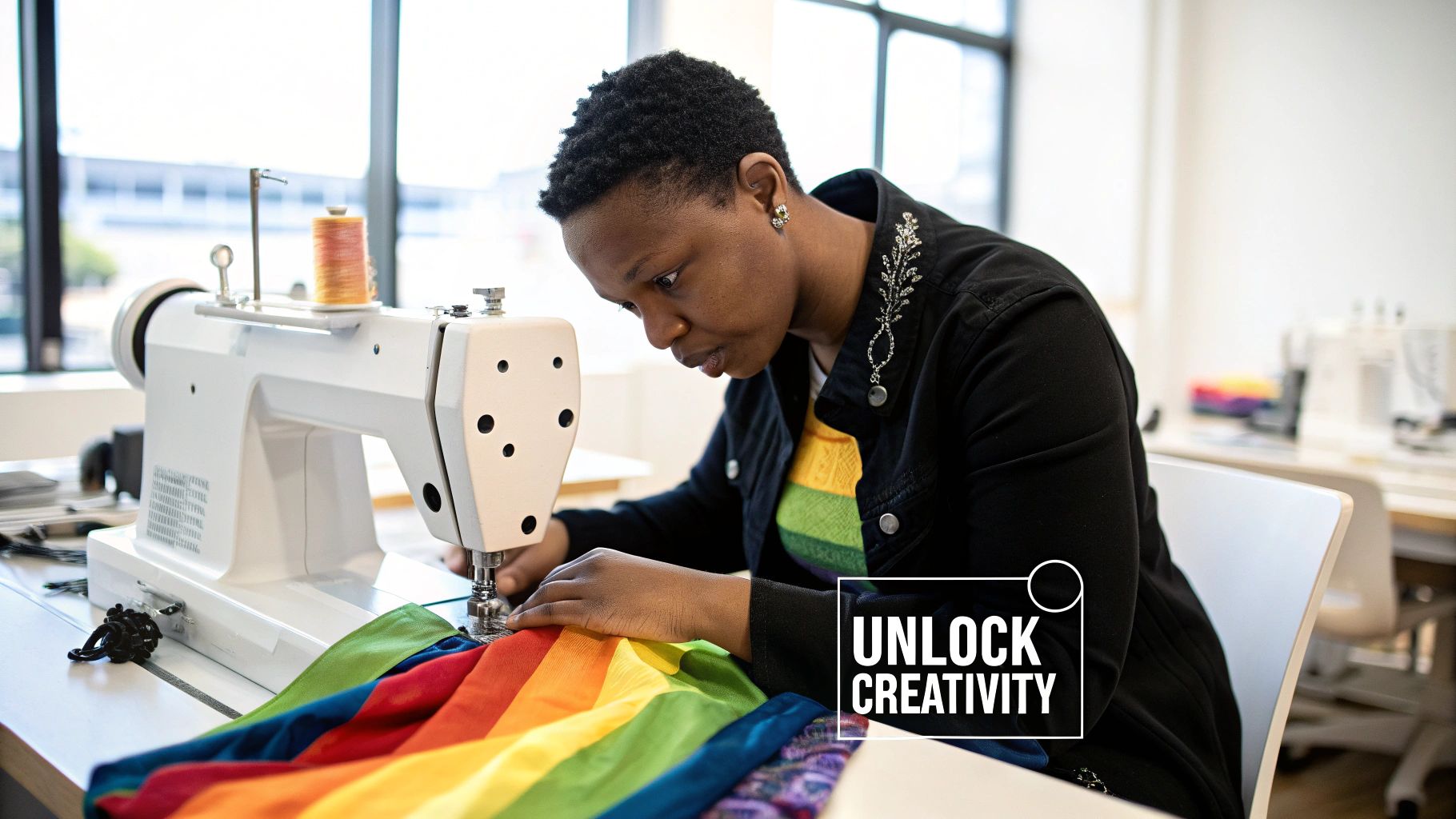
So, you've found some amazing free lessons, which is fantastic! But to actually start sewing, you're going to need a few tools. The great news is you don’t have to spend a fortune to get started. It’s all about focusing on the essentials—the workhorse items you'll reach for on every single project.
Think of it this way: the free sewing lessons teach you the how, but your tools are what let you actually do. You can build a solid beginner's kit with a surprisingly small investment.
The Non-Negotiable Basics
Let's cut right to the chase. These are the core items you absolutely need to get started on the right foot.
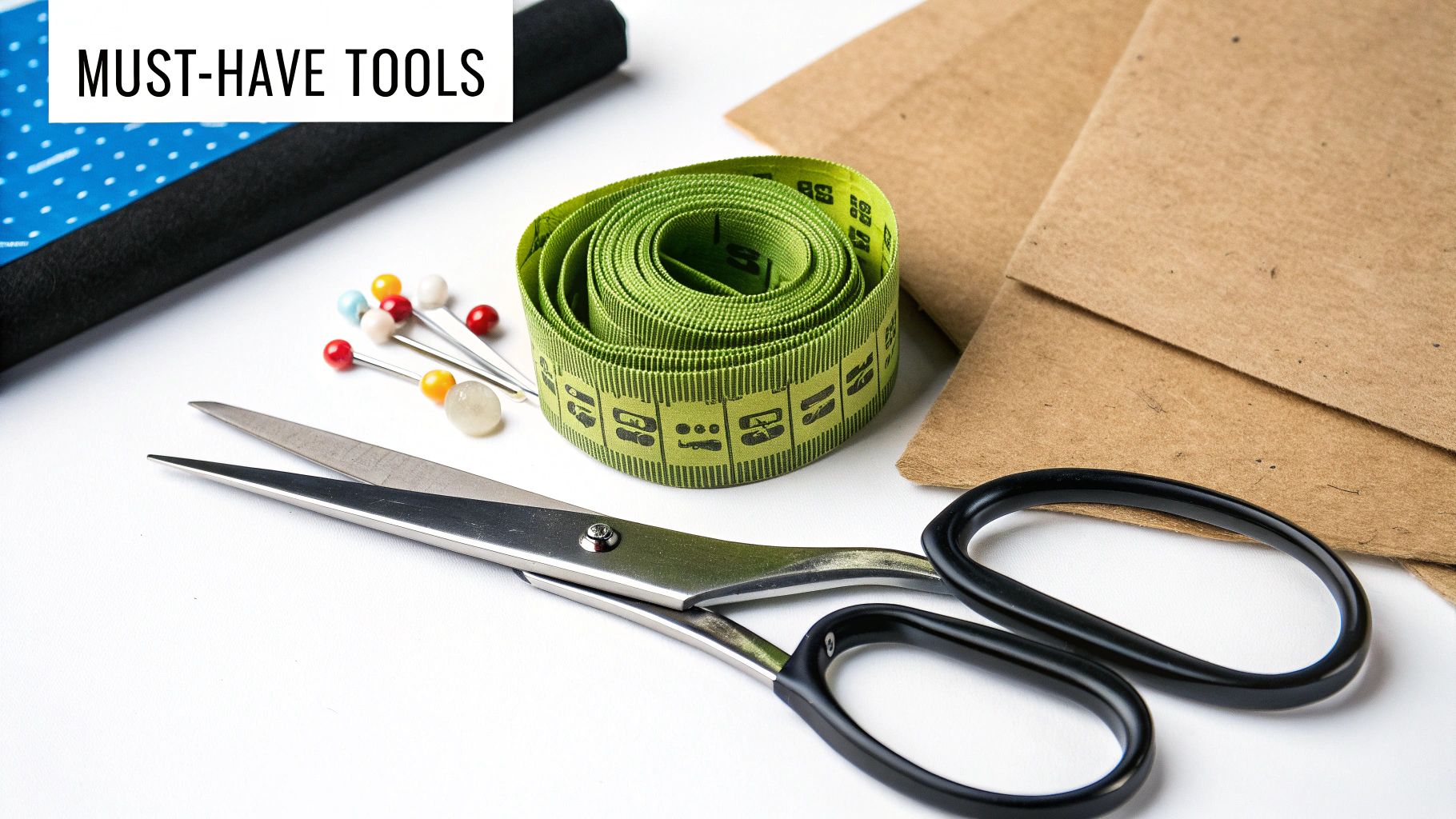
- Fabric Scissors: This is one tool where you don't want to skimp. A good, sharp pair of scissors used only for fabric is your most important purchase. They’ll give you clean, snag-free cuts every time. And please, hide them from anyone who might be tempted to use them on paper!
- Seam Ripper: Trust me on this one—you will make mistakes. Everyone does. A seam ripper will become your best friend for carefully picking out stitches without ruining your fabric. It's a lifesaver.
- Measuring Tape: You'll need a flexible measuring tape for everything from taking body measurements to measuring curves on a pattern. It’s a must-have for accuracy.
- Pins or Clips: These are essential for holding your fabric pieces together while you sew. I find that a lot of beginners prefer clips because they're a bit easier and faster to handle than traditional straight pins.
My best advice? Don't feel pressured to buy the fanciest, most expensive tools right out of the gate. A solid, budget-friendly set will do the job perfectly while you're learning. Spend your money on quality scissors, and you can be more thrifty with the rest.
What About a Sewing Machine?
The sewing machine often feels like the biggest financial hurdle, but it really doesn't have to be. There are plenty of reliable, entry-level machines that won't drain your wallet.
If your budget is extra tight, start looking on local online marketplaces or ask around in neighborhood groups. You'd be surprised how many people have a perfectly good machine collecting dust after they've upgraded. You might even find someone giving one away for free!
Once you’ve gathered these basic supplies, you’ll be all set to dive in. For a complete guide on where to start learning, check out our list of the best free sewing lessons you can find online.
Mastering the Core Skills of Sewing
You've got your basic toolkit, and now for the really fun part—learning to actually sew. Don't get overwhelmed by the fancy projects you see online. Every single one, from a simple tote bag to a tailored jacket, is built on just a handful of foundational skills. Getting these right is your first real milestone, and any good free sewing lessons will drill these basics into you from the start.
Your sewing machine is going to be your best friend, so it’s worth taking some time to get properly acquainted. Your first task is figuring out how to thread it and wind a bobbin. Most modern machines have helpful diagrams printed right on them, but I find that watching a slow-motion video of someone doing it can make all the difference when you're just starting out.
Building Your Stitching Confidence
Before you even think about fabric for a real project, grab some scraps. Seriously. The goal here isn't to make anything; it's to get a feel for the machine. Practice sewing straight lines. Then try some gentle curves. See if you can pivot perfectly at a sharp corner. This is all about building muscle memory and learning how the machine speeds up or slows down when you press the foot pedal.
You'll quickly find that two stitches do most of the heavy lifting:
- The Straight Stitch: This is your go-to. It's the stitch you'll use for probably 90% of your seams. Play around with the stitch length setting to see how a longer or shorter stitch looks and behaves.
- The Zigzag Stitch: This one is a lifesaver for finishing raw edges of fabric to stop them from unraveling in the wash. It's also fantastic for sewing with stretchy knits that need a bit of give.
Here's a tip I give every beginner: control your speed. Sewing isn't a race. A slow and steady pace will give you way more control and accuracy than flooring it. You'll end up with much neater seams and a lot less frustration.
Once you get the hang of the stitches, you'll see that almost every project follows the same basic workflow. It’s a simple, logical process that takes you from flat fabric to a finished piece.
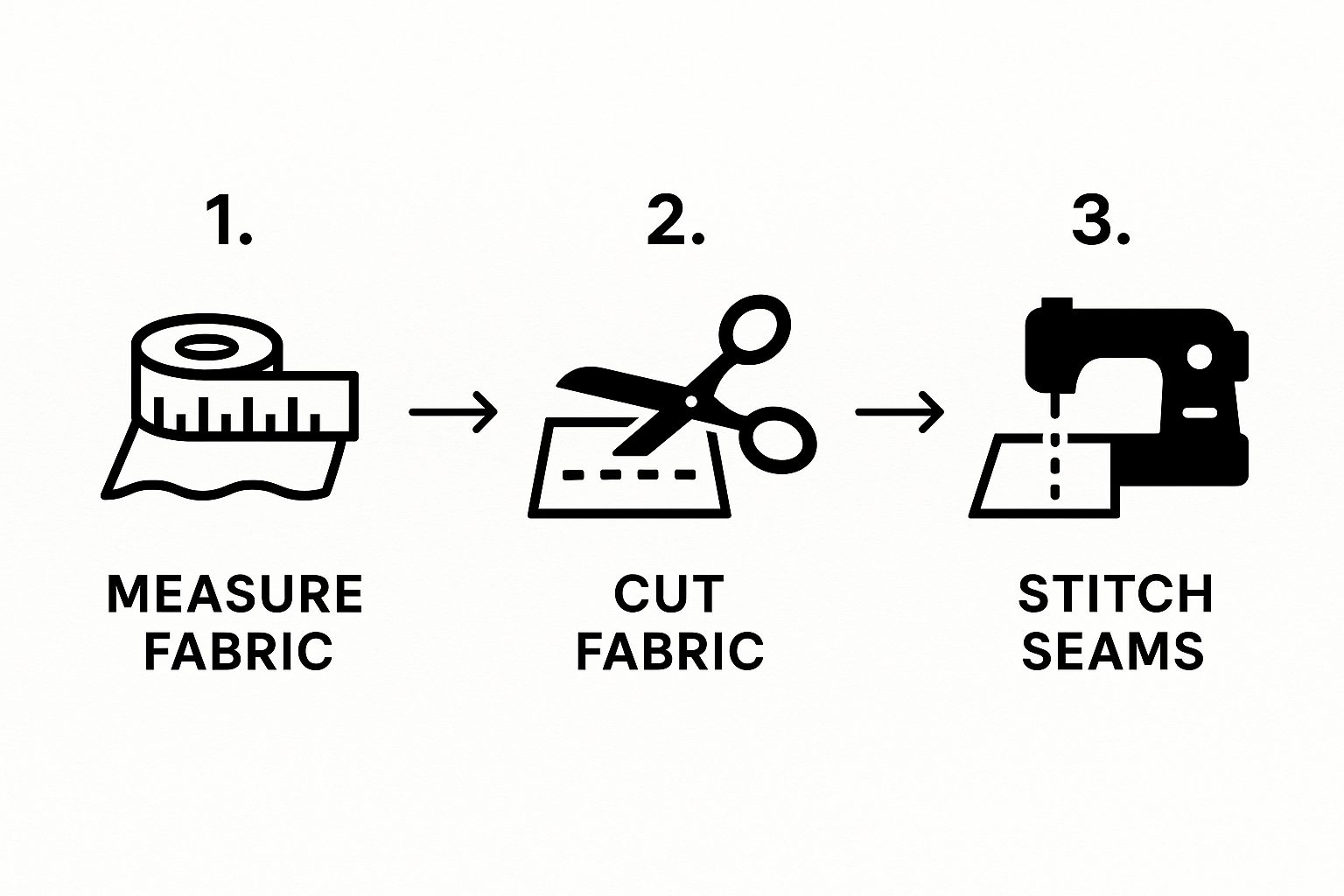
As the visual shows, it’s all about a logical sequence: you prep, you cut, you sew. Once you're comfortable with this rhythm, you can start exploring more essential sewing techniques that will open up a whole new world of creative possibilities.
And please, don't let sewing patterns intimidate you! They’re just blueprints for your project. To start, just focus on understanding the main symbols—the cutting lines, the seam allowance guides, and the grainline arrow. Plenty of free patterns are specifically created for beginners and include fantastic, detailed instructions.
If you're looking for a curated list of the best tutorials and resources, we've put together a complete guide to finding top-notch https://www.famcut.com/blogs/tips-and-tricks/free-sewing-lessons online.
Your First Projects with Free Patterns
Watching videos and reading tutorials is great, but let's be honest—sewing is all about doing. This is where the real fun begins, turning all that new knowledge into something you can actually hold and use. Nothing beats the feeling of finishing that first real project.
The secret to a great start is picking projects designed with beginners in mind. You're looking for something that uses a small amount of fabric and focuses on the absolute essentials you've been learning in your free sewing lessons: sewing straight lines and finishing raw edges. Master those two things, and you're well on your way.
Perfect Starter Projects with Free Patterns
Don't dive into something overly complicated right away. You want a win! Picking something simple and exciting is the best way to build momentum.
Here are a few classic first projects that are perfect for getting your confidence up:
- Simple Tote Bag: This is the quintessential first project for a reason. It's mostly just sewing a few rectangles together, which gives you amazing practice with long, straight seams and hemming.
- Envelope-Back Pillowcase: A pillowcase comes together so quickly, and the instant gratification is fantastic. The envelope-back style is even better because you don't have to fuss with zippers or buttons just yet.
- Easy Pajama Pants: This is a great way to dip your toes into garment sewing. You'll learn how to work with a basic pattern and create a simple casing for an elastic waistband.
A successful first project isn't about perfection; it's about completion. Choosing something simple ensures you'll get to the finish line, boosting your confidence to take on the next challenge.
Once you’ve settled on an idea, it’s time to find a great free pattern. You’ll find tons of reliable, well-tested options on sewing blogs and fabric company websites. They usually come with super clear instructions made just for people starting out. This is where the skills you’ve learned from various free sewing lessons truly come to life.
And hey, while you’re getting into the groove with your sewing machine, don’t forget about other needlecrafts! Exploring something like embroidery can be a relaxing, portable hobby. You can find some fantastic starter resources in these Top Sites for Free Embroidery Patterns for Beginners.
How to Avoid Common Beginner Sewing Mistakes
Let's get one thing straight: every single person who has ever sat at a sewing machine has made mistakes. I’ve made them, pros make them, and you will too. The real skill isn't avoiding them entirely, but learning how to troubleshoot them without getting discouraged. Think of this as your field guide to the most common sewing hiccups.
One of the first frustrations you'll likely encounter is the dreaded "bird's nest"—that ugly, tangled mess of thread on the bottom of your fabric. It’s infuriating, but the fix is usually simple. Surprisingly, this problem almost always stems from the top thread, not the bobbin. In my experience, 9 times out of 10, it just means the machine wasn't threaded correctly.
Diagnosing Common Issues
The second you hear a strange noise or see a wonky stitch, stop. Resist the temptation to power through it. Taking a moment to diagnose the problem is the fastest way back to smooth sailing.
- Tangled Bottom Thread: Before you do anything else, unthread the machine completely and start over. Crucially, make sure your presser foot is up when you thread. This opens up the tension discs so they can properly grip the thread.
- Breaking Needles: This usually means your needle and fabric are not a good match. A universal needle is fine for basic cotton, but trying to punch it through denim is asking for trouble. Grab a denim needle for heavy fabrics, and remember to let the machine's feed dogs pull the fabric—don't force it!
- Puckered Seams: If your fabric is bunching up along the seam, your thread tension is probably too tight. Find the tension dial and lower it by one number. Always test on a scrap piece of the same fabric to see if that solves it.
The most valuable lesson in sewing is patience. Taking five minutes to re-thread your machine or swap out a needle will save you an hour of tedious seam-ripping later. Building these good habits from day one makes all the difference.
Getting comfortable with these troubleshooting steps is a massive part of your learning curve. As you work through different free sewing lessons, you'll realize that understanding your machine's quirks is just as critical as mastering stitching techniques.
To keep leveling up, check out our complete guide to finding the best tutorials and free sewing lessons available online.
Answering Your Top Questions About Learning to Sew for Free
Starting any new hobby brings up questions, and sewing is no different. Let's tackle some of the most common things people wonder about when they're just getting started with free online lessons.
How Much Time Should I Set Aside to Learn the Basics?
This really depends on you, but most people start to feel confident with the core skills after a handful of practice sessions. You won't be an expert overnight, but with consistent practice, you could easily be stitching up a simple tote bag or a pillowcase in a single weekend.
The secret isn't spending hours and hours at the machine in one go. It’s all about focused, regular practice.
Can I Genuinely Learn to Sew Just from Free Videos?
You absolutely can. Millions of people have taught themselves to sew entirely through free resources available online. The quality of free sewing lessons you can find on sites like YouTube is often fantastic.
The best channels show you clear, close-up views of what they're doing and, more importantly, explain why they're doing it. This context makes all the difference when you're learning on your own.
Remember, patience is the most important skill you'll need, not perfection. Your first seams will probably be a bit wobbly, and that's okay! Every stitch is part of the learning process.
What's the Hardest Part for a Beginner?
For many newcomers, the two biggest challenges are threading the sewing machine and getting the thread tension right. It can feel like a puzzle at first, but I promise it becomes second nature faster than you think.
My best advice? Go slow. Follow a video tutorial step-by-step and don’t be afraid to re-thread the machine a few times just for practice. Once it clicks, you'll be able to do it without even thinking.
Ready to dive in and start creating? Famoré offers all the high-quality tools you'll need, from sharp, precise scissors to reliable rotary cutters, to help bring your ideas to life. Check out our collection at https://famcut.com.