


Top picks for best sewing thread for durable, flawless seams
For years, I've heard people ask for the single best sewing thread, and the truth is, there isn't one. The real answer? It always comes down to your project. Sure, a good quality, all-purpose polyester thread in a medium weight (40wt or 50wt) will get you through most garment sewing, and 100% cotton is the gold standard for many quilters. But the secret isn't about finding one magic spool—it's about learning how to play matchmaker between your thread and your fabric.
Why Your Thread Choice Is a Project's Weakest Link
It’s easy to get swept up in gorgeous fabrics and focus on the hum of your sewing machine, treating thread as just a color to be matched. But that humble little strand is the architectural backbone holding every single seam together. Think of it like the mortar between bricks; without the right stuff, even the strongest bricks will eventually fall apart.
Picking the wrong thread is a fast track to sewing headaches. If a thread is too thick for a delicate silk, you’ll end up with ugly, puckered seams and a constant battle with your tension dials. On the flip side, use a thread that’s too flimsy for a tough material like denim, and you’ll hear that dreaded pop as the seams give way after just a few wears. The best sewing thread isn't just about color; it’s about a perfect partnership between fiber, weight, and your chosen fabric.
The Unseen Costs of Low-Quality Thread
Grabbing that bargain-bin spool might feel like you're saving a few bucks, but it almost always costs you more in time, frustration, and repairs down the road. Cheap threads are famous for a few key problems that can sabotage your work and even gunk up your machine.
- So. Much. Lint: Low-quality threads are often spun from short, loose fibers. As that thread zips through your machine, it sheds a surprising amount of lint that clogs up your tension discs and bobbin area. This leads to stitch issues and means you'll be stopping to clean your machine far more often.
- Constant Snapping: These threads simply don't have the tensile strength needed for modern machines. The constant breaking mid-seam kills your creative flow and, more importantly, creates weak seams that just won’t last.
- Uneven Thickness: Look closely at a cheap thread and you might see thick and thin spots along its length. These inconsistencies create uneven, sloppy-looking stitches and are the precise points where the thread is most likely to break under pressure.
The thread you choose is the single element that holds every piece of your project together. Investing in quality thread is an investment in the durability and professional finish of your final creation.
This focus on quality isn't just a niche concern; it's a huge global business. The sewing thread industry was valued at roughly USD 3.66 billion in 2024 and is expected to keep growing, thanks to the demand for high-performance threads in everything from fashion to car seats. You can dig deeper into the growing sewing thread market on grandviewresearch.com.
Ultimately, learning to master thread is what elevates you from someone who just sews to a true craftsperson. This guide is your roadmap to understanding the essentials, so you can walk up to any thread rack and choose the perfect spool with confidence, no matter what you plan to create.
Natural vs Synthetic Threads: What to Use and When
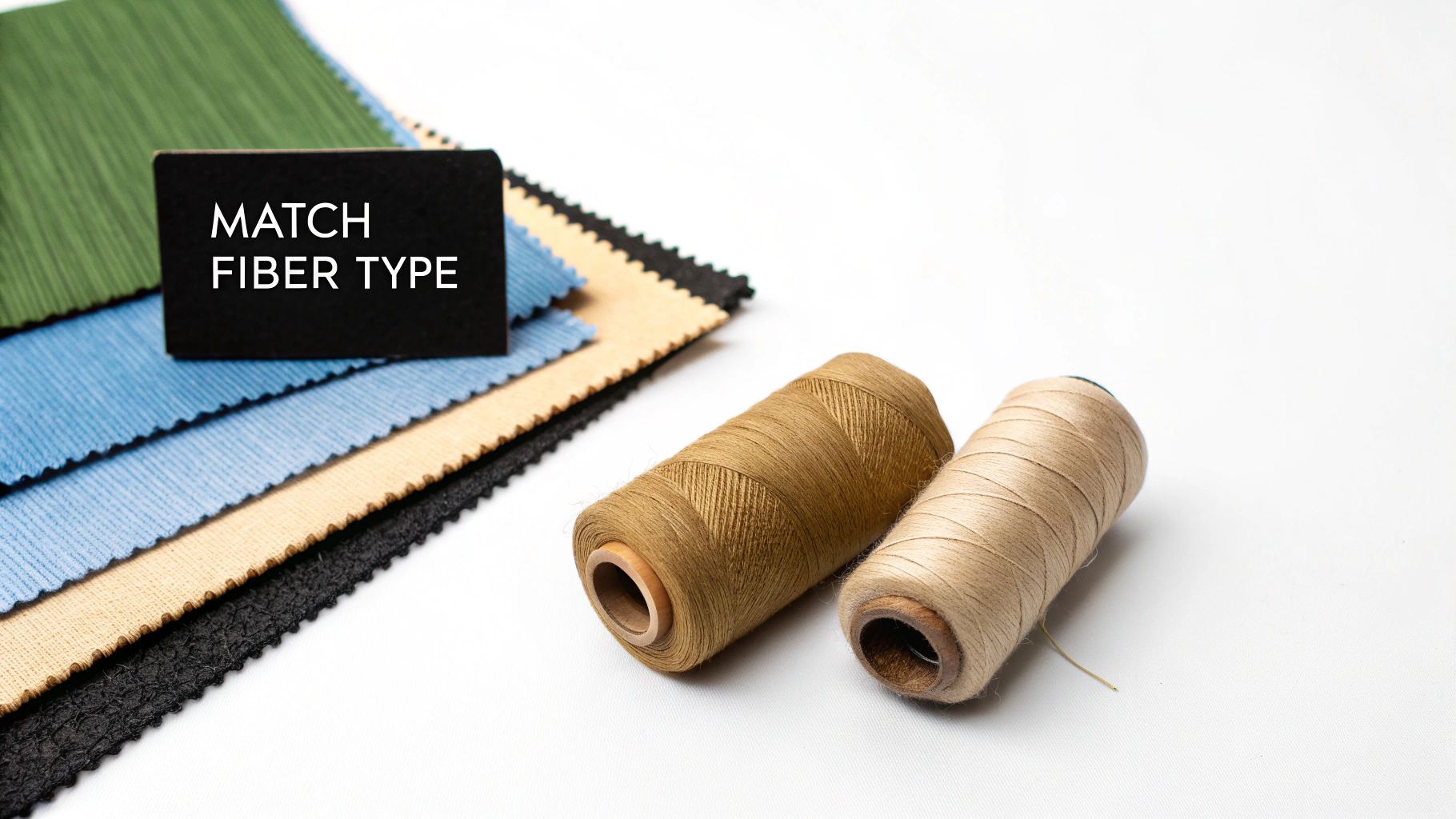
Choosing between a natural and a synthetic thread is a bit like deciding between a classic leather boot and a modern running shoe. Both are fantastic, but you wouldn't wear hiking boots to run a marathon. The world of thread is broadly split into these two families, and knowing the difference is the first step to making your projects last.
The best piece of advice I ever got was simple: match your thread fiber to your fabric fiber. Think of it as creating a happy marriage. When you sew a cotton quilt with cotton thread, or a polyester-blend workout top with polyester thread, they behave as a team. They'll shrink, stretch, and react to your iron the same way, which means your seams will stay flat and strong for years to come.
Straying from this rule isn't a disaster, but sticking to it prevents so many common headaches, like puckered seams after the first wash.
The Case for Natural Fibers
Natural threads are the old-school artisans of the sewing world. Think cotton and silk—fibers with a long history in classic tailoring, quilting, and heirloom sewing.
Cotton thread is the undisputed champion of quilting, and for good reason. It has almost no stretch, so your carefully cut quilt blocks won't get warped or distorted as you piece them together. Plus, it can take the heat from a hot iron like a pro, letting you press your seams perfectly crisp and flat.
That same lack of stretch, however, makes it a less-than-ideal choice for most clothing, where you need seams that can flex and move with you.
Key Takeaway: Stick with cotton thread for projects using natural woven fabrics like cotton, linen, or rayon. It truly shines in quilting, where precision and heat tolerance are everything.
Silk thread, another natural beauty, is incredibly fine yet shockingly strong. It has a gorgeous luster and just enough elasticity to sink into delicate fabrics like silk and wool without leaving ugly holes. It’s the go-to for hand-basting and tailoring high-end garments for a flawless finish.
The Power of Synthetic Fibers
Synthetic threads like polyester and nylon are the modern workhorses. They're engineered for pure strength, resilience, and versatility, which is why you'll find them in everything from jeans to outdoor gear.
Polyester thread is the king of all-purpose sewing today. It’s incredibly strong, resists fading from UV rays, and won't mildew. Most importantly, it has a slight bit of stretch. This little bit of "give" is exactly what you need for clothing seams that have to withstand stress and movement. Whether you're making play clothes for a toddler or sewing with stretchy knits, polyester is almost always the right call.
When choosing your thread, it helps to understand the characteristics of different apparel fabrics, since the goal is to create that perfect match.
It’s no surprise that synthetics dominate the industry. Polyester alone makes up roughly 80% of the entire global sewing thread market. Its blend of durability, elasticity, and affordability is just too good to beat for most commercial and home sewing applications.
To help you decide at a glance, here’s a quick rundown of what makes each type tick.
Natural vs Synthetic Thread Quick Comparison
| Fiber Type | Key Characteristics | Best For | Things to Consider |
|---|---|---|---|
| Natural (Cotton) | No stretch, high heat resistance, soft matte finish. | Quilting, piecing, sewing with natural woven fabrics. | Can shrink, less strength than polyester for high-stress seams. |
| Synthetic (Polyester) | Strong, durable, slight stretch, resistant to moisture/UV. | Garment construction, stretchy knits, outdoor gear, general sewing. | Can melt under a very hot iron; the slight stretch isn’t ideal for precision piecing. |
So, what’s the final verdict? The "best" thread is simply the one that’s right for your fabric and your project. By keeping spools of both high-quality cotton and all-purpose polyester in your stash, you’ll be ready for pretty much any sewing adventure that comes your way.
Cracking the Code of Thread Weight and Thickness
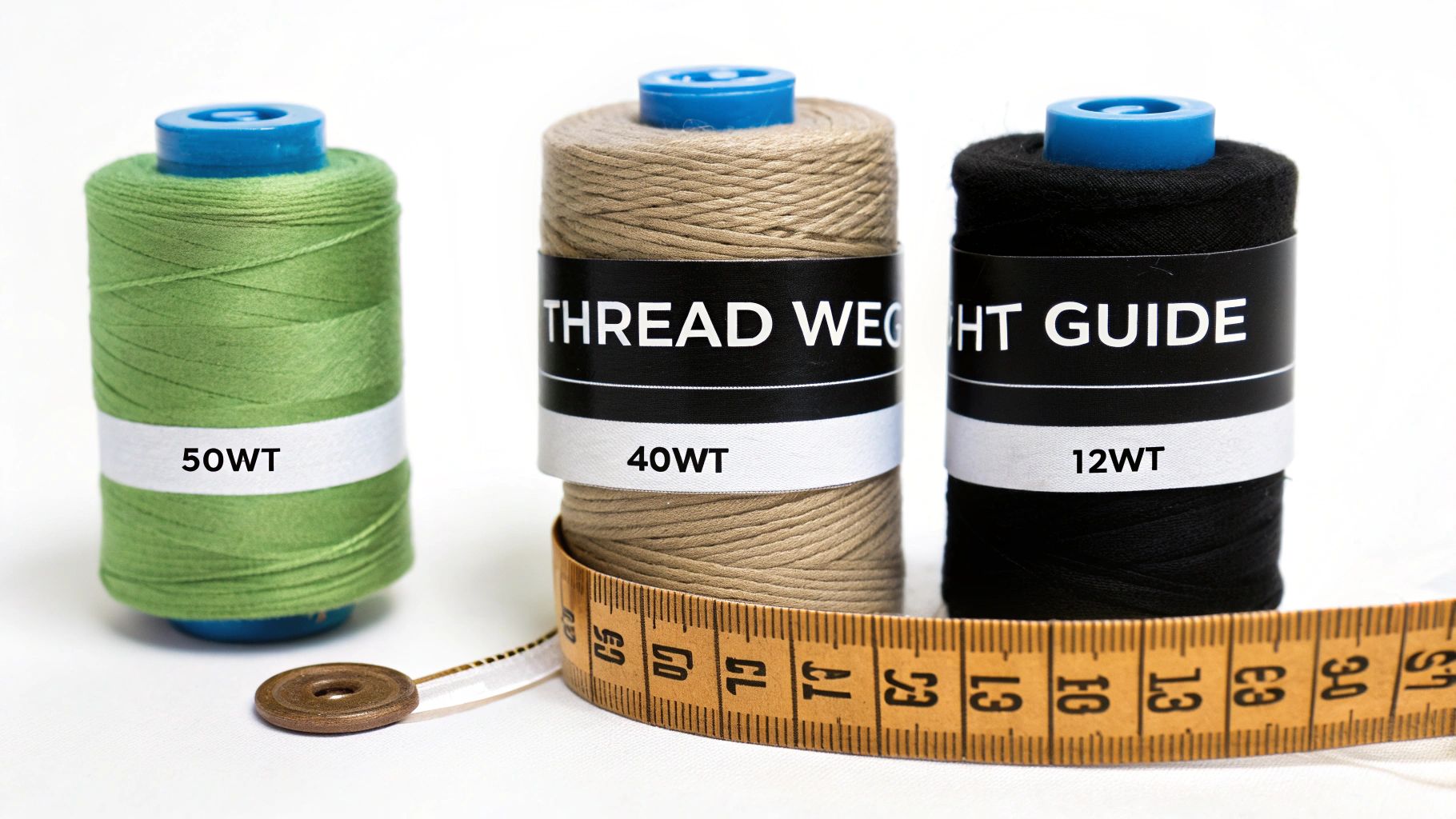
Walking into a craft store and seeing numbers like 50wt, 40wt, or 12wt on spools of thread can feel like trying to read a secret language. But once you understand what they mean, you gain an incredible amount of control over your sewing.
It’s a bit of a counterintuitive system, but here’s the most important thing to remember: the higher the number, the finer the thread. A whisper-thin 100wt thread is much finer than a standard 50wt thread. On the flip side, a low number like 30wt or 12wt means you're dealing with a much thicker, heavier thread that’s designed to be seen.
This isn't just random trivia; it has a huge impact on how your seams look, feel, and hold up over time. Nailing the right weight is a massive step toward finding the best sewing thread for whatever you're making.
Understanding the "Weight" System (wt)
That little "wt" you see on the label is the most common system for talking about thread thickness. It's based on a technical measurement of length per unit of weight, but you really don't need to get bogged down in the math.
The beauty of the weight system is that it gives you a consistent way to compare threads, even across different brands or fiber types. A 40wt cotton is going to be a similar thickness to a 40wt polyester.
Key Insight: Think of the 'wt' number as a guide to the thread's job. High numbers are for construction—the seams you don't want to see. Low numbers are for decoration—the stitches you do want to see.
Let's break down the common weights you'll actually run into and what they're good for.
- Fine Threads (60wt to 100wt): These are the specialists. They're perfect for delicate work like English paper piecing, invisible machine appliqué, and heirloom sewing on fabrics like silk or lawn. The goal here is for the stitches to practically disappear.
- Medium Threads (40wt and 50wt): Welcome to your workhorse threads. 50wt is the absolute gold standard for quilt piecing because it creates strong but very flat seams that don't add extra bulk. 40wt is a fantastic all-rounder—it's just a touch thicker, making it a durable choice for general garment sewing and machine quilting.
- Heavy Threads (30wt and below): When you want your stitches to make a statement, these are the threads you grab. A 30wt thread is wonderful for decorative topstitching on a bag or a pair of jeans. Go all the way down to a chunky 12wt, and you've got the perfect thread for bold hand quilting, Sashiko, or prominent buttonholes.
How Ply Affects Thread Strength
While weight tells you about thickness, you might also see the term "ply." This simply tells you how many individual strands are twisted together to make the final thread. A 2-ply thread is made of two strands, a 3-ply is made of three, and so on.
Think about twisting yarn. A single strand is easy to pull apart, but when you twist three of them together, you get a much stronger rope. The same principle applies here. A 3-ply thread will almost always be stronger and rounder than a 2-ply thread of the exact same weight. This matters because a rounder, smoother thread tends to glide through your machine more consistently, leading to prettier stitches.
For instance, a 50wt, 2-ply thread is a favorite among quilters because it’s a bit finer and creates exceptionally flat seams. On the other hand, a 50wt, 3-ply thread gives you a bit more strength and durability, making it a great choice for seams that need to stand up to more stress.
Ultimately, getting a handle on thread weight is about moving beyond just matching a color. It’s about making a deliberate choice—do I want this thread to blend in or stand out? This is what gives you the power to bring your creative vision to life with real precision.
Understanding How Thread Is Made and Finished
Have you ever picked up two spools of thread that look almost identical—same fiber, same weight—but one sews like a dream while the other is a nightmare of shredding and tangling? The secret isn't in the color; it's in the construction and finish. This is the behind-the-scenes engineering that gives a thread its unique personality.
These choices, from the way fibers are twisted together to the final coating they receive, are what separate a high-quality thread from a frustrating one. They’re the result of decades of innovation, evolving right alongside the textile industry itself.
For centuries, thread was simple, made from natural fibers like cotton or silk. But the 20th century brought a wave of synthetics like polyester, completely changing the game with incredible new levels of strength and resilience. It's a massive industry—the sewing thread market alone is valued at around USD 2.19 billion for 2025. You can dig deeper into the numbers on the global thread market.
How Thread Construction Affects Performance
Think of a thread’s internal structure as its DNA. It determines how the thread will behave under pressure, and the three main construction methods each create a thread with a very different feel and function.
- Spun Thread: This is made just like traditional yarn. Short, staple fibers are twisted together to form a single strand. This construction gives it a slightly fuzzy, matte look. That fuzziness helps it grip the fabric nicely, but it’s also what creates lint in your machine. Classic spun cotton is the perfect example, loved for its traditional feel and easy handling.
- Filament Thread: The complete opposite of spun thread. This type is made from one single, long, continuous strand of fiber, almost like a fishing line. Filament threads (usually polyester) are incredibly strong and smooth, with a noticeable sheen. Because there are no short fibers to shed, they are a fantastic low-lint choice, but their slickness means you need to lock your stitches well to prevent unraveling.
- Corespun Thread: This is the hybrid hero of the thread world. It’s built with a super-strong filament polyester core that’s then wrapped in a cozy blanket of spun cotton or polyester fibers. What you get is the best of both worlds: the powerhouse strength of the filament core combined with the soft feel and sewability of a traditional spun thread. It’s an unbeatable all-rounder for everything from dressmaking to sturdy upholstery.
The Finishing Touches That Matter
Once a thread is spun and plied, it often gets a final treatment. These finishes aren't just for show—they can completely change how a thread behaves in your machine and how durable the final seam will be.
A thread's finish is like the clear coat on a car. It protects the core structure and provides a smooth, tough surface that helps it perform flawlessly under stress.
Knowing about these finishes helps you pinpoint the absolute best sewing thread for tricky or demanding jobs. Sometimes, that little extra treatment is the key to success.
Common Thread Finishes and Their Uses
Here are a couple of the most common finishes you’ll come across and why they are so important for specific projects.
- Mercerization: This is a chemical bath just for cotton threads. The process swells the cotton fibers, making them rounder, stronger, and much smoother. The most noticeable benefit, though, is how it boosts the thread’s luster and allows it to soak up dye more evenly, giving you much richer and more vibrant colors. Most of the high-quality cottons you buy for quilting have been mercerized.
- Glazing or Bonding: Ever used a thread marked "hand quilting" or "heavy duty"? You've probably felt a glazed finish. A special resin or starch is applied that locks all the stray fibers down, creating a stiff, almost waxy surface. This allows the thread to glide through tough materials like canvas or leather without shredding and makes it incredibly resistant to tangling when you’re sewing by hand. But here’s a crucial warning: never use glazed thread in your sewing machine. The coating will flake off and gum up your tension discs and other internal parts, leading to a costly repair bill.
Getting a handle on these details—from the core construction to the final finish—is what really takes your sewing to the next level. It lets you look past just the color on the spool and choose a thread that’s truly engineered to make your project a success.
A Practical Guide to Choosing Thread for Any Project
Now that we’ve covered the fundamentals of fibers, weights, and finishes, it’s time to put that knowledge to work. Picking the right thread doesn't have to feel like a guessing game. In fact, you can narrow down the perfect choice every single time by asking just three simple questions before you even make your first cut.
Think of this as your mental checklist. Running through it ensures your thread is a perfect partner for your fabric—not just in color, but in strength, stretch, and overall behavior.
The Three Core Questions to Ask
Before you dive into a new project, take a moment to ask yourself these questions. The answers will point you straight to the best spool on your rack.
- What is my fabric made of? This is the golden rule of thread matching. Sticking to the same fiber family prevents all sorts of headaches down the line, especially with puckering after a wash. If you're sewing with cotton, reach for a cotton thread. Working with a synthetic knit? A synthetic thread with a bit of give is your best bet.
- How heavy is my fabric? The weight of your fabric directly determines how thick your thread should be. A wispy silk chiffon would be completely overwhelmed by a heavy thread, so you need something fine and delicate. On the other hand, a rugged canvas tote bag needs a thick, tough thread that can handle the stress.
- What is this project’s purpose? You have to consider the life your finished project will lead. A decorative wall quilt has very different demands than a pair of toddler play pants destined for mud puddles and rough-and-tumble play. Think about durability, flexibility, and whether the stitches are meant to be seen or to disappear.
The infographic below shows how different thread constructions are designed for specific jobs, whether you need strength, a smooth finish, or something else entirely.
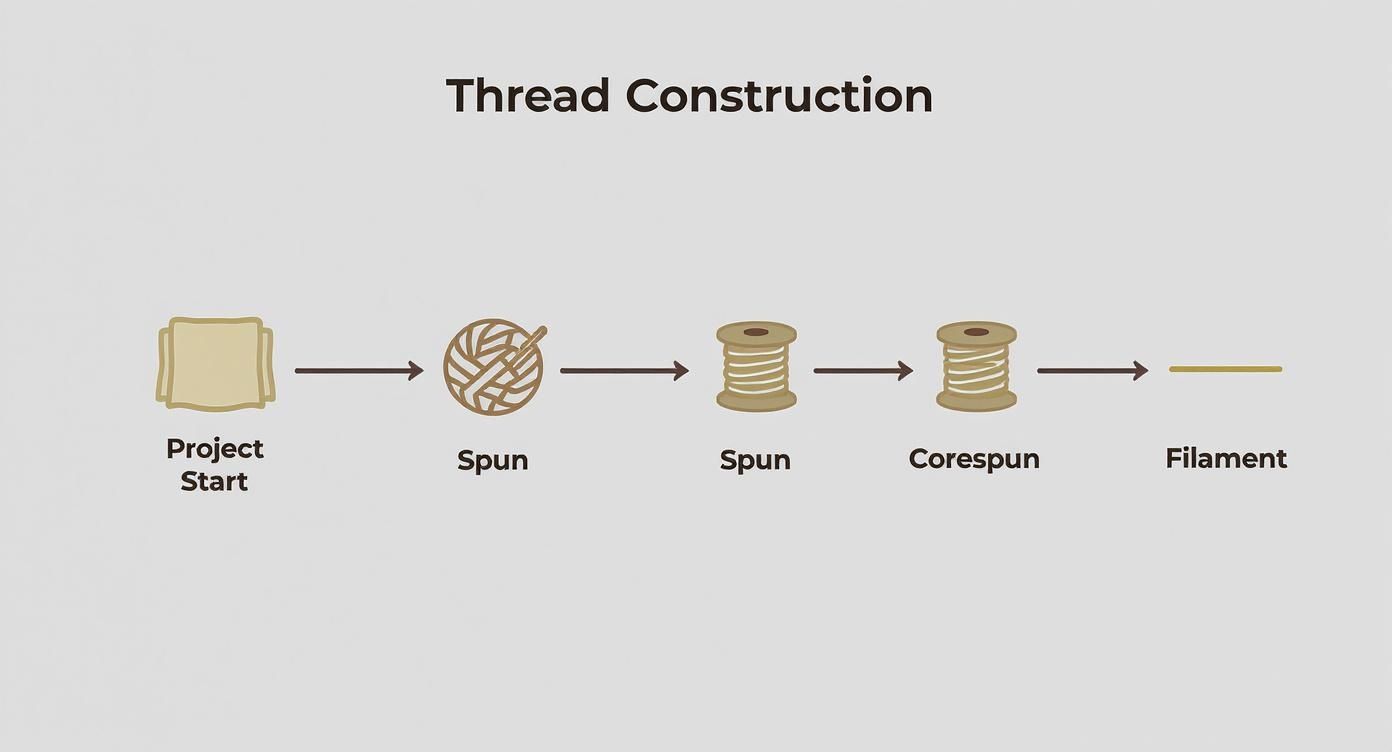
As you can see, your project's function is a huge clue that helps you pick the right thread structure for a beautiful and long-lasting result.
Putting It All Together: Real-World Scenarios
Let's walk through this three-question framework with a few common sewing projects. You’ll quickly see just how simple it is to apply in your own work.
Knowing your material is always the first step. For instance, understanding the properties of different blanket materials will immediately give you a head start on choosing the right thread for a cozy project.
Scenario 1: The Stretchy Knit T-Shirt
- Fabric: A lightweight cotton/polyester blend jersey knit.
- Weight: Light to medium, with a lot of stretch.
- Purpose: Everyday wear, so it needs to move with the body and hold up to frequent washing.
The Verdict: An all-purpose polyester thread in a 50wt or 40wt is the hands-down winner. Polyester has natural stretch, which is essential here. A cotton thread would just snap the first time you pull the shirt on. A medium weight provides plenty of strength without adding any bulk to the seams.
Needle Choice: You'll want a ballpoint or stretch needle (size 75/11 or 80/12). These needles have rounded tips that slide between the knit fibers instead of piercing them, which prevents holes and runs.
Scenario 2: The Classic Cotton Quilt
- Fabric: 100% quilting cotton, which is a stable woven fabric.
- Weight: Medium.
- Purpose: Piecing quilt blocks. Precision and flat seams are the name of the game.
The Verdict: For piecing, nothing beats a high-quality 50wt, 2-ply cotton thread. Because cotton has zero stretch, it helps you create incredibly accurate seams. A fine 50wt thread melts into the fabric, creating flat seams that press beautifully and reduce bulk where multiple points meet.
Needle Choice: A quilting or universal needle (size 80/12) is the perfect companion here.
Scenario 3: The Heavy-Duty Canvas Tote Bag
- Fabric: Heavyweight cotton canvas or duck cloth.
- Weight: Very heavy and dense.
- Purpose: Designed to carry heavy loads, so the seams must be exceptionally strong. It might also feature some decorative topstitching.
The Verdict: For the main construction, a corespun polyester thread is your best friend—it offers incredible strength. If you're adding visible topstitching, switch to a beefier 30wt or even 12wt polyester or cotton thread to make those stitches pop.
Needle Choice: You need to bring out the big guns. A denim or jeans needle (size 100/16 or 110/18) is tough enough to punch through that dense fabric without snapping.
Project Thread Recommendation Guide
To make things even easier, here is a quick-reference table for some common projects you might tackle.
| Project Example | Recommended Thread Fiber | Recommended Thread Weight | Recommended Needle Size |
|---|---|---|---|
| Delicate Silk Blouse | Silk or 100wt Polyester | 80wt - 100wt | 60/8 or 70/10 Microtex |
| Cotton Dress Shirt | 100% Cotton | 50wt | 80/12 Universal |
| Denim Jeans | Corespun or Heavy Polyester | 40wt - 30wt | 100/16 or 110/18 Jeans |
| Fleece Jacket | All-Purpose Polyester | 50wt or 40wt | 80/12 or 90/14 Stretch |
| Leather Handbag | Bonded Nylon or Polyester | 40wt or heavier | 100/16 or 110/18 Leather |
| Sheer Curtains | Fine Polyester | 60wt - 80wt | 70/10 Universal or Microtex |
This table is a great starting point, but always remember to test your thread and needle on a scrap of your project fabric first!
By consistently using this simple framework, you'll move from guessing to making intentional, expert choices. This is the skill that elevates your sewing, ensuring every project you create is built beautifully and built to last.
A Few Common Questions We Hear All The Time
Even after you get a handle on fibers and weights, a few nagging questions always seem to surface. We get it. Let’s clear up some of the most common head-scratchers that trip people up.
Getting these little details right can be the difference between a project that flows and one that fights you every step of the way. Think of this as your go-to guide for those "what if" moments that pop up mid-project.
Can I Use a Different Thread in the Bobbin?
You bet! Not only can you, but sometimes you absolutely should. It's a fantastic technique that seasoned sewists use all the time.
Popping a finer thread in your bobbin, say a 60wt or even a delicate 80wt, can be a game-changer. Here’s why:
- Less Bulk: A lighter bobbin thread means your seams will be flatter and less bulky on the underside. This is a huge plus for quilters piecing intricate blocks or anyone working with sheer, lightweight fabrics.
- Smarter Stitching: Doing decorative embroidery or quilting with a beautiful, pricey thread? Save the good stuff for the top! Using a more economical, neutral fine thread in the bobbin is a smart way to stretch your budget without compromising the look.
- Easier Tension: Occasionally, a finer thread in the bobbin can actually help your machine create a more perfect, balanced stitch, especially when you're wrestling with fussy materials.
Here’s a pro tip: Keep a few bobbins wound with a neutral, fine-weight thread (think grey, beige, or white). It'll save you from constantly winding a new bobbin every time you change your top thread color.
Just one quick reminder: always run a test on a scrap of fabric first. You might need to tweak your tension a tiny bit to get that stitch looking just right when using two different thread weights.
How Can I Tell If My Thread Is Too Old?
Oh, yes—thread definitely has a shelf life. Old thread gets brittle and weak, which leads to one thing: constant, frustrating breakage while you're trying to sew.
While there's no official expiration date stamped on the spool, your thread will give you some pretty clear hints when it's past its prime.
Telltale Signs of Old Thread:
- The Snap Test: This is the easiest way to check. Unwind about a foot of thread and give it a sharp, firm tug. If it snaps instantly with almost no effort, it's too weak for your machine. Good thread will put up a little fight.
- Fading or Sun Damage: Has that spool been sitting on a windowsill? Sunlight doesn't just fade the color; the UV exposure breaks down the fibers, seriously weakening them.
- Dusty and Dry: If a spool is covered in a layer of dust or the thread itself feels rough and brittle, it has likely dried out over time, losing its essential strength and flexibility.
The best way to keep your thread happy is to store it away from direct sunlight and dust. If you've just inherited a beautiful vintage sewing box full of old wooden spools, be sure to test them before you use them on a project you care about. They might be better off as a lovely decoration or saved for slow, gentle hand-sewing.
At Famcut.com, we know that quality materials are the secret to every successful project. Come explore our collection of top-notch threads and find the perfect partner for your next sewing adventure. Visit us at https://famcut.com to see what's new.