


Your Guide to the Best Fabrics for Cosplay
When you're hunting for the best cosplay fabrics, you'll find yourself reaching for polyester, spandex, and cotton time and time again. These three are the bedrock of countless costumes, prized for their versatility and user-friendliness. They’re a fantastic starting point, whether this is your first build or your fiftieth.
Navigating the World of Cosplay Fabrics
Walking into a fabric store can be completely overwhelming. You're hit with a sensory overload of textures, colors, and weights, and it's easy to get lost in the aisles.
The trick is to simplify. Think of choosing a fabric like casting the right actor for a role—each one brings something unique to the performance. Your job is to match the fabric’s natural personality to your character's design.
The right material can truly make or break a costume. It dictates everything from the fit and feel to how the costume looks under the harsh lights of a convention hall. A dramatic, flowing cape needs a fabric with a beautiful drape, while a set of rigid armor demands something sturdy that will hold its shape no matter what.
The Go-To Fabric Families
To cut through the noise, it helps to think in terms of a few key fabric families. These are the reliable workhorses you'll turn to for almost any project.
- Woven Fabrics: These are your stable, non-stretch essentials like cotton, twill, and satin. They're perfect for creating structured pieces like school uniforms, sharp-looking jackets, and elegant historical gowns.
- Knit and Stretch Fabrics: Materials like spandex and jersey are non-negotiable for anything form-fitting. We’re talking superhero suits, bodysuits, and any design that needs to hug your curves and move right along with you.
- Specialty Fabrics: This is the fun stuff! This category covers everything from faux leather (pleather) and vinyl to foam-backed fabrics. Use these to build realistic armor, craft detailed accessories, and add killer textures to your costume.
Among all these options, polyester often reigns supreme. It's affordable, incredibly durable, and holds onto color like nobody's business, which means you can get those vibrant, screen-accurate hues you need. It's no surprise that polyester accounts for the majority of fabric used in costuming worldwide—you can even explore more data on cosplay fabric trends to see just how dominant it is. This adaptability makes it a true staple in any cosplayer's stash.
Top Cosplay Fabric Choices at a Glance
To give you a quick reference, here’s a simple breakdown of the most common fabrics and what they do best. Think of this as your cheat sheet for your next trip to the fabric store.
| Fabric Type | Best For | Key Feature |
|---|---|---|
| Cotton | Uniforms, shirts, comfortable linings | Breathable and easy to sew |
| Spandex (Lycra) | Superhero suits, bodysuits, leggings | 4-way stretch for a skin-tight fit |
| Polyester | Capes, jackets, vibrant garments | Durable and wrinkle-resistant |
| Faux Leather | Armor, belts, boots, sci-fi outfits | Mimics the look of real leather |
| Satin | Gowns, magical girl costumes, sashes | Smooth, glossy finish |
| Twill | Jackets, pants, military-style outfits | Sturdy with a distinct diagonal weave |
| Vinyl | Wet-look outfits, futuristic designs | High-shine, waterproof surface |
This table should help you narrow down your options quickly. As you gain more experience, you'll develop an instinct for which fabric will bring your vision to life.
Understanding How Fabrics Behave
Before you can even think about which fabric to buy, you have to learn to speak their language. Seriously. Every material has its own unique personality that determines how it moves, hangs, and feels. Getting a handle on these core traits is the secret to making smart choices that actually bring your character to life.
Think of it this way: a superhero’s dramatic, flowing cape and a space marine’s rigid, structured uniform are born from fabrics with completely opposite personalities. One is all about fluid, graceful movement, while the other is built to be stiff and authoritative. Understanding these behaviors is what separates a costume that just looks okay from one that looks like it stepped right out of the screen.
The Four Pillars of Fabric Behavior
To get really good at picking fabrics, you need to look at four key properties. These are the building blocks that define how a material will act once you've cut, sewn, and put it on.
- Drape: This is all about how a fabric hangs under its own weight. A material with a soft drape, like chiffon or a lightweight silk, will flow and cling beautifully, creating those elegant lines you want for a royal gown or a wizard's robes. On the flip side, something with a stiff drape, like canvas or heavy denim, holds its own shape, which is perfect for structured jackets or the base of an armor piece.
- Stretch: This one’s pretty straightforward—it’s how much a fabric can extend and snap back. You'll hear about 2-way stretch, which pulls in one direction (usually across the grain), and 4-way stretch, which pulls both horizontally and vertically. For any kind of form-fitting superhero suit or bodysuit, 4-way stretch is non-negotiable. It gives you the freedom to move and keeps the costume looking smooth and painted-on.
- Weight: Fabric weight, often measured in grams per square meter (GSM), tells you how heavy and substantial it is. A light cotton voile might be great for a pirate's billowy shirt, but it would look ridiculous if you tried to make a heavy winter coat from it. That kind of project demands a hefty wool or a sturdy twill to look authentic and have the right presence.
- Weave or Knit: This is the DNA of the fabric—its fundamental structure. Woven fabrics like cotton, linen, and satin are made from threads crisscrossing at right angles. This makes them stable and fantastic for tailored pieces. Knit fabrics like spandex or jersey are made from interlocking loops of yarn, which is what gives them their inherent stretch.
Natural vs. Synthetic Fibers
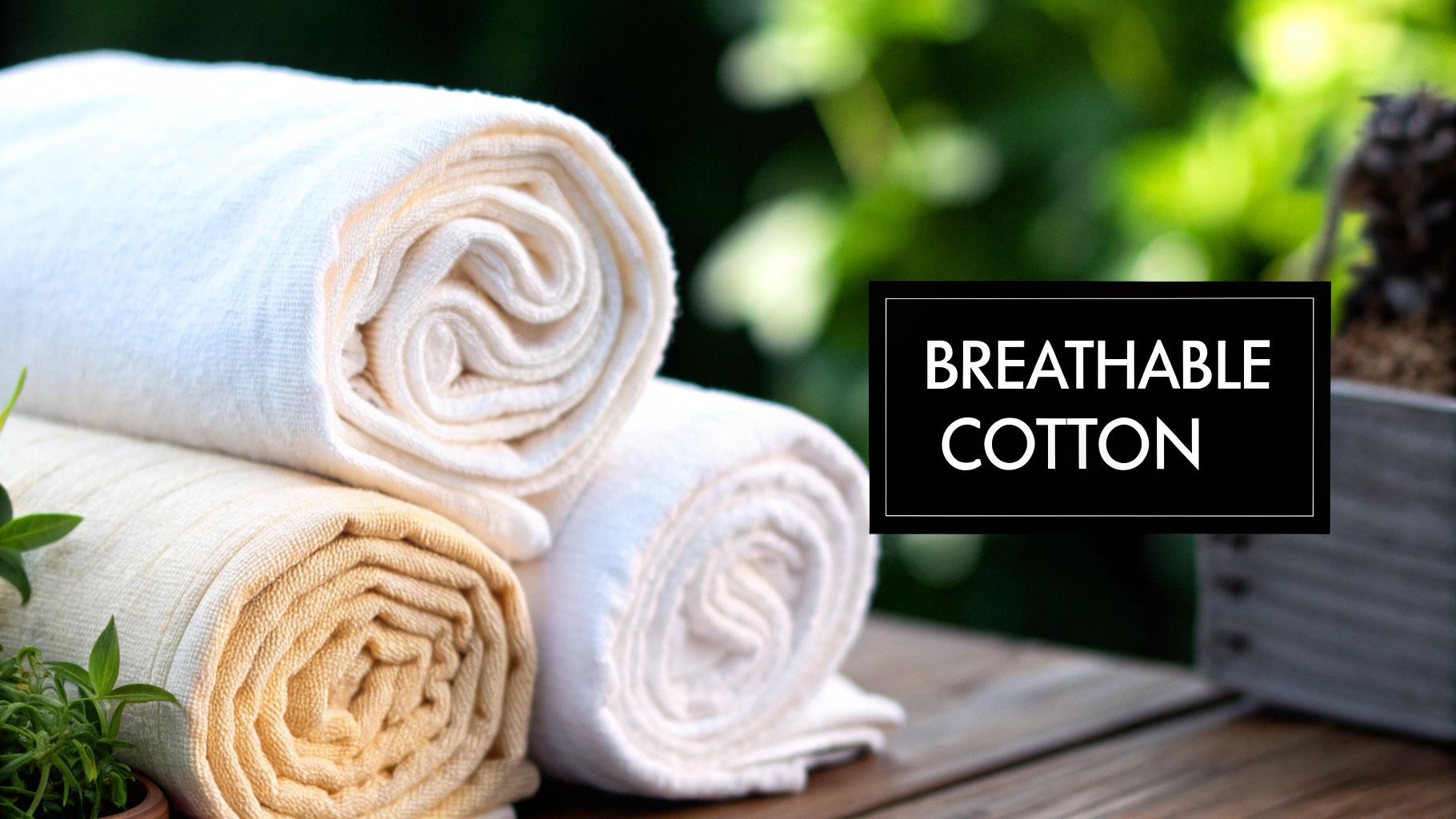
Finally, let's talk about where the fibers actually come from. Natural fibers, like cotton, wool, and linen, are known for being breathable and comfortable against the skin. This makes them a godsend for anything you’ll be wearing all day at a hot, crowded convention.
Pro Tip: Never, ever sacrifice your comfort. A breathtaking costume is completely wasted if you're overheating and miserable in it. Choosing natural fibers for base layers can make a massive difference in how you feel after eight hours on the con floor.
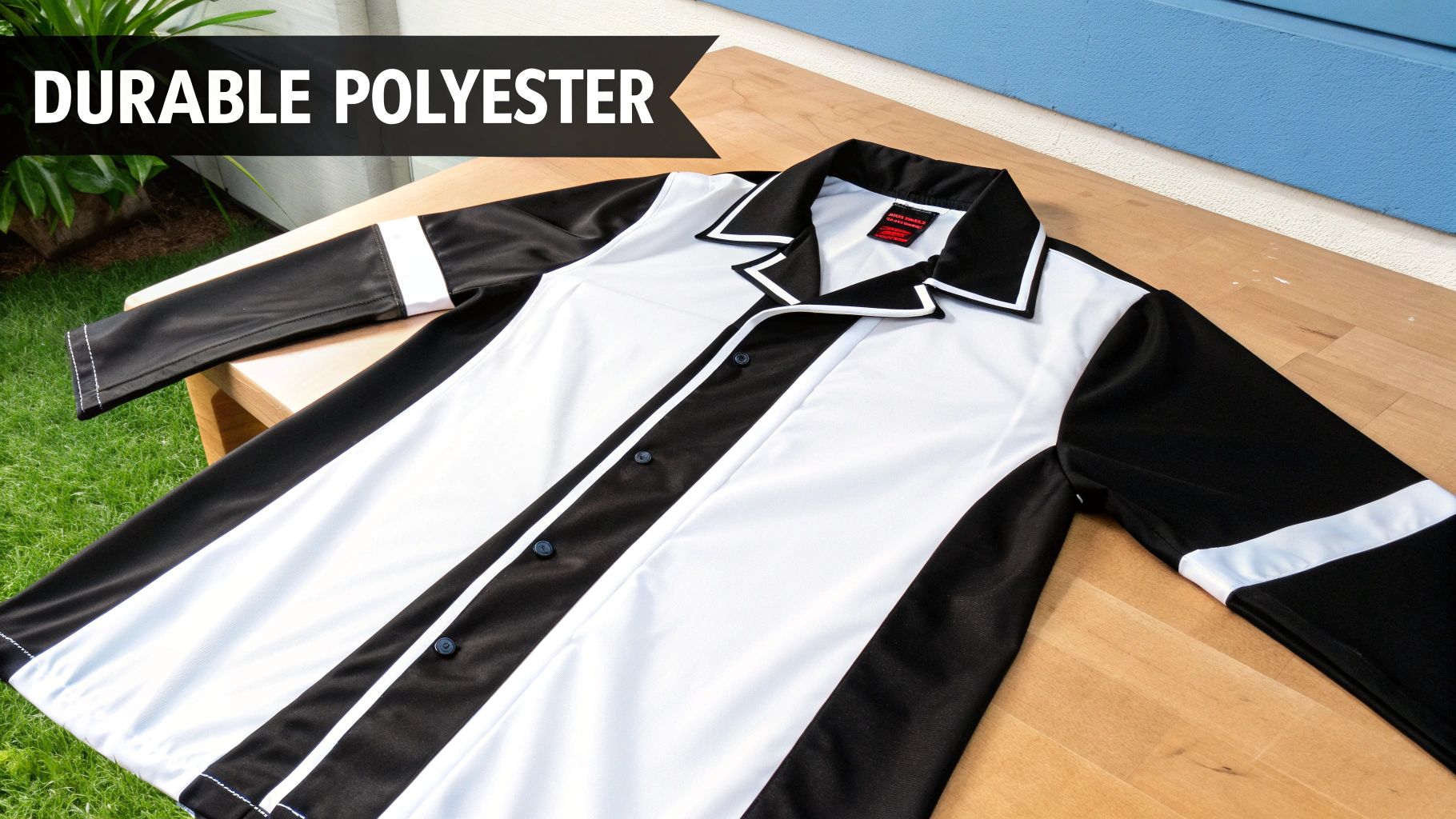
Then you have synthetic fibers like polyester and nylon. These are the workhorses of cosplay. They’re incredibly durable, resist wrinkles like a champ, and often hold onto bright, saturated colors much better than natural materials. Honestly, some of the absolute best cosplay fabrics are blends, which give you the soft, breathable feel of natural fibers with the strength and performance of synthetics. It’s the best of both worlds.
Woven Fabrics: Your Go-To for Structure and Detail
So many iconic costumes just wouldn't work without the structure and sharp lines you can only get from a woven fabric. Picture a crisp military uniform, a wizard’s flowing robe, or a perfectly tailored school uniform—these looks are all built on the reliable foundation of non-stretch wovens. They are the architectural backbone of cosplay, giving you structure where a knit fabric would give you stretch.
Woven fabrics are made by interlacing threads at right angles, which creates a stable grid that doesn’t really stretch. This structure is a huge advantage for cosplayers because it makes the fabric predictable and easy to sew, especially when you're trying to create precise seams and sharp details. Plus, wovens press like a dream with an iron, letting you create professional-looking pleats, collars, and cuffs that will hold their shape all day long.
The Natural Choice: Cotton and Its Variations
When you're starting with wovens, cotton is an absolute lifesaver. It’s a cosplayer’s best friend, especially for those foundational pieces. Its breathability is a godsend during a long, crowded convention, which is why it’s perfect for shirts, linings, and any underlayers that sit right against your skin. In fact, due to its comfort and natural moisture absorption, cotton makes up about 25% of all materials used in casual and beginner cosplay. You can actually discover more insights about cosplay fabric usage to see how it stacks up against other popular choices.
But it’s not just about plain old cotton. You’ve got some really useful variations to work with:
- Twill: You know that distinct diagonal weave you see on a pair of jeans? That’s twill. It’s incredibly durable and the perfect choice for rugged costumes like military jackets, work pants, or anything that needs to look tough and handle some wear and tear.
- Poplin and Broadcloth: These are your go-to lightweight, smooth, and crisp cottons. They are fantastic for sewing button-up shirts, school uniforms, and simple dresses because they’re so easy to handle and hold a press beautifully.
When you need a fabric to behave itself and hold a crisp line, a woven cotton should be your first thought. It's the reliable workhorse that won’t let you down when precision is everything.
The Synthetic Route: Satin and Taffeta for Shine
While cotton is all about comfort and reliability, synthetic wovens are here to bring the drama. These fabrics offer a level of sheen, color vibrancy, and wrinkle resistance that you just can't get from most natural fibers. They are easily some of the best fabrics for cosplay when you need to make a big impact.
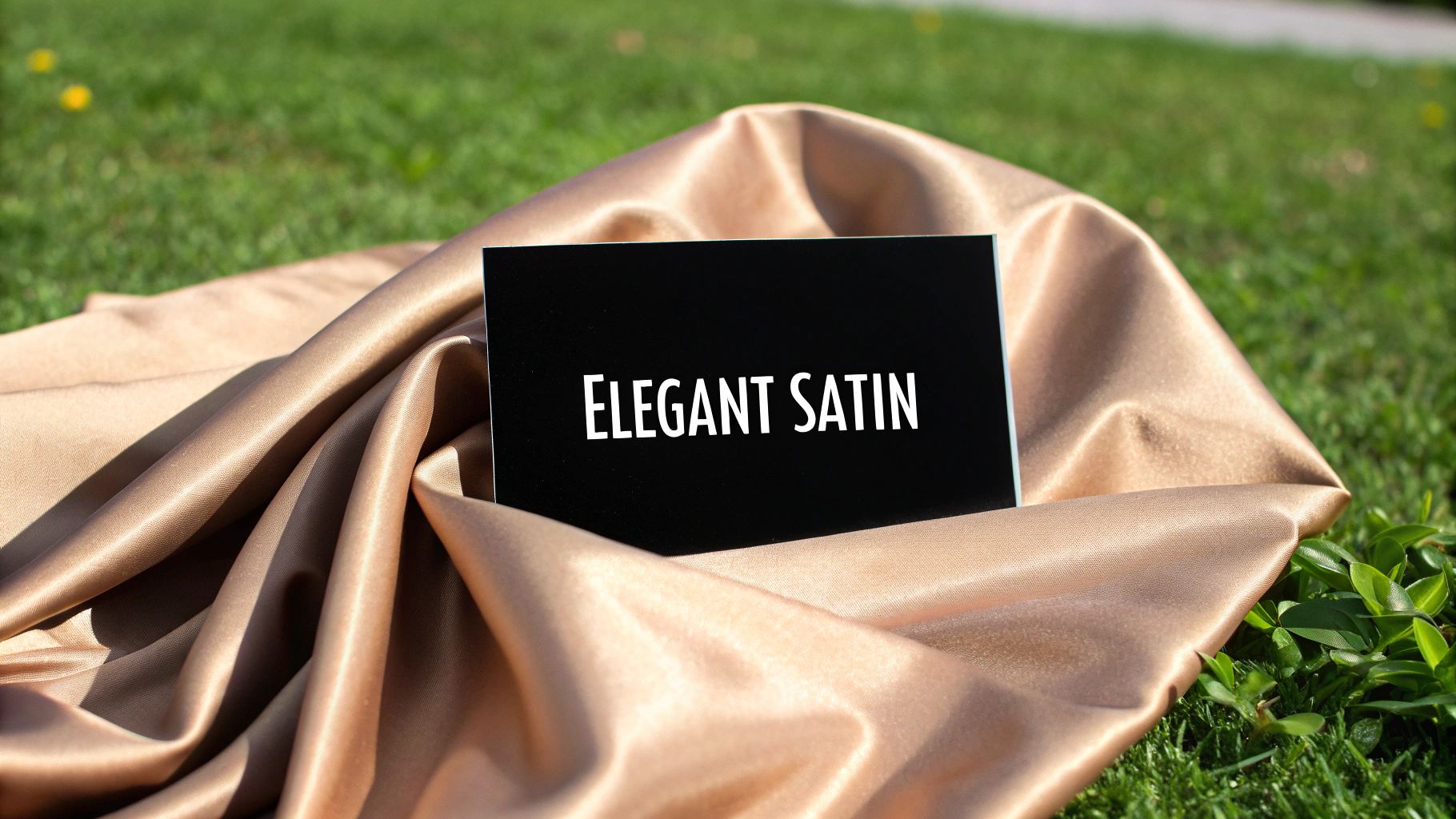
Satin is practically famous for its glossy surface and fluid drape. It’s the go-to for magical girl outfits, elegant gowns, and luxurious, flowing capes. Just a heads-up, its slippery texture can be a bit tricky to sew, so be patient, take your time, and use plenty of pins!
Taffeta is another fantastic choice, especially for formal or fantasy costumes. It has a crisp, almost paper-like feel and a subtle iridescent sheen that catches the light in a really beautiful way. Its natural stiffness makes it ideal for creating voluminous skirts and structured bodices that won't collapse on themselves.
Ultimately, choosing between the comfort of cotton and the vibrant finish of a synthetic woven comes down to your character’s story and what you need your costume to do.
Working With Stretch Fabrics for a Perfect Fit
When your cosplay calls for a second-skin fit—think superheroes, cat burglars, or futuristic pilots—stretch fabric isn't just a nice-to-have; it's the only way to go. These materials are the secret ingredient for creating those powerful, form-fitting silhouettes that move with you, not against you. Without the right amount of give, your costume can go from dynamic to disastrous the moment you strike a pose.
The undisputed champion here is spandex, also known by brand names like Lycra or its generic name, elastane. It’s an incredibly versatile fiber that gets blended with others to create a massive range of finishes and weights. This stuff is a cosplay staple, showing up in an estimated 30-40% of professional costumes for one simple reason: it can stretch up to an incredible 500-600% of its original size and snap right back into place. That kind of elasticity gives you amazing flexibility and comfort, a trend you can see reflected in detailed market analysis of the cosplay industry.
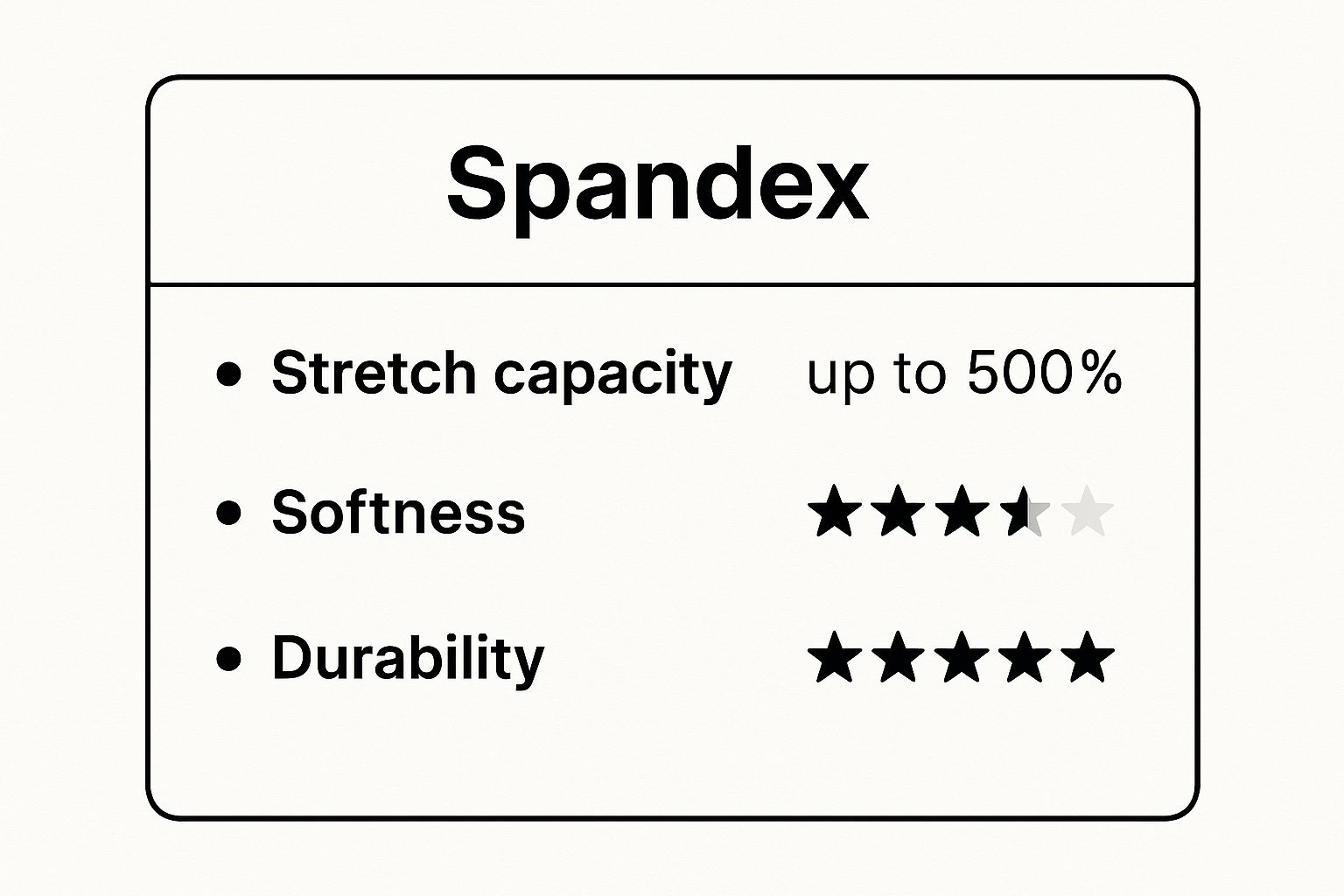
As you can see, spandex offers that sweet spot of high stretch and solid durability, which is exactly what you need for costumes that will see a lot of action on the convention floor.
Understanding 2-Way vs. 4-Way Stretch
Here’s where a lot of beginners get tripped up: not all stretch fabrics are created equal. The biggest difference you need to know is between 2-way and 4-way stretch, because it will completely change how your costume fits and moves.
- 2-Way Stretch: This fabric only stretches in one direction, usually from side to side (from one finished edge, or selvage, to the other). It has some give, but it’s best for things that don't need to be skin-tight all over, like a fitted t-shirt or the side panels on a jacket.
- 4-Way Stretch: This is the holy grail for bodysuits and catsuits. It stretches both horizontally and vertically, giving you total freedom of movement. When you pull on it, it gives in every direction—exactly what a superhero needs to avoid a wardrobe malfunction mid-battle-pose.
For any costume that needs to hug your entire body, always choose 4-way stretch. It’s the only way to ensure the fabric conforms smoothly to every curve without creating stress points that could pop a seam or make the fabric look strained.
Sewing Tips for Stretch Fabrics
Okay, so you've picked your fabric. Now you have to sew it. Working with materials that want to wiggle and shift can feel intimidating, but a few simple tricks make all the difference. The biggest challenge? Your seams need to stretch just as much as the fabric does. A standard, straight stitch has zero give and will snap the first time you bend over.
To avoid that, switch your sewing machine to a zigzag stitch or a dedicated stretch stitch. These stitches are built to expand and contract right along with the material. Just as important, swap your regular sewing machine needle for a ballpoint or stretch needle. Instead of a sharp point, these have a rounded tip that gently pushes the fabric fibers aside instead of piercing them, which prevents those dreaded runs and holes.
Finally, think about the look. Do you want something subtle and matte? A high-quality milliskin spandex is your best friend. Going for a dramatic, eye-popping effect? Grab a shiny metallic or wet-look spandex. Choosing the right finish is the final touch that pulls your whole silhouette together.
Stretch Fabric Comparison for Cosplayers
To make things even easier, I've put together a quick comparison table. Think of it as your cheat sheet for picking the perfect stretch fabric for your next project.
| Fabric Name | Stretch Percentage | Common Uses | Finish (Matte/Shiny) | Sewing Difficulty |
|---|---|---|---|---|
| Spandex/Lycra | 75-100% (4-way) | Bodysuits, leggings, gloves, superhero suits | Both (Milliskin, shiny, metallic) | Intermediate |
| Stretch Cotton | 25-50% (2-way) | Fitted t-shirts, comfortable pants, casual cosplay | Matte | Beginner |
| Stretch Velvet | 50-75% (4-way) | Regal gowns, elegant capes, fantasy characters | Shiny/Lustrous | Intermediate |
| Stretch Satin | 25-50% (2-way) | Formal wear, magical girl outfits, fitted dresses | High Shine | Intermediate |
| Neoprene | 30-50% (2 or 4-way) | Sci-fi armor, structured pieces, swimwear | Matte | Advanced |
Remember, this is just a starting point. The best way to get a feel for these fabrics is to order swatches and see how they stretch, feel, and look in person. Happy sewing
Using Specialty Fabrics for Armor and Texture
When you're ready to move past sewing basic garments and start building the really cool stuff, specialty fabrics are where the magic happens. We're talking about materials like faux leather and vinyl—the cornerstones for creating convincing armor, belts, and accessories that give your costume that polished, professional edge.
These aren't just fabrics for your sewing machine; they're materials you can heat, shape, glue, and distress to build some truly incredible textures.
Unlike your standard cottons or knits, you pick these materials for their structure, their sheen, and their amazing ability to imitate things that aren't fabric at all. This opens up a whole new world of creative cosplay, letting you craft everything from a rugged adventurer's gear to the sleekest futuristic armor.
Working with Faux Leather and Vinyl
Let's start with a cosplay classic: pleather. This is your go-to for getting that authentic leather look without the high price tag or the tricky maintenance of the real deal. It’s perfect for crafting jackets, boot covers, and straps. On the other hand, you have vinyl, which is all about that high-shine, waterproof finish. Think wet-look catsuits or glossy sci-fi armor.
Working with these materials is a bit different, so keep a few ground rules in mind:
- Get the Right Tools: A standard sewing needle is going to have a bad time. You'll want to switch to a dedicated leather or denim needle. A walking foot or Teflon foot for your machine is also a lifesaver, as it stops the fabric from sticking and bunching up.
- No Pins Allowed: Never, ever use pins on pleather or vinyl. Every hole you poke is there for good. Instead, use binder clips or quilting clips to hold your seams together while you work.
- Gluing Is Your Friend: When you're building armor pieces or detailed accessories, sewing isn't always the answer. Sometimes, a strong adhesive like contact cement is much more effective. Just make sure you're working in a well-ventilated area—that stuff is potent!
The best fabrics for cosplay are often those that let you think outside the box. Faux leather isn’t just for sewing a jacket; it can be heated and shaped over a form, weathered with paint, and layered to create complex armor designs.
Exploring Unconventional Fabric Choices
Don't be afraid to wander off the beaten path and experiment. Neoprene, the same stuff wetsuits are made of, is a fantastic choice for creating structured, foam-like armor. It has a bit of stretch, a smooth matte finish, and holds its shape beautifully.
Its natural thickness gives it a body and structure that’s hard to get with other fabrics. You can cut it into panels, glue the edges together for a seamless look, and paint it to mimic anything from battle-worn metal to gleaming chrome.
The real key is to start seeing these materials as more than just textiles. They're versatile sculpting mediums for your next big cosplay build.
Telling a Story with Your Fabric Choices
When you're picking out fabrics, you're doing more than just looking at stretch and weight. You're actually starting to tell a story before you've even spoken a line. The right material can say everything about your character's personality, their social status, and even their backstory, all in a single glance.
Think of the fabric as your character's second skin. An adventurer who's been living on the road for months isn't going to be decked out in pristine, shimmering satin. Their story is told through rough-spun linen, maybe some scuffed-up faux leather—materials that scream survival and a hard-knock life. On the flip side, a sleek cyborg from the year 3000 needs something that looks synthetic and advanced, like a high-gloss vinyl or an iridescent spandex.
Building Character Through Texture
The texture you choose adds a whole new layer to your performance and how people perceive your character. It’s all in the details.
- Royalty: You can't go wrong with rich brocades, velvets, and silks. These fabrics instantly communicate wealth and high status.
- Warrior: Think durable. Heavy twill, tough canvas, and weathered leather all suggest a life of training and battle.
- Mystic: To get that ethereal, otherworldly vibe, you'll want something with a lot of movement, like a flowing chiffon or a lightweight gauze.
Making these deliberate choices is what takes a costume from just being an outfit to becoming a piece of wearable art.
The most memorable cosplays are the ones where the fabric feels like it was pulled directly from the character's world. Let your material choices do the heavy lifting in establishing who your character is and where they come from.
At the end of the day, it's about making intentional decisions that build atmosphere and feel authentic. When you connect your fabric to the narrative, you give your cosplay a voice of its own, letting it tell a rich story all on its own.
Common Cosplay Fabric Questions Answered
Diving into the world of cosplay fabrics can feel like learning a new language. You're bound to have questions, and getting the right answers can be the difference between a costume you love and a pile of "learning experiences." Let's clear up some of the most common questions that pop up for cosplayers.
Should I Pre-Wash My Cosplay Fabrics?
Yes, almost always! Think of it as a mandatory first step, especially for natural fibers like cotton, linen, or rayon. These fabrics are notorious for shrinking in the wash, and the last thing you want is for your perfectly tailored costume to become two sizes too small after its first cleaning.
That said, there are some major exceptions to the rule. Anything with a special finish is a no-go for the washing machine. This includes materials like pleather, vinyl, or anything with glued-on glitter or sequins. Tossing them in the wash can ruin their texture and finish forever. Always spot-clean these materials and double-check the care instructions if you're unsure.
What Is the Best Fabric for a Beginner?
If you’re just starting your sewing journey, make friends with a good, stable cotton. Something like a broadcloth or poplin is the perfect starting point.
Why? They’re incredibly well-behaved. They don't wiggle around when you're cutting them, they take a press from an iron like a champ for super sharp seams, and they're relatively inexpensive. You can practice your stitches without the stress of fighting a slippery or stretchy material.
For beginners, the goal is to build confidence and skill. A forgiving fabric like cotton lets you focus on the fundamentals—like sewing a straight line—instead of wrestling with the material itself. It's perfect for projects like school uniforms, simple robes, or basic shirts.
Can I Mix Different Fabric Types?
Not only can you, but you absolutely should! Mixing fabrics is one of the secrets to creating a costume with real depth and character. Think about it: a rugged warrior’s costume feels more believable with a coarse linen tunic, a tough twill coat, and worn pleather accents for the belts and straps. The contrast in textures makes the whole piece come alive.
The trick is to be mindful of how you combine them. Pay close attention to the fabric weights. Sewing a super heavy material directly to a flimsy, lightweight one is a recipe for disaster—the heavy fabric will pull and stretch the lighter one out of shape. To prevent this, use a stabilizer like interfacing to give the lighter fabric some extra support. This helps ensure your finished costume hangs properly and looks like it belongs in another world.
Whether you need some beginner-friendly cotton or a unique specialty fabric for your next build, check out the huge selection over at Famcut.com. Find exactly what you're looking for at https://famcut.com.