


Choosing the Best Batting for Quilts A Complete Guide
The best batting for your quilt really depends on what you're making. If you're going for that classic, crinkled look you see in antique quilts, cotton is your best friend. But if you want a quilt with puffy, high loft and serious durability, polyester is the way to go. For something that's both breathable and incredibly warm, natural fibers like wool and bamboo are fantastic alternatives.
Ultimately, the right choice comes down to how you plan to use the quilt, the kind of drape you're envisioning, and your preferred quilting style.
Finding the Right Batting for Your Quilt
The batting is the very soul of your quilt. It's that hidden middle layer that dictates the final look, feel, and purpose of your finished piece. It’s responsible for everything from warmth and weight to how beautifully your quilting stitches pop. Picking the wrong one can be frustrating—you might end up with a quilt that hangs stiffly when you wanted it to drape beautifully, or one that feels disappointingly thin when you were hoping for a plush, cozy comforter.
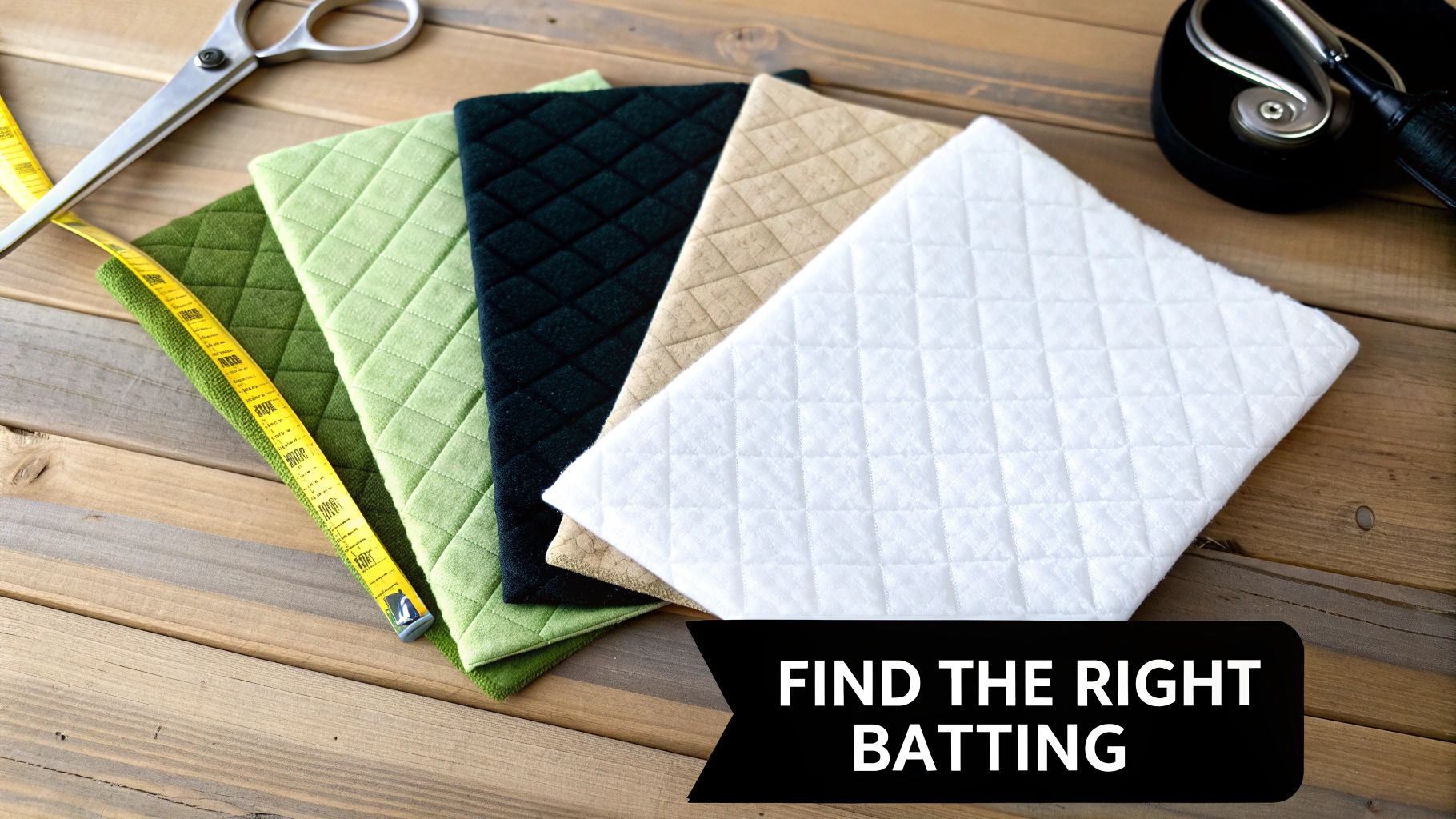
This isn't just about personal preference; it’s a critical choice that affects the entire quilting journey. Your batting selection will directly influence the quilt's:
- Aesthetic: Are you aiming for a flat, modern look or a puffy, traditional finish?
- Durability: Does this quilt need to survive countless washes, like a baby quilt, or is it a delicate wall hanging?
- Function: Will it be a light, breathable throw for summer or a toasty warm quilt for a chilly winter?
- Technique: Your method matters. Are you hand quilting, machine quilting, or tying the layers together?
The batting you choose is the unsung hero of your quilt. It dictates the drape, defines the stitch, and ultimately brings your creative vision to life.
A Quick Batting Comparison
Getting to know the main types of batting is the first step in making a choice you'll be happy with. Each fiber has its own personality and is suited for different results.
With the global quilt market valued at USD 231.26 billion in 2023 and still growing, it's clear that quilters are investing in quality materials that give their projects the right texture and longevity. You can read more about these quilt market trends to see just how much our craft is thriving.
To get you started, here’s a quick-reference table summarizing the most common options. Use it to narrow down the best batting for your next project.
Quilt Batting Quick Comparison Guide
| Batting Type | Key Characteristic | Best For | Drape |
|---|---|---|---|
| Cotton | Breathable, soft, classic crinkle after washing | Traditional quilts, baby quilts, wall hangings | Soft, but can be dense |
| Polyester | High loft, lightweight, resistant to shrinkage | Tied quilts, bedding, projects needing warmth | Puffy, less fluid drape |
| Wool | Excellent insulation, lightweight, great stitch definition | Heirloom quilts, show quilts, warm bed coverings | Exceptional, fluid drape |
| Bamboo | Silky soft, breathable, antibacterial properties | Modern quilts, summer throws, baby items | Silky and very drapey |
This table gives you a great starting point, but the real magic happens when you understand the nuances of each type—which we'll dive into next.
Comparing the Most Popular Quilt Batting Fibers
Choosing the right batting is about more than just filling; it's about defining the personality of your quilt. The fiber you pick dictates the final drape, texture, and feel of your finished piece. It's what makes the difference between a crisp wall hanging and a soft, cuddly throw you want to wrap up in.
Let’s get into the real differences between the most popular options out there. Each one brings something unique to the table, both in how it handles during quilting and how it looks and feels in the end.
Classic Cotton: The Traditional Choice
If you're aiming for that timeless, antique look, cotton batting is your go-to. It’s a natural fiber that feels like a thick, soft flannel right out of the package. What really sets it apart is its signature 3-5% shrinkage after the first wash, which creates that classic, crinkly texture so many quilters love.
This gentle shrinkage is what gives a quilt that beautifully puckered, well-loved look from day one. Cotton is also breathable and has a nice, comforting weight without being overly puffy. It’s fantastic for machine quilting because its relatively flat profile helps your stitches look crisp and defined.
- Best for: Heirloom quilts that will soften and age beautifully, or breathable baby quilts.
- Good to know: If you want a perfectly flat, modern quilt, you'll need to pre-wash 100% cotton batting to get the shrinkage out of the way before you start quilting.
Lofty Polyester: The Durable Workhorse
On the other end of the spectrum is polyester batting, known for its incredible loft and resilience. This synthetic fiber is lightweight, won't shrink, and holds its shape beautifully, even after countless trips through the laundry. If you want a thick, puffy comforter that’s light as a cloud but still warm, polyester is the answer.
Its high loft is perfect for tied quilts, where the layers are secured with yarn knots instead of dense stitching. The puffiness really makes quilting lines pop. That same puffiness, however, can make it a challenge for really intricate machine quilting, as navigating all that fluff can be tricky.
The quilting world is booming, with the U.S. quilting industry expected to hit $4.5 billion in 2025. With nearly 18% of quilters being new to the craft, understanding these material differences is more crucial than ever. You can see how trends are shifting by checking out the latest quilting industry trends.
Luxurious Wool: The Natural Insulator
For pure warmth and a luxurious drape, nothing beats wool batting. Wool is a fantastic natural insulator that breathes, regulating temperature to keep you warm without making you sweaty—perfect for an all-seasons bed quilt. It’s surprisingly lightweight and has a natural springiness that resists creases and folds.
Wool’s medium loft provides incredible stitch definition, making both hand and machine quilting look absolutely stunning. It’s often the secret weapon for show quilts where the quilting itself is the main event. For a deeper dive into how it stacks up against synthetics, you can explore the pros and cons of wool vs. synthetic quilt fills.
Silky Bamboo: The Modern Drape
Bamboo batting, often blended with cotton for stability, has become a favorite for its incredibly soft, silky feel and gorgeous drape. This eco-friendly fiber creates a lightweight quilt that hangs and flows elegantly, making it ideal for modern throws and even quilted garments.
Besides its amazing texture, bamboo is naturally antibacterial and highly breathable. This makes it a great choice for warmer climates or for anyone with sensitive skin. The drape is more fluid and less stiff than cotton, giving your finished project the feel of a high-end blanket.
Versatile Blends: The Best of Both Worlds
For many quilters, a blend is the perfect happy medium. The most common is the 80/20 blend, which is 80% cotton and 20% polyester. This magical mix gives you the softness and breathability of cotton, but with the added stability, reduced shrinkage, and a little extra loft from the polyester.
An 80/20 blend is a true all-rounder that works beautifully for both hand and machine quilting. You still get some of that traditional crinkle from the cotton, but with extra durability, making it a reliable and forgiving choice for quilts that will see a lot of use.
How Batting Loft Defines Your Quilt's Look and Feel
Once you've picked a fiber, the next big decision is loft. This is just quilter-speak for the thickness and puffiness of the batting. It’s what makes the difference between a thin, drapey quilt and a thick, plush one. Getting the loft right is the secret to making sure the quilt in your head is the one that comes out from under your needle.
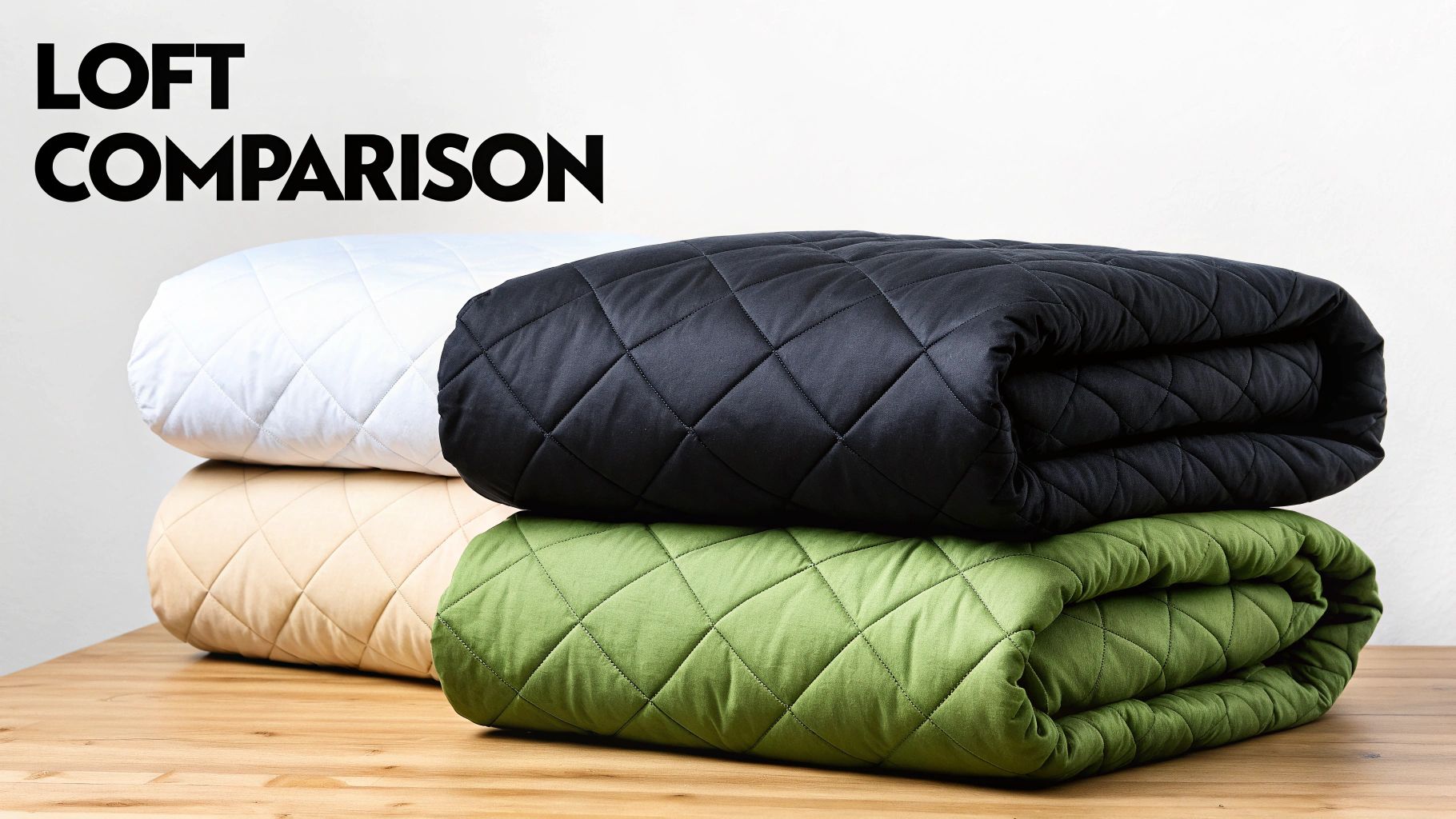
Loft isn't just about how thick the quilt feels; it dramatically changes how the fabric hangs and how your quilting stitches pop. A low-loft batting gives you a flat, light quilt that drapes beautifully. Go with a high loft, and you'll get a puffy, warm quilt that feels more like a comforter. There's a place for both, and the right choice really comes down to what you're trying to achieve with your project.
Low Loft: The Foundation for Detail
Low-loft battings are the thinnest options, usually around ⅛ inch thick. They produce a quilt that lays flat and has a lovely, soft drape. This minimal thickness is precisely why they're the go-to for projects with complex, detailed quilting. Because the stitches don't have much to sink into, every line of your quilting design looks crisp, sharp, and well-defined.
Think of it this way: if your quilting pattern is the star of the show, a low-loft batting is the perfect stage. It stays in the background and lets your stitch work shine.
- Best Use Cases: Wall hangings that need to hang perfectly flat, modern quilts with intricate geometric quilting, and lightweight throws where you want a fluid, graceful drape.
- Common Fibers: You’ll find great low-loft options in 100% cotton, bamboo blends, and some 80/20 cotton/poly blends.
A needle-punched cotton with scrim, for instance, is a fantastic choice for a show quilt where stitch precision is everything. It offers stability and a very low profile. That extra stability from the scrim often means you can space your quilting lines further apart without worrying about the batting bunching or shifting over time.
High Loft: For Puff and Warmth
When you're chasing that cloud-like texture and maximum coziness, high-loft batting is what you need. These are much thicker, often ½ inch or more, and they create a wonderful three-dimensional effect. Your quilting stitches will sink deep into the fibers, which creates dramatic shadows and makes the un-quilted areas puff up beautifully.
This is why high-loft batting is the top choice for quilts where warmth and a traditional comforter feel are the main goals.
High loft is less about showing off individual stitches and more about creating an overall pillowy texture. It’s perfect for tied quilts or simple, wide-spaced quilting that emphasizes comfort over complexity.
A bonded, high-loft polyester is a classic example. It's incredibly lightweight but provides fantastic insulation, which is perfect for a kid's bed quilt or a lap throw you plan to snuggle under on cold nights. The bonding process helps lock the fibers together, preventing them from migrating through your quilt top over time—no one wants that.
Medium Loft: The Versatile Middle Ground
Sitting right between the two extremes, medium-loft batting gives you a bit of both worlds. It offers more stitch definition and warmth than a low-loft batting but doesn't have the full-on puffiness of a high-loft one. It’s a wonderfully versatile choice that works for a huge range of projects, from everyday bed quilts to comfortably soft throws.
Wool batting is a perfect example of a fiber that offers a beautiful medium loft. It gives quilting stitches a lovely, soft definition while remaining surprisingly lightweight and exceptionally warm. You end up with a quilt that has both substance and a graceful drape, making it a fantastic all-around option when you can't decide.
Matching Batting to Your Quilting Project and Technique
The first question I always ask myself before starting a new quilt is: what is this quilt for? The answer changes everything. The batting that makes a baby quilt soft and washable is completely wrong for a wall hanging that needs to lie perfectly flat. Aligning the fiber, loft, and your quilting technique is the secret to a finished piece that not only looks beautiful but actually works the way you want it to.
Thinking about the project first saves you from common frustrations, like a bed quilt that feels stiff as a board or a wall hanging that sags. This is true whether you're making an art quilt, a cozy bedspread, or even something for specific projects like quilted play mats.
Project Specific Batting Recommendations
Let's walk through how to pick a batting for some of the most common projects. Each one has its own set of demands, and there’s a perfect batting out there to meet them.
- Baby Quilts and Kids' Bedding: Here, durability and washability are king. You need a batting that can handle countless trips through the laundry without shrinking or bunching up. A high-quality polyester or a soft bamboo blend are my top picks because they’re hypoallergenic, resist shrinkage, and dry pretty fast.
- Heirloom and Show Quilts: When you’re making a quilt to last for generations or to wow a panel of judges, you need a batting that shows off your stitch work and ages with grace. Wool is an amazing choice; it gives your quilting stitches incredible definition and is surprisingly lightweight for how warm it is. A high-quality 100% cotton is another classic that gives you that traditional, crinkly feel and a beautiful drape.
- Decorative Wall Hangings: For a wall hanging, the goal is stability, plain and simple. It must hang flat without stretching over time. A thin, low-loft batting with a scrim (a lightweight stabilizer grid) is exactly what you need. Needle-punched cotton or an 80/20 blend provides that crisp structure to keep your art looking its best.
The most successful quilts are those where the batting choice is a deliberate, functional decision. A durable polyester for a child’s quilt is just as “correct” as a luxurious wool for an heirloom piece.
This focus on versatility is a big deal in the quilting world. The market for 'four seasons' quilts is projected to hit $4,797 million by 2025, which just shows how much people want adaptable materials. For those of us using Famcut.com resources, this really brings home the importance of batting—a breathable cotton for a humid Atlanta summer is just as vital as a lofty polyester for a chilly winter night.
How Your Quilting Technique Shapes Your Choice
The way you plan to quilt—by hand, on your domestic machine, or with a longarm—is a huge factor in your batting choice. Some battings are a dream to work with, while others will fight you every step of the way.
For Hand Quilting If you're quilting by hand, you need a batting that’s easy on your hands. The needle should glide through without a struggle. Natural fibers are usually the way to go.
- Best Choices: Wool and 100% cotton (the kind without scrim) are famous for being hand-quilting friendly. Their soft fibers offer very little resistance, which your hands will thank you for after a few hours of stitching.
For Domestic Machine Quilting When you're wrestling a quilt through the throat space of your home machine, you need a batting that's stable but not too bulky.
- Best Choices: An 80/20 cotton/poly blend is a fantastic workhorse. It offers good stability, has a medium loft that shows off stitches nicely, and is generally easy to handle. Low-loft cotton is also a great pick if you're planning on dense quilting.
For Longarm Quilting Longarm machines move at incredible speeds, so the batting has to be smooth and consistent. The last thing you want is "bearding" (when fibers poke through your fabric) or the batting stretching out of shape on the frame.
- Best Choices: Blends (like 80/20) are a favorite among longarmers because they are so stable. Wool is another brilliant option for the way it makes quilting patterns pop without adding a ton of weight.
Recommended Batting Pairings for Common Quilt Projects
To make things a little easier, I've put together this quick-reference table. Think of it as a starting point for matching your next project with the perfect batting and technique.
| Project Type | Recommended Batting | Ideal Loft | Best Quilting Technique |
|---|---|---|---|
| Baby Quilt | Polyester or Bamboo Blend | Low to Medium | Machine Quilting |
| Wall Hanging | Cotton with Scrim | Low | Machine Quilting |
| Heirloom Quilt | Wool or 100% Cotton | Medium | Hand or Machine Quilting |
| Bed Quilt | 80/20 Blend or Wool | Medium | Machine or Longarm Quilting |
| Tied Comforter | High-Loft Polyester | High | Hand Tying |
Of course, these are just guidelines! The best part about quilting is experimenting to find the combinations you love most.
Practical Tips for Handling and Caring for Quilt Batting
Choosing the right batting is a huge step, but what you do with it afterward is what really makes a quilt last. A few simple tricks, from prepping your batting to the final wash, can save you from a world of headaches like wrinkles, distortion, and laundry day surprises.
Honestly, a little bit of prep work goes a long way. Taking a moment to understand what your batting needs before you even think about making your quilt sandwich can prevent so much frustration down the road.
Prepping Your Batting for Quilting
The great pre-washing debate is a classic in any quilting circle. The truth is, it all comes down to the fiber and the look you’re going for. If you’re using 100% cotton batting, go ahead and wash it if you want that flat, modern look. This step gets the initial shrinkage (3-5%) out of the way. But if you're like me and adore that classic, crinkly texture of an old, well-loved quilt, just skip the pre-wash and let that beautiful puckering happen naturally after its first laundering.
Thankfully, most polyester, wool, and bamboo battings have very little shrinkage, so you can usually skip washing them altogether.
When you're ready to layer your quilt sandwich, lay the batting out on a big, flat surface. Gently smooth it out from the middle to the edges. This helps relax any folds from the packaging and makes sure it lies perfectly flat without stretching. Whatever you do, don't pull or tug on it—that’s a surefire way to distort the fibers and end up with puckers later.
A well-basted quilt is a joy to quilt. Taking the time to properly smooth and secure your batting prevents shifting, which is the number one cause of puckers and tucks on the back of your quilt.
This visual decision tree can help you quickly match your project needs to the right batting, technique, and loft.
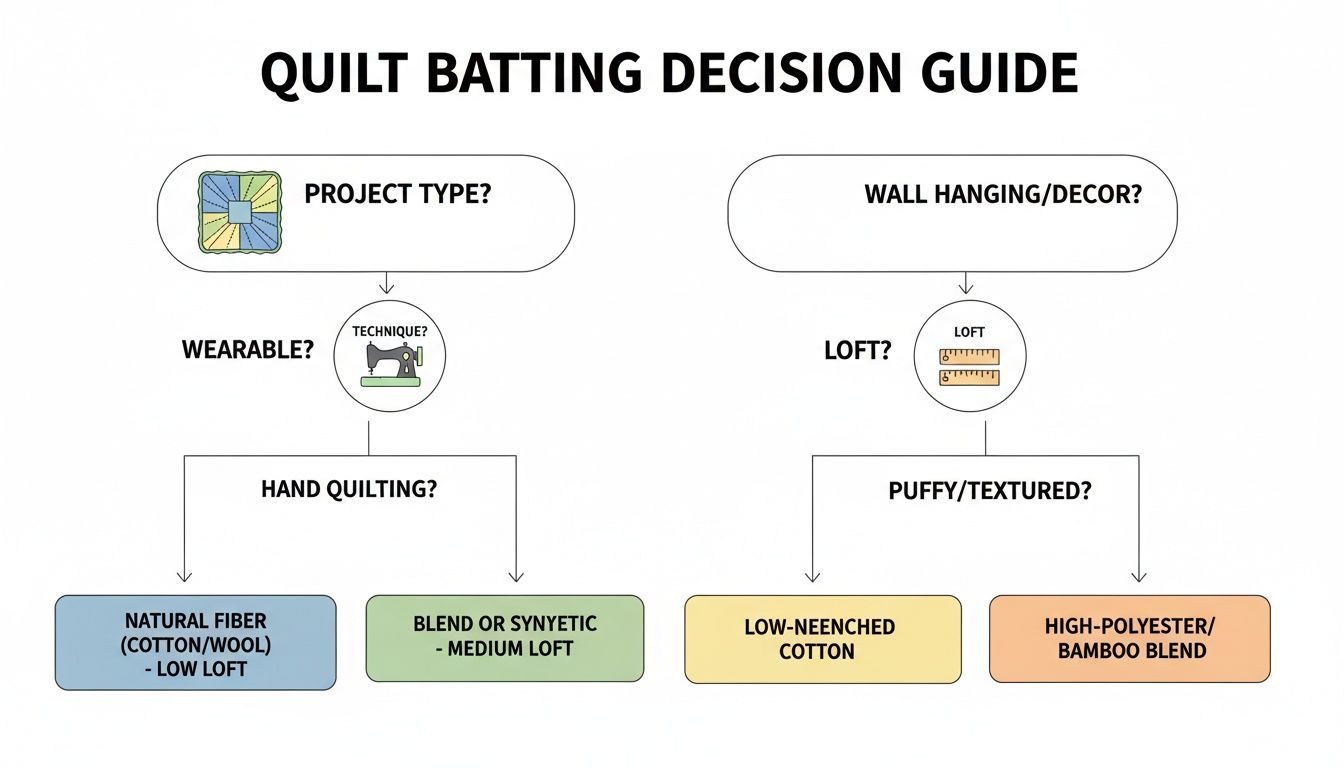 The guide simplifies complex choices by breaking them down into key project-based questions, leading you to a suitable material.
Machine Settings and Quilting Needles
Getting your sewing machine settings right is absolutely crucial. A walking foot isn't just a suggestion; it's pretty much essential for evenly feeding all three layers of the quilt sandwich through the machine. It stops the top layer from creeping and shifting against the batting, which is a common cause of frustration.
When it comes to the smaller details, a few adjustments make all the difference:
- Needle Size: Always start with a sharp, new needle. For most projects using low- to medium-loft batting, an 80/12 or 90/14 quilting needle will do the trick. If you’re tackling a thicker, high-loft batting, you’ll probably need to size up to a 100/16 to punch through all those layers without a fight.
- Stitch Length: You’ll want to lengthen your stitch to accommodate the batting's thickness. A stitch length between 2.5 to 3.5 mm is a great starting point for most machine quilting. For something really puffy like a wool batting, you might even push it to 4.0 mm so the stitches don’t get lost in the fluff.
Washing and Drying Your Finished Quilt
You've poured so much effort into your quilt; the last thing you want is to ruin it in the wash. Always check the manufacturer's care label first, but here are some reliable guidelines based on the batting's fiber:
- Cotton and Blends: These are pretty sturdy. Just toss them in the machine on a gentle cycle with cold water and a mild detergent. You can tumble dry on low heat or, if you have the space, lay the quilt flat to air dry.
- Polyester: These quilts are true workhorses. Feel free to machine wash with warm water and tumble dry on a low or medium setting.
- Wool and Bamboo: These materials need a gentler touch. Wash them on your machine's delicate cycle with cool water, or simply wash them by hand. To dry, always lay the quilt flat or hang it so its weight is evenly distributed—this prevents stretching and distortion.
Following these simple care steps will protect the batting and keep your quilt looking beautiful for years to come.
Your Atlanta Resource for Quilting Supplies and Classes
All this talk about batting can feel a bit theoretical, can't it? Reading about the perfect drape or loft is one thing, but actually feeling it in your hands is another. That’s where having a local quilting expert in your corner can make all the difference.
For quilters here in the Atlanta area, that's what we aim to be at Famcut. We want to be your go-to spot, bridging that gap between knowing which batting you need and actually finding the perfect one for your next quilt.
We take a lot of pride in the batting we keep in stock. Whether you're after that classic, crinkly texture of 100% cotton, the dependable high loft of a polyester, or the beautiful drape you only get with wool, we've got high-quality options you can see and touch. Our team is here to help you match the right batting to your fabric and vision, so your project turns out just the way you imagined.
Go Beyond the Batting with Expert Classes
Of course, choosing your materials is just the start. To really bring your skills to the next level, nothing beats hands-on guidance from someone who's been there. That’s why we offer a range of sewing and quilting classes for every skill level, from your first stitch to advanced techniques.
Think of our classes as a place to bring all your questions. It's the perfect setting to get real, practical advice on the very things we've covered in this guide. You'll learn things like:
- How to baste different batting lofts without getting a single pucker.
- The best machine needles and tension settings for specific fibers.
- Tricks of the trade for making your stitches look perfect, no matter the material.
Having access to a local shop with passionate staff is invaluable. They don't just sell supplies; they share knowledge and build a community that helps every quilter grow.
So, if you're in the Atlanta area, we'd love for you to stop by Famcut. Let's find the ideal batting for your project, pair it with the perfect fabric, and maybe even get you signed up for a class that will help you create quilts you'll treasure for years.
Common Questions About Choosing Quilt Batting
Even with all the options laid out, a few questions always seem to pop up. I get it—picking the right batting feels like a huge commitment, and you want to be sure you're making the best choice for your quilt. Let's tackle some of the most common things quilters ask so you can move forward with confidence.
Getting these little details right is what makes the difference between a good quilt and a great one.
Should I Pre-Wash My Quilt Batting?
Ah, the great pre-washing debate! The answer really comes down to the fiber and the final look you’re going for.
With 100% cotton batting, you absolutely should pre-wash if you want a flat, modern look. Cotton naturally shrinks about 3-5%, and pre-washing gets that out of the way before you start quilting. But if you're like me and love that crinkly, vintage, "lived-in" texture, then skip the pre-wash! The batting will shrink up after the quilt is finished and washed, creating that classic, puckered charm.
For most other types—polyester, wool, and many bamboo blends—shrinkage is so minimal that pre-washing isn't necessary. You can just get right to quilting.
What Does 80/20 Mean on Batting Labels?
When you see "80/20" on a package, it’s referring to a super popular blend of 80% cotton and 20% polyester. Quilters absolutely love this stuff, and for good reason—it’s the best of both worlds.
The cotton gives you that soft, natural feel and lovely drape, while the polyester adds a bit of strength, loft, and resistance to wrinkles. It’s a workhorse batting that’s stable enough for machine quilting but still soft enough to needle by hand. It’s one of the most reliable and versatile choices you can make.
How Far Apart Should My Quilting Stitches Be?
This is one of the most important questions, and thankfully, the answer is always right there on the batting package. The manufacturer will tell you the maximum distance you can leave between quilting lines, which can be anywhere from 2 to 10 inches.
Pro Tip: Don't ignore the recommended quilting distance! Following this guideline is what keeps the batting from shifting, separating, or bunching up over time, especially after a few trips through the laundry. It's the key to a long-lasting quilt.
For instance, a soft 100% cotton might need quilting every 3-4 inches to keep it secure. A sturdier, needle-punched batting with a scrim, on the other hand, might let you go up to 10 inches apart, which gives you a lot more design freedom.
Can I Use Two Layers of Batting?
Yes, you can, and it's a fantastic trick! Doubling up your batting is how you get that extra-cozy warmth and create quilting with stunning, high-definition texture. When you quilt through two layers, your stitches compress the batting, making the un-quilted areas really pop.
A classic combo is to lay down a thin, low-loft cotton batting first for stability, then top it with a fluffy wool or high-loft polyester for that incredible puff. Just remember to switch to a bigger needle (a 90/14 or 100/16 is a good start) and lengthen your stitch to handle the extra bulk. The result is a quilt with a truly luxurious, weighty feel.
Ready to find the perfect batting for your next project? At Famcut.com, we offer a wide selection of high-quality battings and expert advice to help you succeed. Explore our materials and sign up for a class today at https://famcut.com.