


8 Beginner Sewing Projects for Adults to Start in 2025
Welcome to the vibrant world of sewing! If you've ever wanted to create your own clothes, unique home decor, or handmade gifts but felt intimidated by the complexity of a sewing machine, you've found the perfect starting point. This guide is specifically designed for you—the aspiring adult creator ready to turn fabric into functional art. We've curated a comprehensive list of eight handpicked beginner sewing projects for adults that are not only achievable but also incredibly rewarding.
Each project is intentionally selected to teach you fundamental skills, build your confidence, and leave you with a finished item you can be genuinely proud of. Forget confusing patterns and frustrating instructions; we're focusing on simple, fun projects that transform learning to sew into an exciting adventure. You will learn essential techniques like sewing straight lines, finishing seams, hemming edges, and working with elastic, all while creating something beautiful and useful.
This listicle breaks down each project with clear, actionable steps, including required materials, estimated completion time, and the specific skills you'll practice. Whether you want to make a simple tote bag for your groceries, a set of custom placemats for your dining table, or even your first cosplay accessory, this is where your journey begins. If you're truly passionate about personalizing your style, discovering how to create your own outfit from scratch is an incredibly rewarding skill to develop. Let's thread that needle and start creating.
1. Simple Tote Bags
The simple tote bag is arguably the quintessential first project for any aspiring sewist. Its construction relies on basic geometric shapes and straight seams, making it an ideal practice ground for foundational skills. This project demystifies the sewing process, teaching you how to measure and cut fabric accurately, sew consistent straight lines, and attach functional elements like handles. Because it requires minimal pattern pieces, often just two rectangles for the body and two for the straps, it's a wonderfully unintimidating entry into the world of sewing.
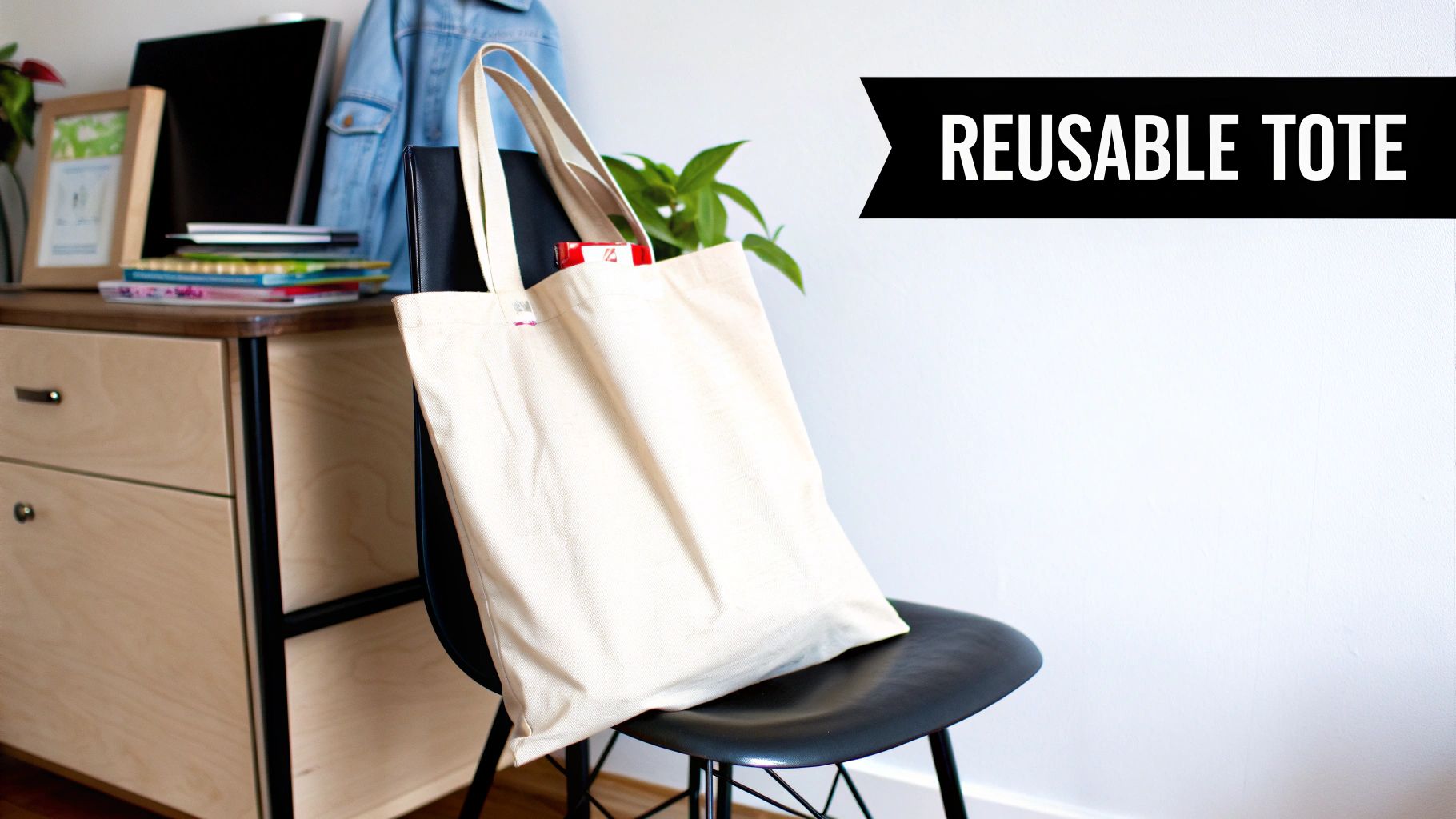
The immediate practicality of a tote bag provides a sense of accomplishment that fuels further creativity. It's not just a practice swatch; it’s a usable item you can show off right away. This makes it one of the most rewarding beginner sewing projects for adults.
Project Breakdown
- Difficulty: 1/5 (Very Easy)
- Estimated Time: 1-2 hours
- Key Skills Practiced: Measuring and cutting fabric, sewing straight seams, topstitching, and attaching handles.
- Best For: First-time sewists who want a quick, functional, and satisfying project.
Actionable Tips for a Perfect Tote
To ensure a smooth process and a professional-looking result, follow these tips:
- Choose the Right Fabric: Start with a medium-weight woven cotton, canvas, or denim. These fabrics are stable, easy to handle, and don't slip or stretch, which is perfect for beginners.
- Press Your Seams: Ironing your seams open as you sew is a game-changer. It makes your tote look crisp and professional and ensures your corners are sharp.
- Reinforce Your Handles: The point where the handles attach to the bag body takes the most stress. Sew a small square or an "X" shape over the base of each handle attachment point for extra durability.
Once you master the basic construction, the possibilities are endless. You can create a lined canvas tote with an interior pocket for your phone, upcycle old jeans into a sturdy denim bag, or even experiment with decorative stitching. If you're documenting your creative process and sharing it online, you might find valuable resources and opportunities. Learn more about creator platforms and brand collaborations to see how your new hobby could evolve.
2. Pillowcases and Throw Pillows
Following tote bags, pillowcases and throw pillows are a fantastic next step for developing your skills. These projects keep things simple with straight seams and basic shapes but introduce important new techniques like finishing edges and creating closures. They allow you to practice working with larger pieces of fabric while creating something that instantly adds a personal touch and comfort to your home decor. The satisfaction of making your own custom pillows is immense, as they are both beautiful and functional.
The versatility of this project makes it an enduring favorite among beginner sewing projects for adults. You can start with a simple envelope-style closure that requires no hardware and then graduate to installing zippers or buttons as your confidence grows. It's a project that truly grows with you.
Project Breakdown
- Difficulty: 1.5/5 (Easy)
- Estimated Time: 1-3 hours
- Key Skills Practiced: Sewing straight seams, creating hems, finishing seam allowances, inserting closures (like envelope, zipper, or button), and ensuring square corners.
- Best For: Beginners ready to move beyond the most basic projects and learn foundational garment and home decor construction techniques.
Actionable Tips for a Perfect Pillow
For a professional finish that will have guests asking where you bought your pillows, keep these tips in mind:
- Start with an Envelope Closure: This clever design uses overlapping fabric panels on the back to create a closure without needing a zipper or buttons. It's the easiest and quickest way to make a removable pillow cover.
- Use a Pillow Form: Don't worry about making the pillow insert yourself. Purchase a pre-made pillow form that is 1-2 inches larger than your finished cover dimensions for a plump, full look.
- Clip Your Corners: Before turning your pillowcase right-side out, carefully snip the fabric at the corners diagonally, without cutting through your stitches. This removes bulk and helps you achieve sharp, professional-looking points.
- Press Everything: Just like with the tote bag, pressing your fabric before cutting and pressing your seams as you go is crucial. It ensures accuracy and gives your final product a crisp, high-quality appearance.
3. Elastic Waist Drawstring Skirts
Making your first wearable item is a major milestone, and the elastic waist skirt is the perfect project to take that leap. This garment introduces the fundamentals of clothing construction without intimidating elements like zippers or buttons. It teaches you how to work with a simple pattern, take your own body measurements for a custom fit, and create a casing for elastic and a drawstring. The result is a comfortable, stylish, and forgiving piece of clothing that builds confidence for more complex future projects.
The immediate gratification of creating a skirt you can actually wear makes this one of the most encouraging beginner sewing projects for adults. It’s a versatile piece that can be adapted for any season, from a light cotton print for summer to a cozy flannel for winter.
Project Breakdown
- Difficulty: 2/5 (Easy)
- Estimated Time: 2-3 hours
- Key Skills Practiced: Following a simple pattern, taking body measurements, creating a casing, inserting elastic, and hemming.
- Best For: Beginners ready to tackle their first piece of clothing and learn basic fitting techniques.
Actionable Tips for a Perfect Skirt
To create a well-fitting and beautifully finished skirt, keep these tips in mind:
- Pre-wash Your Fabric: Always wash and dry your fabric before you cut it. Most fabrics, especially cotton and linen, will shrink, and doing this first ensures your finished skirt will fit perfectly even after its first wash.
- Measure Elastic Correctly: Don't just rely on the pattern's measurements. Wrap the elastic snugly around your waist where you want the skirt to sit. It should be comfortable but firm enough to hold the skirt up. Cut it to this length plus a one-inch overlap for sewing.
- Use a Safety Pin: When threading the elastic or drawstring through the waistband casing, attach a large safety pin to one end. This gives you something firm to grip and push through the fabric channel, making the process much faster and easier.
Once you’ve mastered the basic skirt, you can add fun details like patch pockets, a ruffled hem, or use contrasting fabric for the drawstring. This project is a fantastic foundation that opens the door to creating a handmade wardrobe.
4. Aprons
Aprons are fantastic projects that introduce beginners to the basics of garment construction without the intimidation of complex fitting. They combine straight seams with gentle curves, teaching you how to handle different types of stitches on a single, manageable item. This project is a step up from simpler items like pillowcases, introducing elements like straps, pockets, and finished edges, all of which are foundational skills for making clothes. An apron is a forgiving project, where slight imperfections won't ruin the final, functional product.
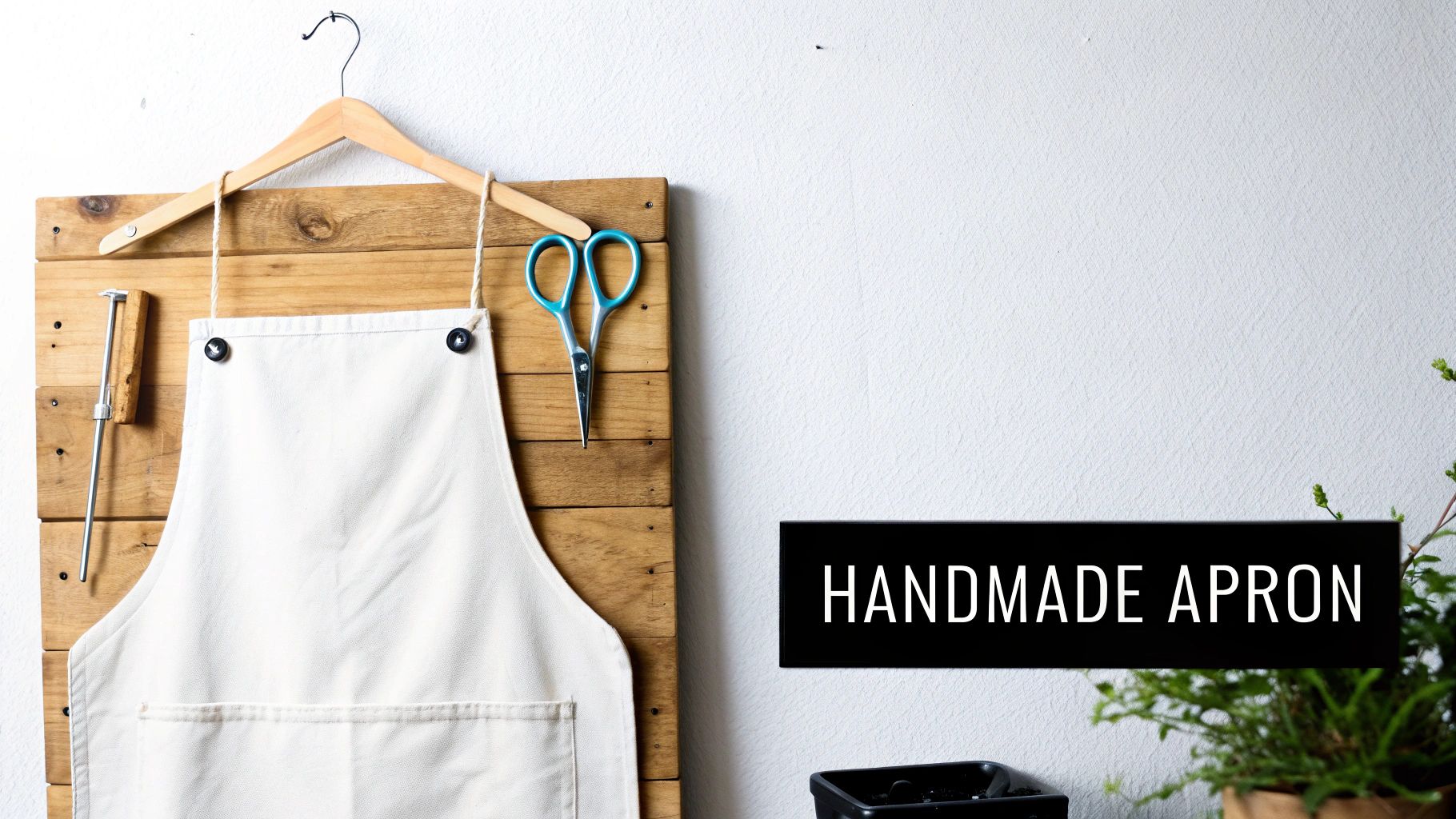
The practicality of an apron makes it a highly rewarding project. Whether for cooking, gardening, or crafting, it’s a useful item that also makes a wonderful handmade gift. Because it’s so versatile and functional, it stands out as one of the best beginner sewing projects for adults.
Project Breakdown
- Difficulty: 2/5 (Easy)
- Estimated Time: 2-3 hours
- Key Skills Practiced: Sewing straight and curved seams, hemming edges, attaching pockets, creating and attaching ties, and topstitching.
- Best For: Sewists ready to move beyond basic rectangles and learn simple garment construction techniques.
Actionable Tips for a Perfect Apron
To create a durable and stylish apron, keep these tips in mind:
- Reinforce Pocket Corners: Pocket corners are high-stress areas. Reinforce them by backstitching at the beginning and end, or sew a small triangle at each top corner for extra strength.
- Use Bias Tape for a Clean Finish: Finishing curved edges like armholes or necklines can be tricky. Using pre-made or self-made bias tape provides a clean, professional finish and is great practice for this essential skill.
- Make Neat Fabric Ties: Create crisp, sturdy ties by cutting fabric strips, folding them in half lengthwise, pressing, and then folding the raw edges into the center crease before topstitching them closed.
- Add Visual Interest: Use a contrasting fabric for the pockets, ties, or a ruffled hem to make your apron pop. This is an easy way to customize your project and practice matching different fabrics.
With a basic apron pattern mastered, you can easily add your own creative touches, like decorative ruffles or specialized tool loops for a chef-style apron. If you're excited to expand your skills and share your creations, you can discover new opportunities on creator platforms. Get started with our comprehensive guide to UGC mastery to learn how to showcase your work.
5. Fabric Napkins and Placemats
Transforming your dining table with custom-made linens is an elegant and surprisingly simple endeavor. Fabric napkins and placemats are fantastic projects because they focus on precision without the complexity of garment construction. These flat items are perfect for honing your skills in cutting straight lines, sewing even seams, and mastering various hemming techniques. They offer a canvas for creativity, allowing you to play with colors and prints to match your home decor or create themed sets for holidays and special occasions.
The satisfaction of creating a coordinating set of dining linens is immense. It's a project that is both meditative in its repetition and immediately useful, elevating everyday meals. This practicality and the skills you build make fabric napkins and placemats one of the most popular beginner sewing projects for adults.
Project Breakdown
- Difficulty: 1/5 (Very Easy)
- Estimated Time: 1-2 hours for a set of four
- Key Skills Practiced: Precise cutting, sewing straight lines, pressing, and creating neat, finished hems (including mitered corners).
- Best For: Beginners wanting to perfect their straight stitching and hemming skills on a quick, practical home decor project.
Actionable Tips for a Perfect Finish
To achieve a crisp, store-bought look for your napkins and placemats, focus on these details:
- Press Before You Cut: Always iron your fabric thoroughly before measuring and cutting. This removes wrinkles and ensures your initial measurements are perfectly accurate, which is crucial for square corners.
- Use a Rotary Cutter: For perfectly straight and precise cuts, a rotary cutter, cutting mat, and clear ruler are invaluable tools. They provide a level of accuracy that is difficult to achieve with scissors alone.
- Master the Mitered Corner: A mitered corner is a technique where the corners are folded at a 45-degree angle, reducing bulk and creating a sharp, professional finish. It’s a simple trick that dramatically elevates the look of your napkins.
Once you’ve made a basic set, you can explore more advanced versions. Try making reversible placemats with two different coordinating fabrics, or add a thin layer of batting to create quilted placemats for extra protection and a plush feel. Experimenting with decorative topstitching in a contrasting thread can also add a beautiful, custom detail.
6. Simple Quilted Projects (Lap Quilts and Wall Hangings)
Diving into quilting might seem intimidating, but starting with a small-scale project like a lap quilt or a wall hanging is a fantastic way to learn the ropes. These projects introduce the foundational techniques of quilting, such as cutting accurately with a rotary cutter, piecing fabric blocks, and sandwiching layers of fabric with batting. Unlike a full-sized bed quilt, a lap quilt is a manageable size that allows you to practice the entire quilting process without feeling overwhelmed.
The satisfaction of creating a cozy, multi-layered textile from simple squares of fabric is immense. It’s a project that combines precision with creativity, making it one of the most rewarding beginner sewing projects for adults who are ready to explore a traditional and beautiful craft.
Project Breakdown
- Difficulty: 2/5 (Easy to Moderate)
- Estimated Time: 4-8 hours
- Key Skills Practiced: Rotary cutting, piecing patchwork, pressing seams, layering (basting), quilting, and binding.
- Best For: Aspiring quilters and sewists who want to learn how to work with multiple layers and create structured, decorative items.
Actionable Tips for a Perfect Quilt
To ensure your first quilting project is a success, focus on precision and preparation:
- Use a Quarter-Inch Foot: Most quilting patterns rely on a precise ¼-inch seam allowance. Using a special quarter-inch presser foot for your machine will help you achieve consistent seams, which is crucial for making sure your blocks line up correctly.
- Start with Pre-Cuts: Simplify the cutting process by using pre-cut fabric bundles like "jelly rolls" (2.5-inch strips) or "charm packs" (5-inch squares). This saves time and guarantees your pieces are perfectly uniform.
- Press Seams Thoughtfully: How you press your seams matters. Pressing seams open can reduce bulk, while pressing them to one side (usually toward the darker fabric) can make "nesting" seams easier for perfect points.
- Keep it Simple: For your first project, stick to straight-line quilting. This involves sewing straight lines across your quilt sandwich to hold the layers together. It’s much easier for a beginner to master than free-motion quilting.
Once you’ve completed your first small quilt, you'll have the confidence to tackle more complex patterns and larger designs. For those looking to share their creative journey with a wider audience, understanding how to partner with brands can be a great next step. You can explore opportunities by checking out an influencer gifting application form.
7. Fabric Bookmarks and Small Accessories
Diving into smaller projects like fabric bookmarks, keychains, and small pouches offers a fantastic way to hone your precision skills without the pressure of a large garment. These tiny treasures are perfect for using up fabric scraps and teach essential micro-sewing techniques. They require careful handling, accurate seam allowances, and attention to detail, making them excellent practice for more intricate work later on. Because they are quick to complete and use minimal materials, they are a low-risk, high-reward endeavor.
The charm of these small accessories is their gift-ability. You can create a whole batch in an afternoon, making them perfect for party favors, stocking stuffers, or thoughtful handmade presents. This makes them one of the most practical and delightful beginner sewing projects for adults to build confidence and skill.
Project Breakdown
- Difficulty: 2/5 (Easy)
- Estimated Time: 30-60 minutes per item
- Key Skills Practiced: Sewing small pieces, turning right-side out, topstitching close to the edge, working with interfacing, and precise cutting.
- Best For: Beginners wanting to perfect their detail work, use fabric scraps, or create quick handmade gifts.
Actionable Tips for Perfect Small Accessories
To achieve crisp, professional-looking results on your mini-projects, keep these tips in mind:
- Stabilize Your Fabric: Use a lightweight fusible interfacing on your fabric pieces before cutting. This adds stability, prevents stretching, and makes the small pieces much easier to handle and sew accurately.
- Embrace Batch Sewing: If you're making several items like bookmarks or key fobs, cut all your pieces first, then sew all the seams, then press everything, and so on. This assembly-line method is incredibly efficient and saves a lot of time.
- Grade Your Seams: Before turning your small project right-side out, trim the seam allowances and clip the corners. This reduces bulk and ensures your corners are sharp and your edges are flat and crisp.
Once you feel comfortable with these small items, they become a canvas for creativity. You can add embroidery, buttons, or appliqué to bookmarks, or install zippers in small pouches. If you enjoy making and gifting these creations, you might consider sharing your work with a wider audience. Exploring partnerships with brands can be a rewarding next step. You can investigate different influencer gifting platforms to see how your crafting skills can open new doors.
8. Simple Cosplay Costume Pieces (Cloaks, Bags, Belts, and Props)
Diving into the world of cosplay can seem intimidating, but many iconic character elements are surprisingly simple to create. For those who want to merge their passion for pop culture with their new sewing hobby, simple cosplay pieces are a fantastic starting point. Projects like basic cloaks, bags, and belts often rely on straightforward shapes and seams, providing a forgiving canvas for learning garment construction without the pressure of a perfect, tailored fit.
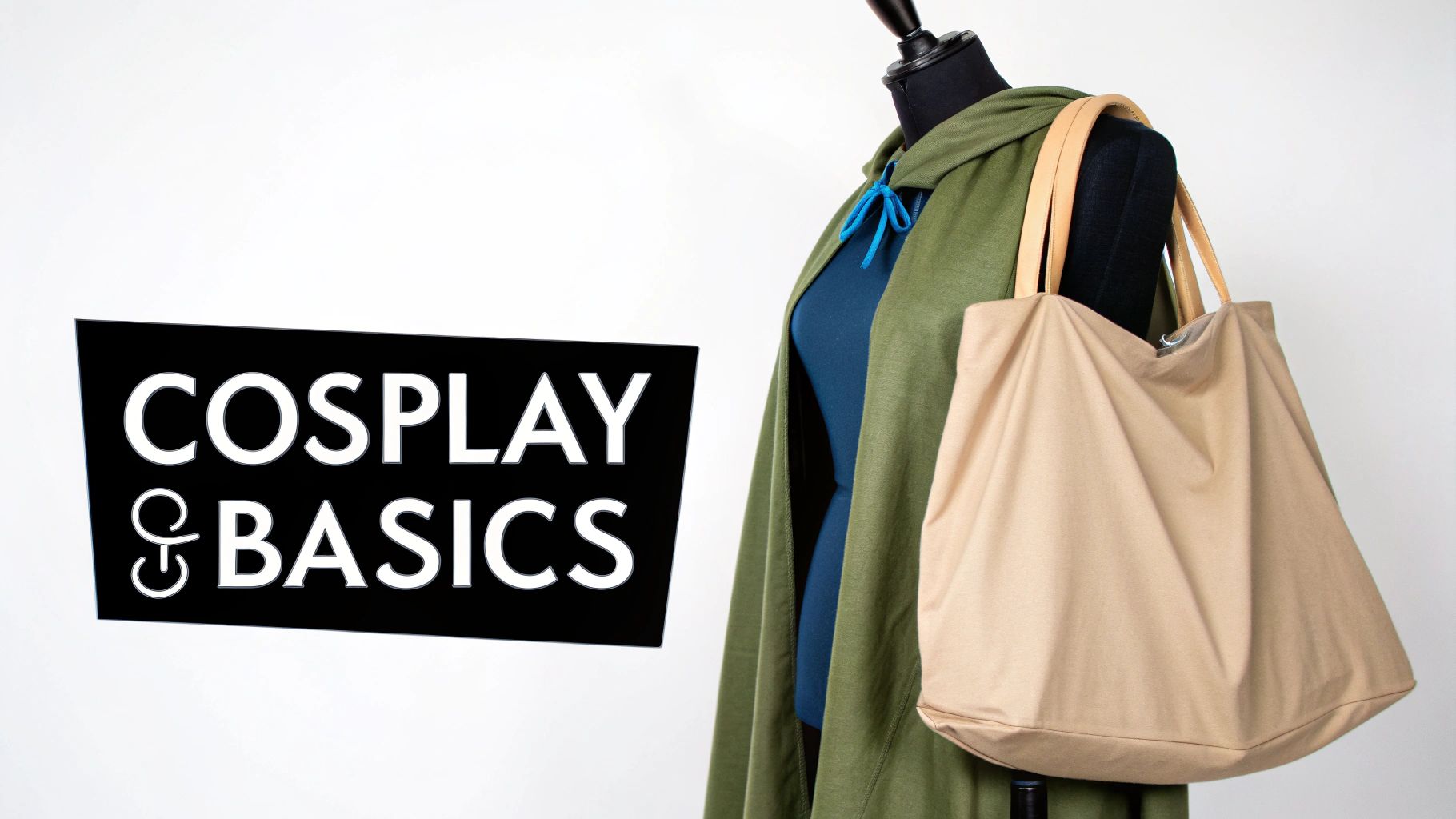
This creative outlet allows you to bring a character to life while practicing fundamental skills. The process of constructing even a simple cape or prop bag teaches you about fabric drape, structure, and finishing, making it one of the most engaging and visually impressive beginner sewing projects for adults.
Project Breakdown
- Difficulty: 2/5 (Easy)
- Estimated Time: 2-4 hours per piece
- Key Skills Practiced: Sewing long straight seams, hemming, gathering (for cloaks), using interfacing, and attaching closures (ties, velcro, clips).
- Best For: Creative beginners, pop culture fans, and anyone wanting to make a fun, wearable item for events or costumes.
Actionable Tips for a Perfect Cosplay Piece
To ensure your creation is both durable and authentic, keep these pointers in mind:
- Choose Forgiving Fabrics: Start with non-stretchy, medium-weight fabrics like broadcloth, cotton, or faux suede. They are easy to cut and sew and handle well for structured pieces like belts or pouches.
- Use Interfacing for Structure: For items like belts, bracers, or armor skirts, interfacing is your best friend. It adds stiffness and body to the fabric, preventing it from looking flimsy and giving it a more professional appearance.
- Weight Your Hems: When making a cloak or cape, sewing a small weight or a chain into the bottom hem will give it a beautiful drape and a dramatic swing as you walk, elevating the entire look of your costume.
Once you’ve built your first few pieces, you might find a community of fellow creators who are eager to see your work. As your skills grow, you can explore sharing your creations online. Discover opportunities for gifted collaborations with brands to see how your hobby can connect you with exciting new ventures.
8 Beginner Sewing Projects Comparison
| Item | 🔄 Complexity | ⚡ Resources | 📊 Expected outcomes | 💡 Ideal use cases | ⭐ Key advantages |
|---|---|---|---|---|---|
| Simple Tote Bags | Low — basic rectangles & straight seams | Low — 1–2 yd fabric, basic tools | Functional, giftable everyday bag | Beginner practice, quick gifts, errands | Quick to finish, forgiving, low cost |
| Pillowcases and Throw Pillows | Low–Medium — hems; optional zippers | Low — fabric ± pillow form, zipper optional | Decorative home items; good hemming practice | Home décor updates, precision practice | Fast, versatile finishes, customizable |
| Elastic Waist Drawstring Skirts | Medium — measurements & garment assembly | Medium — 1–3 yd fabric, elastic, basic notions | Wearable, adjustable-fit garment | Intro garment sewing, casual wardrobe | Wearable result, adaptable sizing |
| Aprons | Medium — pockets, straps, multiple steps | Low–Medium — 1–2 yd, trims, interfacing optional | Functional garment with multiple techniques | Kitchen/craft use, gift projects, scrap use | Teaches several skills; highly customizable |
| Fabric Napkins and Placemats | Very low — straight cuts & hems | Very low — small fabric amounts, basic tools | Practical table linens; neat hem practice | Quick practice, gift sets, beginner drills | Fast, cheap, builds precision |
| Simple Quilted Projects (Lap/Wall) | High — rotary cutting, piecing, quilting | High — multiple fabrics, batting, rotary tools | Decorative/functional quilts; high-quality finish | Quilt-skill development, special gifts | Teaches core quilting; high-impact results |
| Fabric Bookmarks & Small Accessories | Low — micro-sewing & turning small pieces | Very low — scraps, small notions | Small giftable items; precision skill building | Practice detail work, scrap busting, mass gifting | Fast, inexpensive, great for practice |
| Simple Cosplay Costume Pieces | Medium — drape, specialty materials, fit | Medium–High — specialty fabrics, interfacing | Display-ready costume elements; creative pieces | Cosplay, conventions, character-accurate builds | Motivating, creative, hides minor errors |
What Will You Create Next?
You have officially journeyed through a curated collection of beginner sewing projects for adults, each designed to be a launchpad for your creative ambitions. From the utilitarian charm of a simple tote bag to the personalized flair of custom pillowcases, you’ve seen how fundamental skills like sewing straight seams, topstitching, and working with elastic can transform a flat piece of fabric into a functional, beautiful object. The path from novice to confident sewist is paved with projects just like these.
The most critical takeaway is that progress, not perfection, is the goal. Each project on our list, whether it's the practical apron or the vibrant fabric napkins, offers a unique lesson. A slightly wobbly seam on your first drawstring skirt is not a failure; it’s a tangible part of your learning curve. Embracing these small imperfections is what builds resilience and expertise over time. The real magic happens when you realize you've created something useful and uniquely yours.
Turning Inspiration into Action
Now, the sewing machine in the corner of your room is no longer an intimidating piece of equipment but a portal to new possibilities. The question is no longer "Can I do this?" but "What will I make first?" The key is to start small and build momentum.
- Review and Choose: Look back at the list. Which project sparked the most excitement? Was it the idea of a handmade quilted lap quilt or the fun of crafting a simple cosplay cloak? Your enthusiasm is your best guide.
- Gather Your Tools: Before you even touch the fabric, ensure your basic toolkit is ready. A sharp rotary cutter, a reliable sewing machine, quality thread, and an iron will make the entire process smoother and more enjoyable.
- Embrace the Process: Remember the skills each project reinforces. Sewing a pillowcase hones your ability to create clean, finished seams. Crafting an apron teaches you about creating straps and pockets. These are the building blocks for more complex future endeavors.
From Hobby to Passion (and Beyond)
Mastering these foundational projects opens up a world of creative expression. What begins as a way to make a few throw pillows can evolve into a passion for quilting, garment making, or even creating items for your home that reflect your personal style. For some, this journey of making can even lead to entrepreneurial aspirations. As your skills grow, you might find yourself creating products that others admire and want to purchase. When that time comes, resources on starting your own creative business can provide a valuable roadmap for turning a craft into a career.
Ultimately, the power of sewing lies in its ability to connect us to the physical world. In an age of digital consumption, the act of creating something tangible with your own hands is a profound and satisfying experience. Each stitch you sew is a small victory, a step toward self-sufficiency and a testament to your growing skill. The journey of a thousand stitches begins with a single thread. Your thread is ready, your machine is waiting. It's time to begin.
Ready to take the next step with expert guidance and premium supplies? Visit Famcut.com, your local Atlanta hub for everything sewing and quilting. Explore our workshops, connect with a vibrant community of fellow creators, and find the perfect fabrics for your first of many beginner sewing projects for adults at Famcut.com.