


Find Beginner Quilting Classes Near Me Today
So, you're ready to dive into the wonderful world of quilting? That's fantastic. The best way to start is often the most traditional: check out local fabric shops, community centers, and even dedicated quilting guilds right in your area. These places are absolute goldmines for hands-on learning and connecting with people who are just as excited about quilting as you are.
Starting Your Quilting Journey Today
Taking that first step to make a quilt can feel a little intimidating, but trust me, finding the right class changes everything. Think of the search itself as the beginning of your creative adventure. It’s all about finding a supportive spot where you can build those core skills with confidence. Forget scrolling endlessly online—the best experiences are usually just around the corner.
The quilting community is alive and well, and local classes are where the magic happens. You’ll find everything from one-day workshops (where you might make a cool tote bag or a set of coasters) to multi-week courses that walk you through an entire quilt from start to finish. There’s something out there for every schedule and every ambition.
What to Expect from a Beginner Class
Your first class is all about laying a solid foundation. You're not just learning to sew; you're learning the language of quilting. Here’s a little taste of what you'll likely cover:
- Choosing Your Fabrics: You'll get the hang of picking the right cottons, understanding a bit of color theory, and figuring out which fabrics will play nicely together in your project.
- Mastering the Rotary Cutter: This is a game-changer. You'll learn how to safely and accurately cut your fabric with a rotary cutter, ruler, and mat.
- Perfecting Your Piecing: This is all about sewing your fabric pieces together with a consistent quarter-inch seam allowance. It’s the secret sauce for getting those sharp points and perfectly matched blocks.
- Pressing Like a Pro: There’s a right way and a wrong way to press your seams. Learning the proper technique ensures your quilt top lays beautifully flat.
And you're not alone in this! This growing interest is part of a much bigger movement. The sewing market, including the beginner quilting scene, is expected to hit an estimated value of $1.22 billion by 2025, growing at a steady clip of about 5.4%. This boom includes a huge demand for beginner-friendly classes and kits. If you're curious, you can explore more about the fabric arts industry and see just how big this creative wave has become.
To help you get started, here's a quick rundown of the best places to look.
Where to Find Your First Quilting Class
| Where to Look | What You'll Find | Best For |
|---|---|---|
| Local Quilt Shops | Hands-on classes, knowledgeable staff, all supplies in one place. | Beginners who want in-person guidance and a one-stop-shop experience. |
| Community Centers | Affordable multi-week courses, often with a relaxed, social atmosphere. | Learning on a budget and meeting a diverse group of local crafters. |
| Quilting Guilds | Workshops led by experienced quilters, monthly meetings, and a strong community. | Those looking to immerse themselves in the quilting world and network. |
| Online Platforms | Video tutorials and virtual classes you can take from home, like on Craftsy or Skillshare. | Self-starters or anyone with a tricky schedule needing flexibility. |
No matter where you look, the goal is to find a place that feels right for you.
A great beginner class does more than teach you how to sew; it introduces you to a community. It’s where you’ll meet fellow enthusiasts, share tips, and get the encouragement you need to turn a new hobby into a lifelong passion.
Finding the Best Local Quilting Classes
Sure, typing "beginner quilting classes near me" into a search bar is the obvious first step. But the real hidden gems—the classes that truly inspire you—are often found by digging a little deeper and thinking like a local quilter.
A great starting point is to look for your town's quilters guild. These are the community hubs where enthusiasts share tips, show off their work, and, most importantly, organize fantastic workshops. Many guilds bring in talented local artists or even nationally known instructors, so you get top-tier teaching right in your backyard. Joining their local Facebook group is another smart move for getting the inside scoop on upcoming class announcements.
Widen Your Search Net
Don't just stop at guilds. Some of the most charming and personal classes happen in places that don't have a big online marketing budget. You have to know where to look.
- Go Beyond Google: Check out platforms like Eventbrite and Meetup. A quick search for "quilting" or "sewing" in your area can turn up unique one-off workshops you'd never find otherwise.
- Check National Fabric Chains: Don't overlook the big craft stores. Places like JOANN usually have a well-organized schedule of classes that are perfectly designed for absolute beginners. Head straight to their website and look for the "Classes" or "Events" tab.
-
Use Social Media: Hop on Instagram or Facebook and search for hashtags like
#[YourCity]Quiltsor#[YourTown]SewingClass. This is a fantastic way to find independent instructors and small studios promoting their sessions directly to the community.
As you browse, you'll notice that many instructors and small shops manage their own websites. From personal experience, I can tell you that a simple, mobile-friendly design makes a huge difference when you're trying to check schedules and sign up on the go.
Pro Tip: Keep a simple list of the classes that catch your eye. Jot down the instructor, location, dates, and cost in a notebook or a quick spreadsheet. Having everything in one place makes comparing your top choices so much easier down the line.
How to Choose the Right Quilting Workshop
Once you’ve found a few promising beginner quilting classes, the real work begins. How do you sort through them to find the perfect one for you? It’s not just about liking the sample project; it's about digging into the details of the learning experience itself.
Your first clue is the instructor. Look into their background. Are they a seasoned quilter who genuinely loves teaching newcomers, or a brilliant artist who might unintentionally leave beginners in the dust? Scan reviews for words like "patience," "clear," and "encouraging." A great teacher can make even the most intimidating techniques feel completely manageable.
Next, take a hard look at the class curriculum. A solid beginner workshop should be all about the fundamentals—things like mastering the quarter-inch seam, safely using a rotary cutter, and pressing seams correctly. If the class description is a bit fuzzy, don't be shy about calling the shop to ask for a more detailed breakdown.
Key Questions to Ask Before Enrolling
Getting answers upfront can save you from a lot of frustration on the first day of class. A few simple questions can mean the difference between a fantastic experience and a disappointing one.
Before you pull out your credit card, get clarity on these points:
- What specific quilting skills will we learn? You want to see the basics listed, like piecing, pressing, and maybe even a simple finishing technique.
- Do I need my own sewing machine? Many quilt shops provide machines for classes, which is a huge plus if you haven't bought one yet. Find this out early!
- What’s the true total cost? Be sure to ask about any mandatory kits or supply lists on top of the class fee. Those costs can add up quickly.
- How many students are in the class? In my experience, a smaller class size—ideally under ten students—translates to more one-on-one attention from the instructor when you need it most.
A class that teaches you how to quilt is far more valuable than one that just gets you through a single project. Focus on workshops that promise to build your fundamental skills, giving you the confidence to tackle future projects on your own.
Reading Between the Lines of Reviews
Student reviews are a goldmine of information if you know what to look for. Go beyond the generic "it was fun!" comments. Did former students walk away feeling more confident? Do they mention the instructor's specific teaching style or the supportive, friendly vibe in the classroom? That’s the good stuff.
This kind of insight is incredibly valuable, especially now. Quilting is a huge and stable market with 9 to 11 million participants in the U.S. alone. Better yet, recent data shows that 18% of quilters are new to the hobby, a big jump from past years. This growing community means more honest reviews and shared experiences are out there to guide you. You can read more about current quilting trends and see just how vibrant this world is.
Choosing the right workshop is your first step to joining this thriving creative community with confidence.
Getting Ready for Your First Class
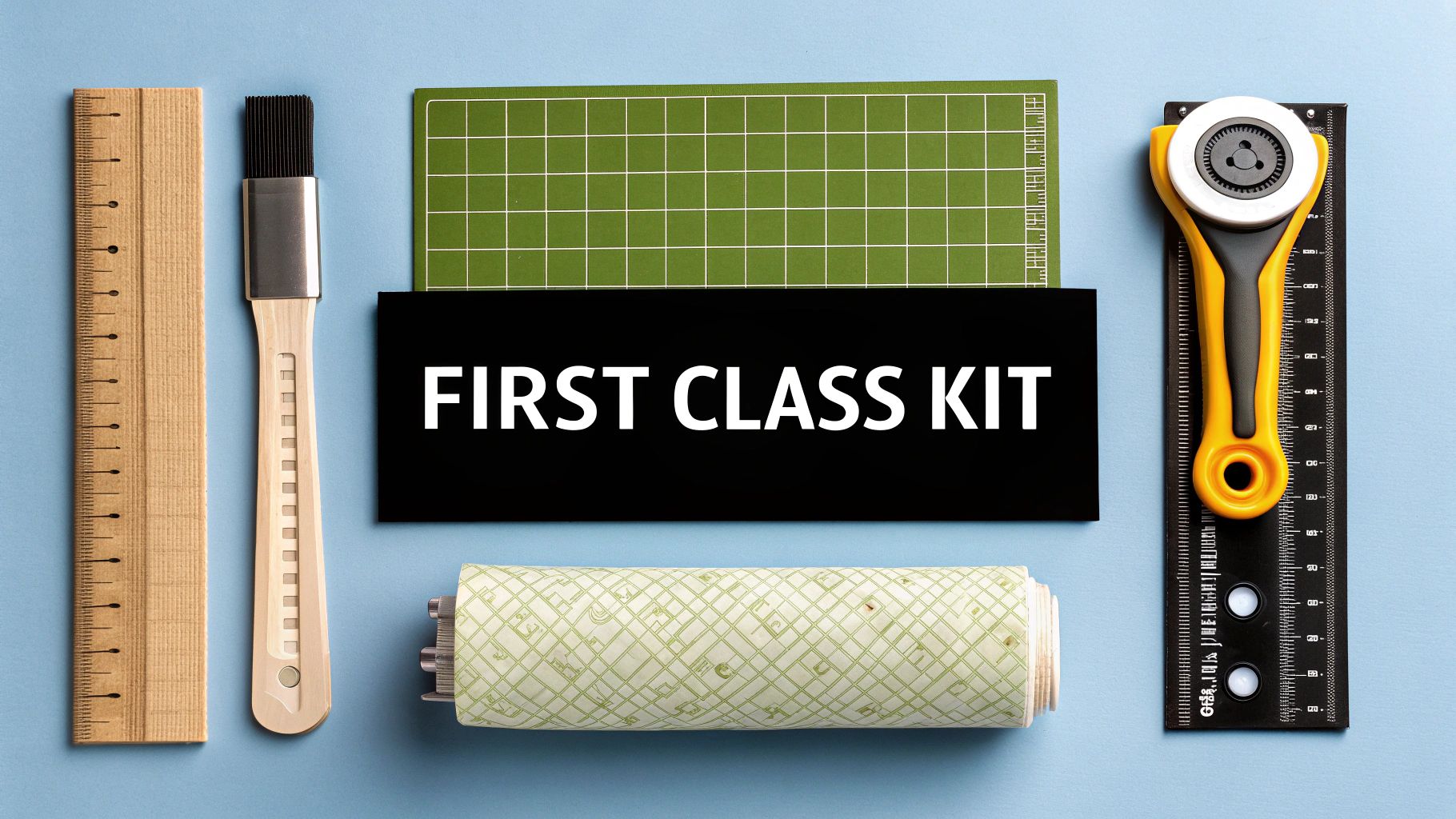
So, you're all signed up! That feeling right before your first class is the best—a little bit of excitement mixed with some "what do I bring?" nerves. A little preparation goes a long way in calming those jitters so you can walk in feeling ready to dive right in.
Your class should come with a supply list, but it’s easy to get overwhelmed trying to figure out what you really need on day one. Your instructor will guide you, but a few core tools are non-negotiable in the world of quilting.
Your First-Day Quilting Toolkit
Think of these as your new best friends. While some shops might have tools you can borrow, having your own means you can get familiar with them and practice at home.
- Rotary Cutter (45mm): The 45mm size is the industry standard for a reason. It’s perfect for slicing through fabric for strips and blocks. Just make sure you get one with a good safety guard.
- Self-Healing Cutting Mat: You don't need a massive one to start. A mat around 18" x 24" gives you plenty of room for most beginner projects without eating up your entire table.
- Acrylic Ruler: If you only buy one ruler, make it the 6" x 24". It's the absolute workhorse for cutting long, accurate strips from your yardage.
Of course, your instructor will also list specific fabrics, thread, and good-quality pins. Pay close attention to that list and ask the shop about student discounts—many offer a nice little percentage off for class supplies.
My best advice? The most important thing you can bring to that first class is curiosity. You're not supposed to be perfect. You're there to learn. Embrace the wobbles, ask all the questions, and remember that every single quilter you admire started right where you are.
It’s totally normal to feel a bit nervous. Just focus on the fun of trying something new and meeting people who share your budding passion. This is where the adventure begins
Considering Online and Hybrid Alternatives
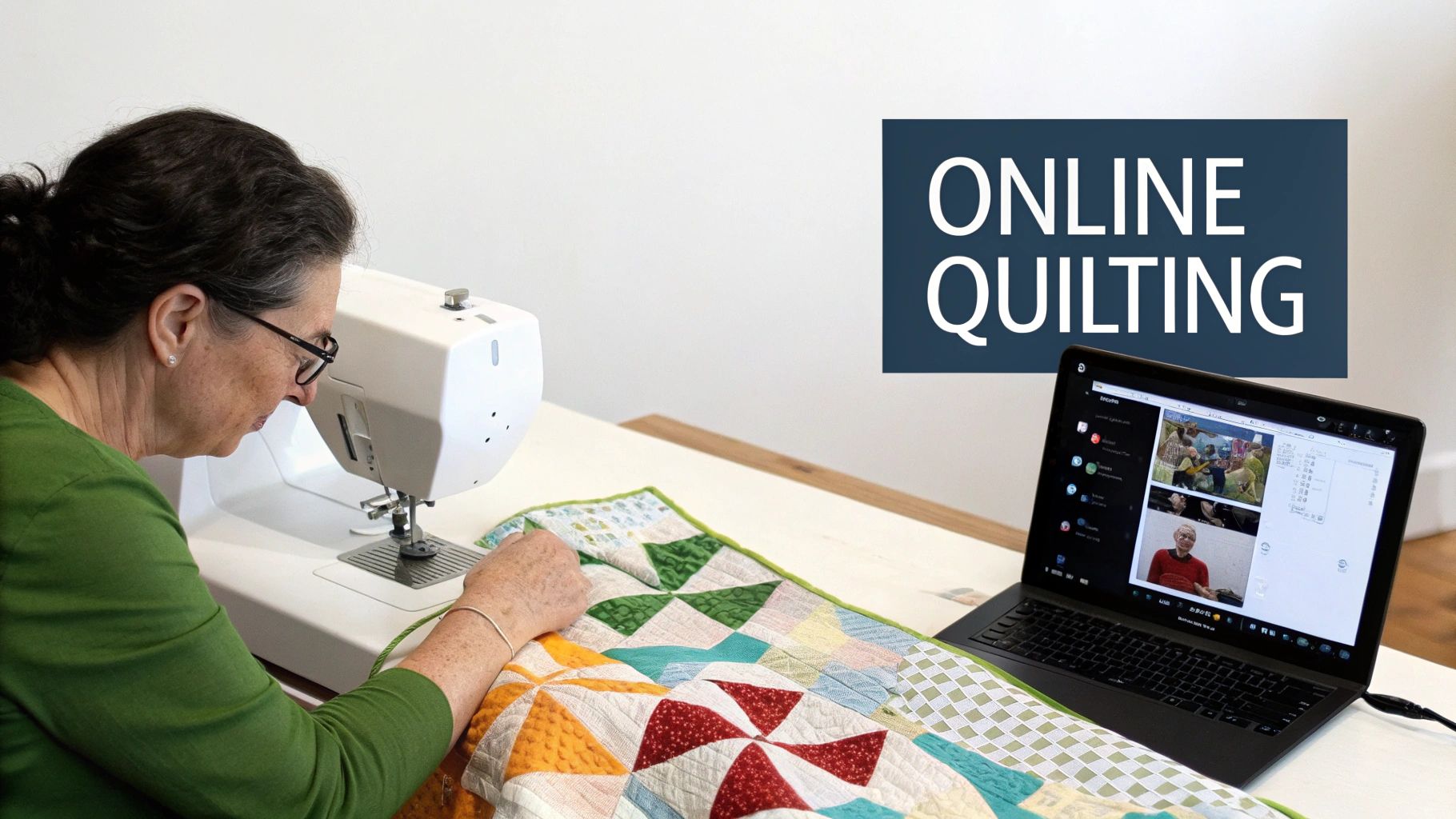
Sometimes, the best beginner quilting class isn't just down the street—it's right on your laptop. If local options are slim or your schedule is already packed, don't feel discouraged. The world of online quilting education is bigger and better than ever.
You can find everything from comprehensive, self-paced video courses on platforms like Craftsy to live, interactive workshops held over Zoom. These digital classes let you learn essential skills like piecing, quilting, and binding from the comfort of your own sewing space. The biggest perk? You can learn at your own pace and re-watch a tricky technique until it clicks.
This incredible accessibility has helped fuel a massive crafting boom. Globally, the needlecraft market is projected to hit nearly $64 billion by 2035, and a big part of that is because online resources have made it so easy for newcomers to jump in.
Finding the Right Fit for You
So, is a virtual class the right move for you? It really comes down to your learning style. Here are the most common formats you'll run into:
- Self-Paced Video Courses: These are fantastic if you're an independent learner. You typically get lifetime access to the lessons and can stitch whenever inspiration strikes, whether that's at 6 a.m. or midnight.
- Live Virtual Workshops: If you crave real-time feedback and community, this is a great option. You get to interact with the instructor and your classmates, creating that "sewing circle" vibe from anywhere in the world.
- Hybrid Models: This approach aims for the best of both worlds. You might learn new techniques through online videos during the week and then meet up with a local group for an in-person "sew-cial" to share your progress.
When you're weighing your options, thinking about a blended e-learning approach can really help clarify what you want. It's a fantastic way to get structured guidance with a healthy dose of real-world connection.
Answering Your Top Quilting Class Questions
When you're just starting out, it's totally normal to have a few questions swirling in your head. Getting these practical details sorted out before you sign up is the key to finding a class you'll love and starting off on the right foot.
Let's tackle some of the most common things beginner quilters ask.
How Much Should I Expect to Pay for a Class?
The cost of quilting classes can really run the gamut. For a one-day workshop where you’ll whip up a small project like a pillow or a table runner, you're probably looking at a range of $50 to $150.
If you're diving into a multi-week course that walks you through making a whole quilt from start to finish, the price tag will likely be somewhere between $200 and $400+.
Always, always ask what that class fee covers. Does it include a kit with all your fabric and supplies? Buying those on your own could easily add another $50 to $100, so it’s good to know upfront. For the most affordable options, check out your local community or recreation centers.
Don't just look at the price—think about the value. You're investing in an expert's time and guidance, which can save you from a ton of frustration and mistakes you might make on your own.
Do I Need to Bring My Own Sewing Machine?
This is a huge one, so make sure you get a clear answer before you register! Many quilt shops have classroom machines you can use, which is a fantastic way to try out quilting without investing in a machine right away.
On the other hand, classes held at community centers or led by independent teachers often require you to bring your own machine. If you’re bringing yours, give it a quick test run at home to make sure it's working properly. It's also smart to pack the manual and make sure you're comfortable with the basics, like threading it and winding a bobbin, before you get to class.
At Famcut.com, we're passionate about helping you start your creative journey. Whether you're looking for your first class or the perfect fabric for your next project, explore our resources at https://famcut.com and join our vibrant community of makers.