


Best Baby Blanket Fabric for Soft, Safe Comfort
When you’re choosing a baby blanket fabric, it all comes down to three things: softness, safety, and breathability. That's why you’ll see materials like cotton, bamboo, and fleece pop up again and again—they hit that sweet spot between gentle comfort and practical, everyday durability.
Decoding the Best Baby Blanket Fabric
Picking out a fabric for a baby blanket is about so much more than a cute pattern. You're creating a little haven of comfort and security. The ideal material has to be incredibly gentle on a newborn's delicate skin, which is much thinner and more sensitive than our own. This is why the big three—softness, breathability, and ease of care—really guide the whole decision. A blanket is often one of the very first textures a baby feels, making the choice a personal and important one.
This focus on quality is a huge driver in a growing market. The global baby blanket industry was valued at around USD 3.09 billion and is projected to hit USD 4.72 billion by 2030. That growth says a lot about what parents are looking for: high-quality, safe, and versatile fabrics that fit into the reality of modern family life.
Core Qualities to Look For
Before we get into specific fabrics, let's talk about the "why." Every material has its own unique feel and function, but the best ones always deliver on a few key promises:
- Softness: The fabric should feel buttery-soft and never irritating. If you wouldn't want it against your own cheek, it’s not right for a baby.
- Breathability: This is a non-negotiable for safety. A breathable fabric lets air flow freely, which helps reduce the risk of overheating while a baby sleeps. Natural fibers like cotton are fantastic for this.
- Durability: Let's be honest, baby blankets go through the wringer. They need to hold up to constant washing and daily snuggles without pilling, falling apart, or losing that initial softness.
- Hypoallergenic Properties: Choosing materials that are less likely to cause an allergic reaction is always a smart move, especially if sensitive skin runs in the family.
To give you a clearer picture, here’s a quick rundown of how the most popular options stack up.
Quick Guide to Top Baby Blanket Fabrics
This table offers a snapshot of the most popular baby blanket materials, highlighting what they do best so you can quickly compare your options.
| Fabric Type | Best For | Softness Level | Breathability | Care Level |
|---|---|---|---|---|
| Cotton | All-around use, from swaddles to quilts | Very Soft | High | Easy |
| Bamboo | Hot climates and babies with sensitive skin | Silky Soft | Very High | Moderate |
| Minky | Ultimate coziness and sensory comfort | Ultra Soft | Low | Easy |
| Fleece | Warmth, durability, and affordability | Soft | Low-Moderate | Very Easy |
| Muslin | Swaddling, burp cloths, and lightweight use | Gets Softer | Very High | Easy |
Ultimately, each fabric has a place. Cotton is a reliable workhorse, while bamboo offers a touch of luxury. Minky is all about that plush feel, and fleece brings the warmth without the fuss.
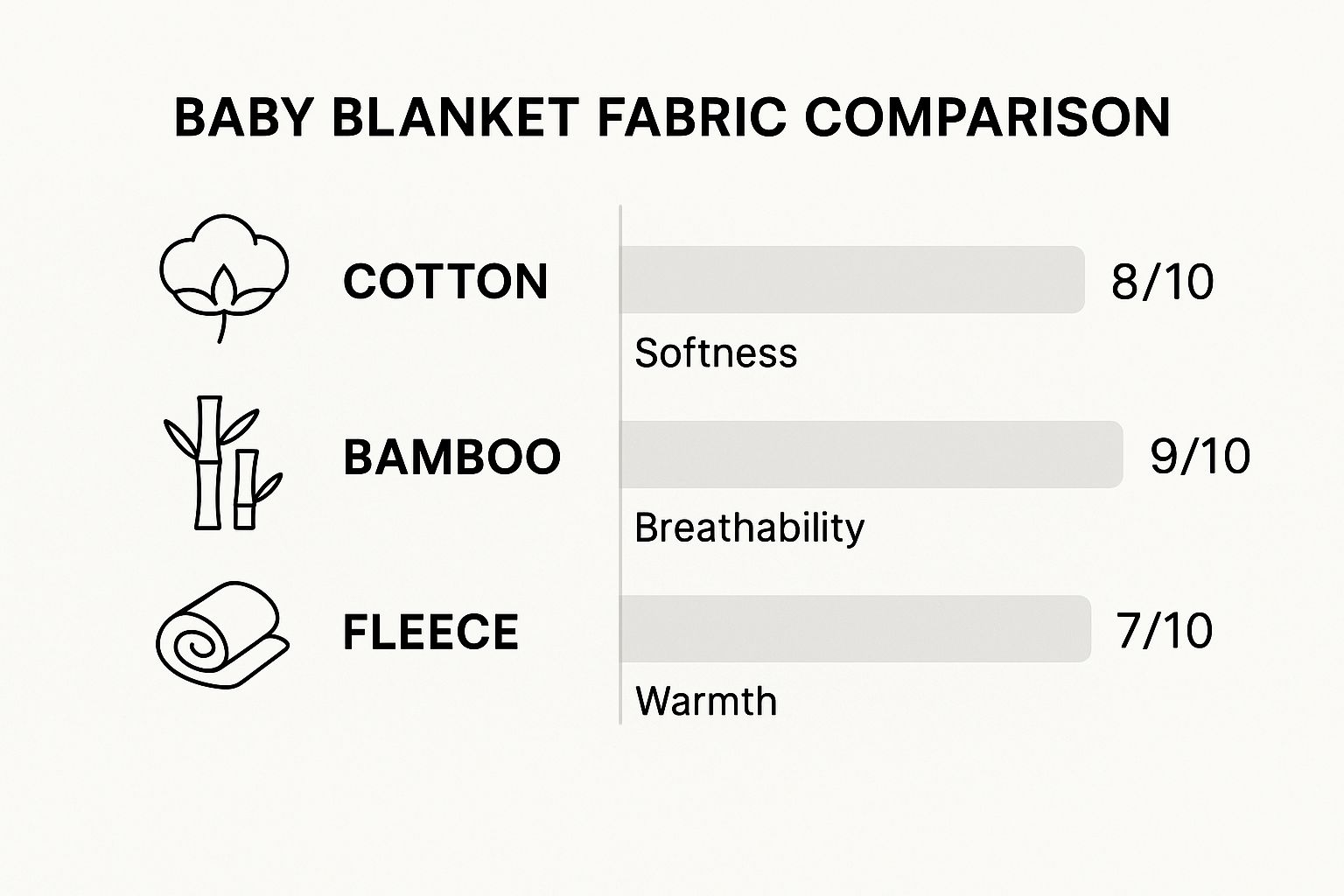
As you can see, bamboo is a champion of breathability, cotton is a fantastic all-arounder for softness, and fleece is a go-to for dependable warmth.
A baby blanket is often the first gift, a security object, and a cherished keepsake. The fabric you choose is the very foundation of that comfort, making it one of the most thoughtful decisions a parent or crafter can make.
And if you're planning a DIY project, don't forget the inside! The batting is just as important as the outer layers. For a quilt that's both soft and breathable, something like Hobbs Heirloom 100% cotton batting is a perfect choice. It provides a lovely, natural middle that complements any fabric you pick for the top and bottom.
Understanding Natural Baby Blanket Fabrics
When you imagine a classic baby blanket, you're probably picturing one made from a natural fiber. These materials, sourced directly from plants and animals, have been the go-to choice for generations, and for very good reason. They offer a unique blend of softness, safety, and performance that synthetics are always trying to replicate.
Natural fabrics are the comfort food of the textile world—they’re reliable, wholesome, and just feel right. They have inherent qualities that make them perfect for being right up against a baby’s delicate skin. Let's dig into the most popular natural options, starting with the undisputed champion of the nursery.
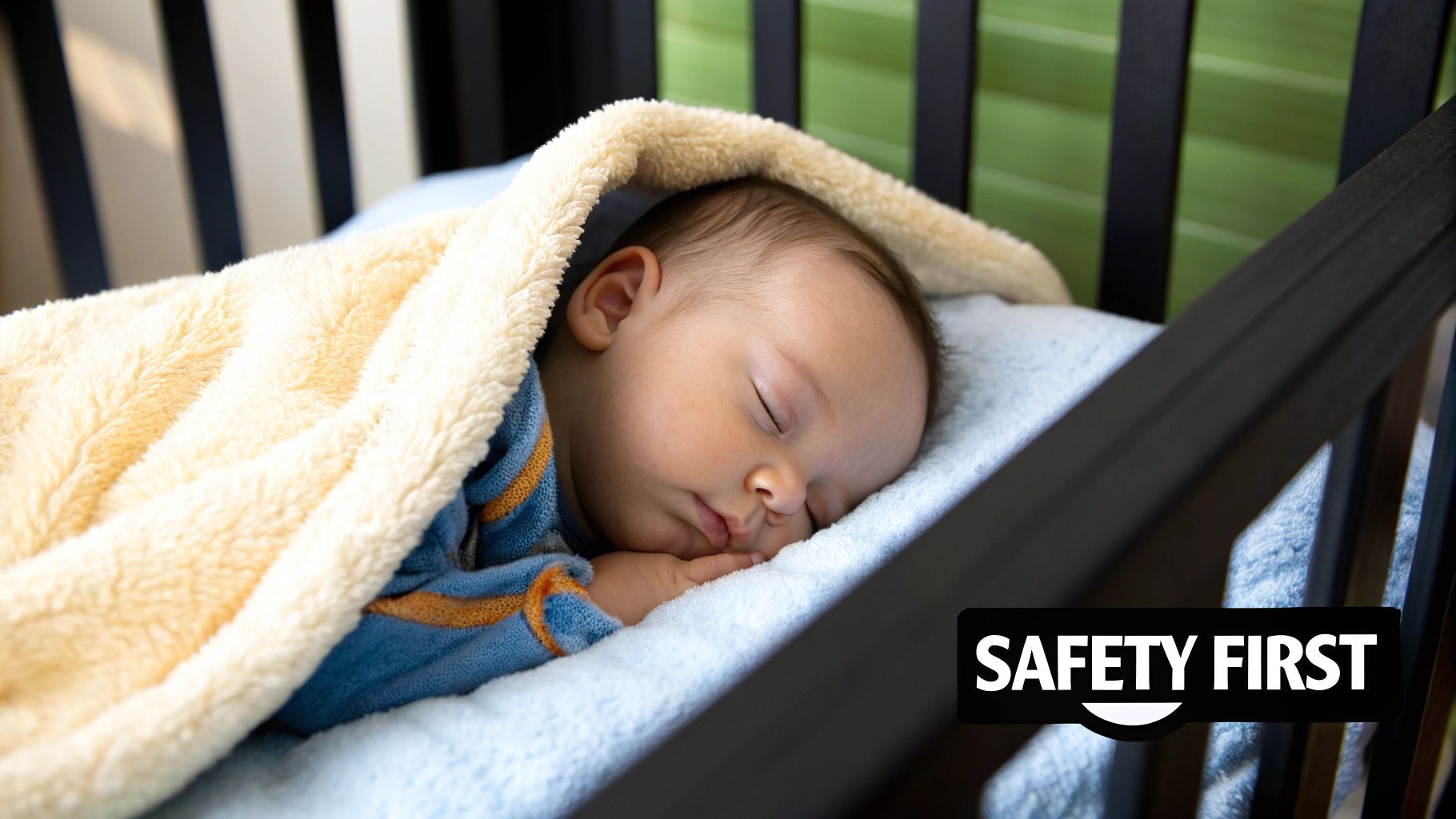
Cotton: The Gentle Workhorse
Cotton is, without a doubt, the cornerstone of the baby blanket fabric world. It’s soft, tough, easy to wash, and wonderfully breathable. Think of it as that dependable friend you can always count on—it performs beautifully in almost any situation.
Its popularity is huge. The global baby blanket market is estimated at around USD 2.5 billion, with cotton being the dominant fabric choice thanks to its breathability and hypoallergenic nature. While bamboo is a rising star, cotton remains the trusted go-to for most parents and crafters around the globe.
What makes cotton so special is its incredible versatility. It isn't just one single fabric, but a whole family of different textures and weaves, each suited for a different job.
- Cotton Muslin: Picture a soft, airy filter. Muslin has a very open, lightweight weave that allows for amazing airflow, which is key for regulating a baby's temperature and reducing the risk of overheating. It’s the top choice for swaddles and lightweight summer blankets. For bigger projects, a quality natural muslin wideback cotton fabric is perfect for creating seamless, breathable quilts.
- Cotton Flannel: If muslin is a summer breeze, flannel is a cozy autumn afternoon. The fabric is brushed on one or both sides, which fluffs up the fibers and creates tiny pockets of air. These little pockets trap body heat, providing warmth without the weight of bulkier materials.
- Organic Cotton: For the most sensitive skin, organic cotton is the gold standard. It's grown without synthetic pesticides or fertilizers and processed without harsh chemicals. This dramatically lowers the chance of skin irritation, making it a pure and safe choice you can feel good about.
Bamboo: The Silky and Sustainable Choice
Bamboo fabric is a newer player on the scene, but it has quickly won over parents with its luxurious, silky-soft feel. It's often compared to cashmere and is exceptionally gentle, draping beautifully.
But its appeal goes far beyond its texture. Bamboo has some remarkable natural properties that make it an incredible material for baby items.
Bamboo is naturally moisture-wicking, pulling dampness away from the skin three to four times faster than cotton. This keeps a baby drier and more comfortable, especially in warmer climates or for little ones who tend to get sweaty.
This feature, combined with its fantastic breathability, makes bamboo a standout for year-round temperature regulation. It helps keep a baby cool in the summer and provides a warm, dry layer in the winter.
Wool: The Natural Insulator
The word "wool" might bring to mind an itchy old sweater, but modern merino wool is a completely different animal. It’s incredibly fine and soft, making it comfortable enough for even the most delicate skin. Wool’s most impressive trick, though, is its ability to insulate.
Think of how a well-insulated thermos keeps drinks hot or cold. Wool does the same thing for the body. Its natural crimp creates countless tiny air pockets that trap heat efficiently, providing serious warmth without the bulk.
Here’s a quick look at how these top natural fibers stack up:
| Feature | Cotton | Bamboo | Wool (Merino) |
|---|---|---|---|
| Primary Benefit | Breathable & versatile | Silky soft & moisture-wicking | Superior insulation & temperature control |
| Feel | Soft and crisp, gets softer with each wash | Silky, smooth, and drapes beautifully | Fine, soft, and springy |
| Best For | Everyday blankets, quilts, and swaddles | Warm climates and babies with skin sensitivities | Cold weather and outdoor use |
| Care | Easy to machine wash and dry | Gentle wash, often line-dried | Hand wash or gentle cycle, lay flat to dry |
While cotton, bamboo, and wool are the big three, other natural fibers offer their own unique benefits. If you're curious about luxury options, you might want to read more about why mulberry silk is an excellent choice for baby blankets.
Ultimately, choosing a natural baby blanket fabric is a wonderful way to wrap your little one in comfort that’s been trusted for centuries. Each fiber offers a distinct set of perks, allowing you to pick the perfect material for your climate, your baby’s needs, and your next project.
Getting to Know Cozy Synthetic and Blended Fabrics
While natural fibers are the timeless workhorses of the baby world, you can’t talk about baby blankets without diving into the wonderfully plush world of synthetics. These modern materials are engineered for one thing above all else: incredible, next-level softness. They also bring vibrant colors and serious durability to the table, which is why they’ve become such a popular choice.
Think of these fabrics as the plush toys of the textile world. They're designed from the ground up to be irresistibly cuddly. We'll explore the big three—minky, fleece, and chenille—to see what makes each one unique and why they’re a go-to for so many parents and crafters.
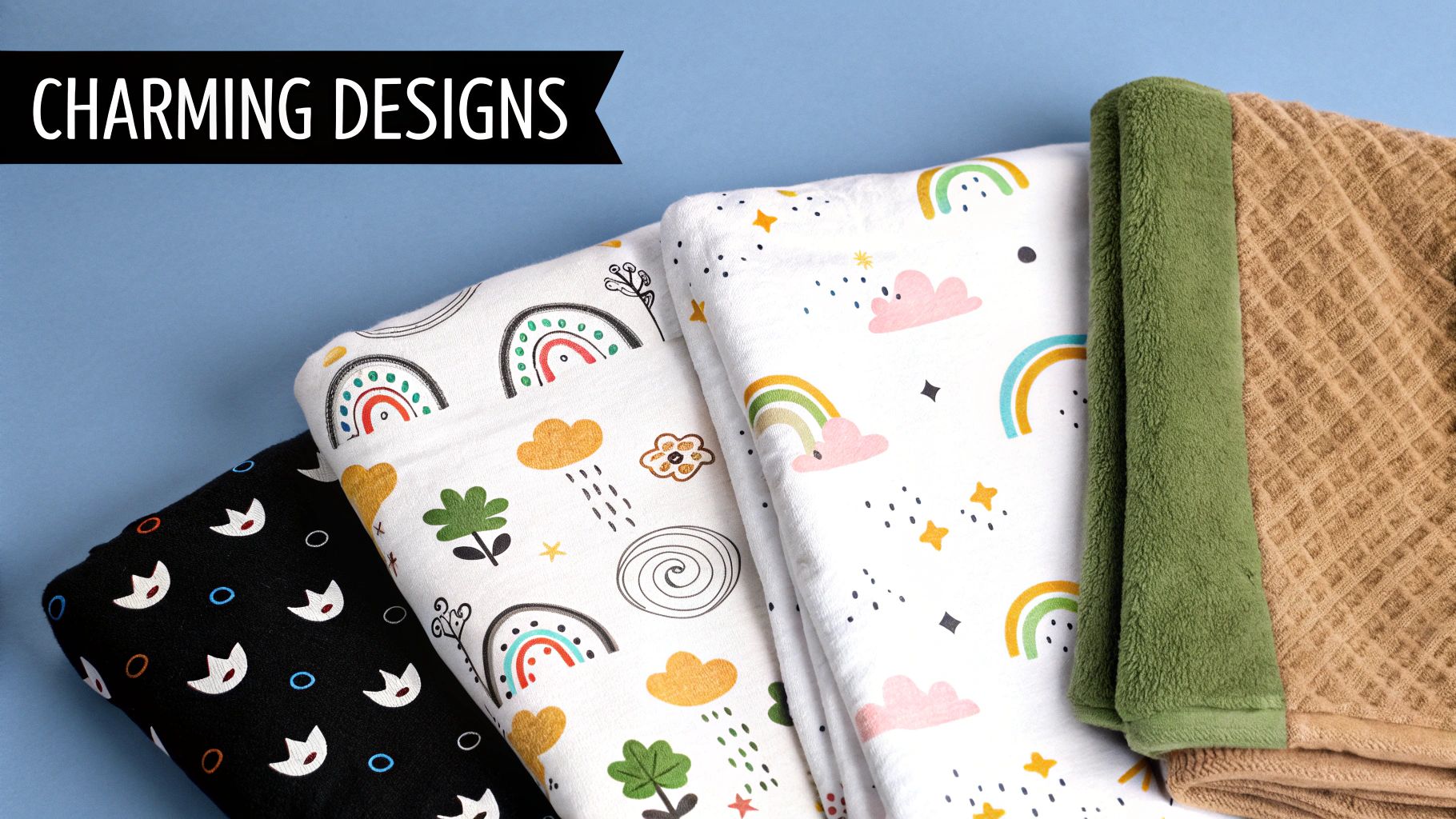
Minky: The Ultimate in Plushness
If you've ever touched a modern, store-bought baby blanket that felt almost impossibly soft and velvety, you were probably feeling minky. It’s a plush polyester fabric that’s best described as a cross between fleece and cashmere, but with a signature silky texture all its own.
Made from 100% polyester fibers, minky is a knit fabric with a dense, soft pile that gives it a slight stretch. That little bit of give makes it a dream to work with for blankets and other comfort items.
The name "minky" is a nod to its resemblance to mink fur, but don't worry—it's a completely vegan and cruelty-free alternative. Its real claim to fame is that ultra-soft, soothing texture that babies (and let's be honest, adults too) just love.
Because it’s synthetic, minky holds dye incredibly well. This means you’ll find it in an endless rainbow of vibrant colors and playful patterns that won’t fade after a few washes. If you need a specific shade or a durable finish for your project, an extra-wide solid minky is a fantastic choice. You can check out options like this Ivory Cuddle® 3 Extra-Wide Solid Minky Fabric to get a feel for its beautiful texture.
Fleece: A Durable and Budget-Friendly Favorite
Fleece is another polyester knit, but it has a completely different feel than minky. The fabric is brushed to fluff up the surface fibers, creating that familiar fuzzy texture that traps air and provides excellent insulation. It’s essentially the cozy sweatshirt of the baby blanket world—warm, dependable, and super easy to care for.
You’ll generally run into two main types of fleece for baby blankets:
- Polar Fleece: This is the classic fleece everyone knows. It's lightweight but surprisingly warm, doesn't pill easily, and dries in a flash.
- Microfleece: A step up in softness, microfleece is thinner than polar fleece. It has a more flexible drape, making it perfect for lighter blankets or as a soft backing for a cotton quilt.
One of fleece’s biggest selling points is its sheer durability. It can handle countless trips through the washing machine and dryer without shrinking or fraying, making it a truly practical pick for everyday use. Plus, its affordability makes it a go-to for crafters on any budget.
Chenille: The Velvety, Vintage-Inspired Choice
Chenille is all about its unique, velvety texture. It has soft, fuzzy piles that stand up from the fabric's surface, giving it a very distinct look and feel. The name "chenille" is actually French for "caterpillar," which perfectly describes the fuzzy yarn used to create it!
Unlike minky and fleece, chenille isn't tied to one fiber. It can be made from cotton, rayon, or synthetics like polyester. For baby blankets, polyester chenille is the most common choice, thanks to its blend of softness and strength.
The fabric has a lovely drape and a subtle iridescence as the light catches the piled surface. While it’s incredibly soft, it can be a bit more delicate than fleece or minky—the piles can snag if you’re not careful. Still, for a blanket with a beautiful, almost vintage-inspired texture, chenille is a wonderful option.
Pros and Cons of Synthetics
So, is a synthetic baby blanket fabric the right choice for you? It really comes down to weighing the undeniable benefits against a few key considerations.
| Feature | Pros | Cons |
|---|---|---|
| Softness | Exceptionally soft and plush right from the start. | High heat or improper washing can sometimes change the texture. |
| Durability | Resists shrinking, stretching, and fading. Dries incredibly fast. | Can be prone to static. Cheaper versions might pill over time. |
| Care | Typically machine washable and very low-maintenance. | Avoid fabric softeners—they can coat the fibers and reduce softness. |
| Cost | Often more affordable than premium natural fibers like merino wool. | Quality varies; high-end minky can be more expensive. |
| Breathability | Provides fantastic warmth thanks to its insulating properties. | Less breathable than natural fibers, making it better for cooler weather. |
That last point on breathability is the most important one to think about. Synthetic blankets are amazing for keeping a baby warm in a stroller on a chilly day or for a cozy tummy time session on the floor.
However, for unsupervised sleep, particularly for newborns, most experts recommend a more breathable fabric like cotton muslin to reduce the risk of overheating. Synthetics are great at trapping heat—which is perfect when you need it, but not so ideal for a warm room or all-night bedding.
Decoding Fabric Safety and Certifications
https://www.youtube.com/embed/27eYZs6zko4
Nothing matters more than your baby’s safety, and let's be honest, the world of fabric certifications can feel like an alphabet soup of confusing acronyms. But learning what these labels mean is one of the most powerful things you can do to protect your little one’s sensitive skin. It’s a lot like learning to read the ingredients on a food label—once you know what to look for, you can make confident, healthy choices.
When you choose a certified baby blanket fabric, it means an independent organization has tested it for a long list of harmful substances. This is a huge deal. A baby's skin is up to 30% thinner than an adult's, making it incredibly absorbent and vulnerable to irritants. These certifications are your proof that the fabric is free from chemicals that could cause rashes, allergies, or worse.
Navigating Key Fabric Certifications
As you shop for fabric or a finished blanket, two labels really stand out as the gold standard for safety and quality. Think of them as your trusted guides in the textile aisle.
- OEKO-TEX STANDARD 100: This is one of the most common and respected certifications you'll see. If a fabric has this label, every single part of it—from the thread to the buttons to the dye—has been tested for over 100 substances known to be harmful. It's a thorough safety check that ensures the final product is genuinely safe to have right next to your baby’s skin.
- Global Organic Textile Standard (GOTS): GOTS takes things a step further by looking at the entire journey of the fabric. It doesn't just ban harmful chemicals; it also demands that the fibers themselves are certified organic. Plus, this certification includes strict social criteria to ensure the fabric is made ethically. If you want a guarantee of both ecological and social responsibility, GOTS is the label to find.
Choosing a certified fabric isn't just about avoiding a potential skin reaction. It's about creating a safe environment for your baby, ensuring the materials they are wrapped in are as pure and gentle as possible.
Understanding these certifications helps you become a safety detective for your baby. You can cut right through the marketing noise and focus on what truly matters: the tested, proven safety of the material you choose. And if you're making a quilt, don't forget the inside layers are just as important! You can find great resources to help you pick the right materials, like this handy Hobbs batting recommendation chart for selecting safe and appropriate fillings.
Beyond Certifications: Physical Safety Checks
While chemical safety is a top priority, the physical construction of a blanket is just as critical. Loose fibers, decorative bits and pieces, and even certain fabric textures can pose unexpected risks for infants and toddlers.
Before you buy or start sewing, run through this quick physical safety checklist:
- Check for Loose Fibers: Give the fabric a gentle tug. Materials that shed a lot, like some types of faux fur or loosely woven chenille, can be an inhalation hazard.
- Avoid Small Attachments: Steer clear of blankets decorated with buttons, beads, sequins, or pom-poms. These can easily come off and become a serious choking hazard.
- Inspect the Weave: For open-weave blankets (like some cellular or crocheted styles), make sure the holes are small enough that a baby’s tiny fingers or toes can't get tangled.
At the end of the day, the safest baby blanket is simple and well-made. By pairing a trusted certification with a careful hands-on inspection, you can rest easy knowing the blanket you choose is a source of pure comfort and security.
Practical Tips for Sewing Your Baby Blanket
There's something incredibly special about turning a beautiful piece of fabric into a soft, finished blanket for a little one. Whether you’re a sewing pro or this is your very first project, a few insider tips can make the whole process smoother and more fun, ensuring your blanket turns out just as you imagined.
Think of it like baking a cake. You wouldn't just throw the ingredients in a pan and hope for the best; you'd preheat the oven first. The same principle applies here—a little prep work goes a long way.
Prepare Your Fabric and Tools
Before you even think about cutting your fabric, there’s one step you absolutely cannot skip: pre-washing. Toss your material in the washer and dryer exactly how you plan to care for the finished blanket. Fabrics like cotton and flannel are notorious for shrinking, and getting that out of the way first prevents your perfectly sewn blanket from puckering up after its first wash.
With your fabric prepped, it's time to gather your tools. You wouldn't use a butter knife to chop an onion, and the same logic applies to sewing needles. The right needle makes all the difference.
- For Woven Fabrics (Cotton, Flannel, Muslin): A universal needle, usually a size 80/12, is your trusty go-to. It works perfectly for these crisp, stable materials.
- For Knit Fabrics (Minky, Fleece): You’ll want to switch to a ballpoint or stretch needle. These needles have a slightly rounded tip that cleverly pushes the knit fibers aside instead of piercing them. This small change is your secret weapon against holes, runs, and frustrating skipped stitches.
- Your Sewing Superheroes: A walking foot is an absolute game-changer, especially with slippery fabrics like minky. It grabs the top and bottom layers at the same time, feeding them through your machine evenly and preventing that dreaded shifting. And don't forget plenty of sharp pins or sewing clips—they are non-negotiable for keeping everything aligned.
Master Tricky and Slippery Fabrics
Let's be honest, sewing with plush, stretchy fabrics like minky can feel like trying to nail Jell-O to a wall. It just wants to slide, curl, and stretch. The secret isn't to fight it, but to gently guide it.
First, pin generously. I mean it—don't be shy! Place a pin every one to two inches along your seam line. This is your number one defense against the fabric wiggling around while you sew. Sewing clips work great, too, and have the bonus of not leaving tiny holes in plush fleece or minky.
Second, let your machine do the heavy lifting. As you guide the fabric under the needle, resist the urge to pull or stretch it into place. A walking foot and a slightly longer stitch length (around 3.0-3.5 mm) will encourage the layers to move together in harmony.
A classic mistake is pairing a stretchy fabric like minky with a stable woven like quilting cotton without the right tools. The minky will stretch and the cotton won't, leaving you with a wavy, puckered seam. A walking foot is the best way to solve this problem.
If you're just starting out, building a solid foundation is key. Feeling a little shaky on the basics, like setting up your machine or sewing a straight line? Checking out some free sewing lessons online can give you a major confidence boost before you start.
Adding Beautiful Finishing Touches
The final details are what take a project from "homemade" to "handmade with love." How you finish the edges is a huge part of that.
- Topstitching: After you’ve turned your blanket right-side out, sewing a simple stitch around the entire edge gives it a clean, professional look. It also adds a bit of stability and helps the blanket hold its shape through countless washes.
- Binding: Adding a fabric binding is a classic quilting technique that frames the blanket perfectly. It's also incredibly durable, making it an excellent choice for a well-loved blanket.
- Hand-Quilting: For a truly personal touch, consider adding a few simple lines of hand-quilting stitches. This can be as simple as "stitching in the ditch" or creating a simple pattern. It adds a lovely texture and a bit of old-fashioned charm that a machine just can't replicate.
With these practical tips in your back pocket, you’re all set to turn that perfect piece of baby blanket fabric into a soft, cozy, and cherished keepsake.
Caring for Your Blanket to Make It Last
A well-loved baby blanket is more than just a piece of fabric; it's a collection of memories. With the right care, that special blanket can stay soft and treasured for years, ready for every snuggle.
Think of it this way: each baby blanket fabric has its own unique needs, much like different plants in a garden. You wouldn't water a cactus the same way you'd water a fern, and the same idea applies here. A little fabric-specific attention goes a long way.
Simple Washing Guidelines by Fabric
For almost any baby blanket, the golden rule is to stick with a gentle, baby-friendly detergent and avoid high heat. Heat is the enemy of delicate fibers. But let’s break it down by material.
- Cotton and Muslin: These are the workhorses of the baby world. They’re tough and actually get softer with every wash. Just toss them in on a gentle cycle with cold or warm water. Tumble dry on low, or even better, line dry them for maximum softness.
- Minky and Fleece: To keep these plush fabrics from losing their signature texture, always wash them in cold water. Tumble dry on the absolute lowest heat setting, or let them air dry. Here’s the most important tip: crucially, skip the fabric softener. It seems counterintuitive, but it actually coats the fibers and makes them feel greasy and matted over time.
- Wool: This natural wonder needs the most delicate handling. It’s best to hand wash wool in cool water using a soap made specifically for it. Gently squeeze out the extra water—never, ever wring it out—and lay it flat on a towel to dry, away from direct heat or sunlight.
A common mistake I see is people throwing all their baby items into one wash load on a standard setting. If you do just one thing, take a moment to sort by fabric type. It’s the single best way to prevent a beautiful minky from getting ruined or a precious wool blanket from shrinking.
Storage matters, too. Before you pack a blanket away, make sure it’s completely dry to avoid any chance of mildew. A cool, dry closet or chest is perfect, as long as it’s out of direct sunlight that can fade those lovely colors. Following these simple steps ensures those soft keepsakes will be around for a long, long time.
Got Questions? Let's Talk Baby Blanket Fabrics
Even after sifting through all the options, you might still have a few lingering questions. That's perfectly normal! Let's clear up some of the most common things people ask, so you can choose your fabric with total confidence.
The best way to start is to think about the blanket's job. Is it for swaddling a tiny newborn? You'll want something light and airy. Is it for tummy time on the floor or a chilly stroller walk? A thicker, cozier fabric is just the ticket.
What’s the Absolute Best Fabric for a Newborn?
When it comes to newborns, two words are non-negotiable: safe and gentle. You simply can't go wrong with lightweight, breathable, natural fibers. They're the gold standard for a reason.
- Organic Cotton Muslin: I always recommend this first. Its open weave allows for amazing airflow, which is crucial for preventing overheating. Plus, it's incredibly soft and you don't have to worry about harsh chemicals on delicate new skin.
- Bamboo Rayon: This fabric feels like silk. It's fantastic at wicking away moisture, keeping your baby comfortable and dry. It's just exceptionally gentle all around.
Here’s a little trick I tell everyone: the most important thing for a newborn blanket is breathability. Hold the fabric right up to your face. Can you breathe through it easily? If so, it’s a safe bet for a swaddle or a light covering for sleep.
How Much Fabric Do I Actually Need for a Baby Blanket?
This really depends on what kind of blanket you're making. A standard receiving blanket is usually about 30 x 30 inches, but a larger crib blanket can be closer to 36 x 52 inches.
As a general rule of thumb, for a simple, two-layer blanket, you'll want one yard of fabric for the front and one for the back. A standard yard of fabric measures 36 inches long and is typically 44-45 inches wide. This gives you more than enough material for a good-sized receiving or stroller blanket. My advice? Always buy a little extra to account for any shrinkage after you pre-wash it!
At Famcut.com, we know how much love goes into every single stitch. Feel free to explore our curated collection of premium, baby-safe fabrics to find the perfect material for your next project.