


Finding the Best Fabrics for Quilting
If you ask a seasoned quilter what the best fabric is for their craft, you'll almost always get the same answer: high-quality, 100% quilting cotton. There's a good reason for this. It's stable, has a tight weave, and barely stretches, which makes it incredibly forgiving and the perfect starting point for anyone new to quilting.
Getting a feel for the key characteristics of quilting cotton is the first real step toward a successful project.
What Makes a Fabric Great for Quilting
Before you even think about making that first cut, it's worth understanding what separates a good fabric choice from a great one. The fundamentals—like thread count, weight, and weave—directly influence how the material behaves under your needle and how well your finished quilt holds up over time. Nailing these basics helps you sidestep common headaches like stretched pieces, frayed edges, and seams that just won't line up.
This infographic gives a great visual breakdown of what to look for when you're at the fabric store.
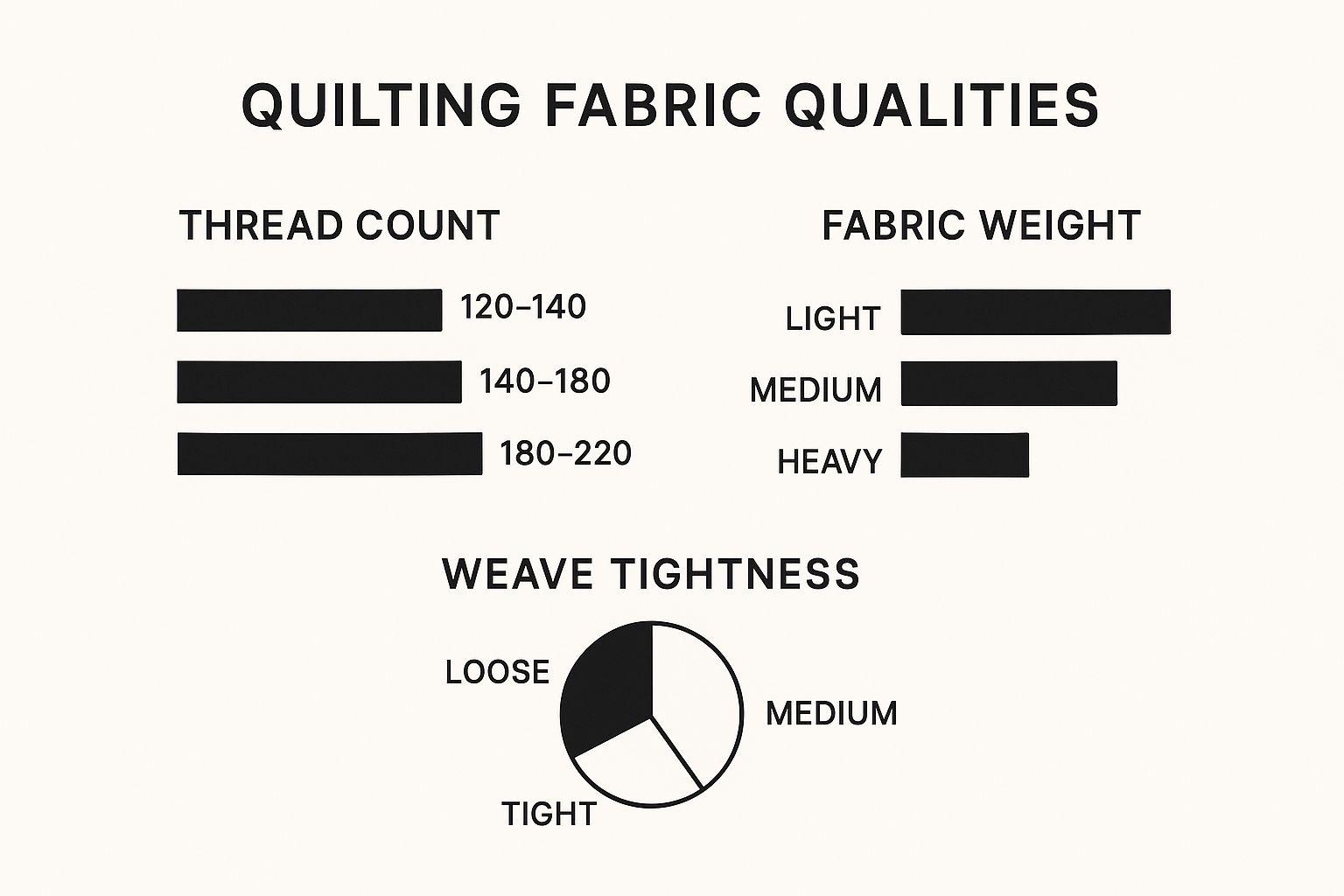
As you can see, the sweet spot for quilting cotton is a specific range of thread count and weight. This balance ensures the fabric is sturdy enough for all the piecing and handling, yet not so thick that it's a battle to quilt through.
The Gold Standard of Quilting Fabric
You might be wondering if quilting cotton is just a fancy name for regular cotton. It's not. High-quality quilting cotton boasts a higher thread count, usually somewhere between 68 to 78 threads per inch, which gives it that signature smooth, crisp feel. It’s created with a plain weave structure, providing the stability you need for accurate cutting and sewing—absolutely crucial for matching up points and creating sharp, clean quilt blocks.
A stable, medium-weight fabric is your best friend in quilting. It resists distortion during sewing and pressing, ensuring your blocks remain true to size and your final quilt top lies flat.
The numbers back this up, too. Cotton is the top choice for quilters around the globe, and the market for cotton quilting fabrics is on track to hit $2.5 billion in 2025. Its popularity comes down to its incredible versatility, breathability, and how easy it is to work with, whether you're quilting by hand or machine. You can dig into more data on the cotton quilting fabric market to see just why it continues to be the industry favorite.
Ultimately, picking the right cotton is the foundation of your entire quilt. It affects everything from how easily you piece your blocks to how the final quilting stitches look and feel. Once you understand these core fabric properties, you can make smarter choices that lead to beautiful quilts that last a lifetime.
Comparing the Most Popular Quilting Fabrics
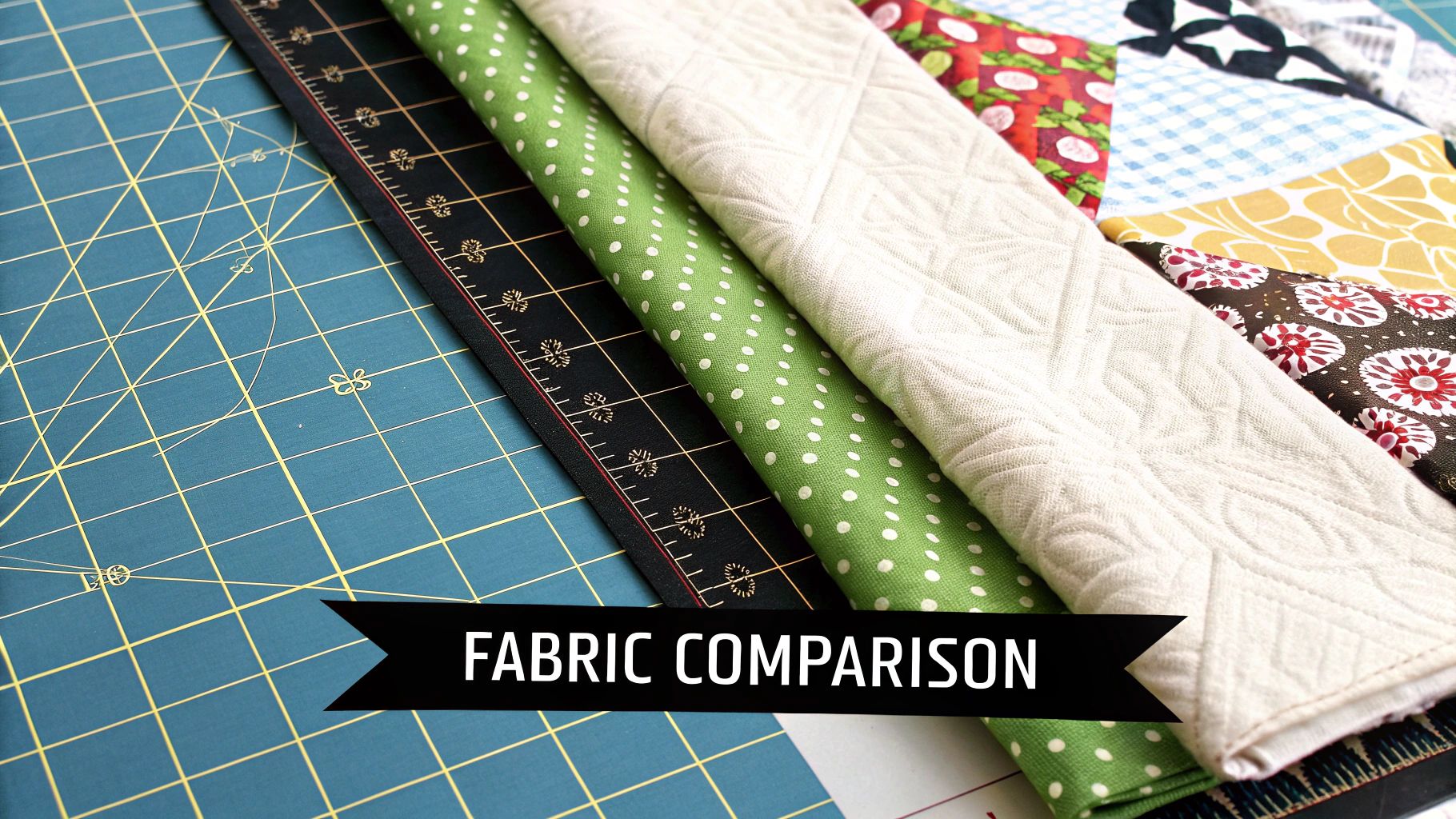
Alright, you know what makes a good quilting fabric in theory. Now, let’s get down to the real-world choices you’ll find in a fabric shop. Picking the right material isn't just about color and pattern; it's about understanding how that fabric will behave under your needle and how the finished quilt will feel.
We're going to put the most common contenders head-to-head: dependable 100% quilting cotton, rustic cotton-linen blends, cozy flannel, and the delicate cotton lawn. Each one has a personality, and learning their quirks is part of the fun.
The Reliable Workhorse: 100% Quilting Cotton
If you ask a seasoned quilter what to start with, nine times out of ten they'll point you to 100% quilting cotton. There's a good reason for that: it's stable. It doesn't stretch or warp much when you cut it, press it, or sew it, making it incredibly forgiving for beginners.
When your pattern involves tons of tiny pieces or sharp points that need to match up perfectly, this is your best friend. Quilting cotton holds a crisp press, which is the secret to getting those razor-sharp seams and perfectly constructed blocks. It's the go-to for a reason.
The Rustic Charmer: Cotton-Linen Blends
Take the softness of cotton and mix it with the earthy texture of linen, and you get a fabric with a whole lot of character. These blends, often known by brand names like Essex Linen, feel more substantial and have a looser weave than standard quilting cotton.
This translates to a quilt with a gorgeous drape and a comfortable, lived-in vibe right from the start. But be warned—that looser weave means it frays like crazy, so handle it with care. It's a fantastic choice for modern quilts or home decor projects where you want a bit more texture and a less rigid feel.
Key Differentiator: The biggest difference between quilting cotton and a cotton-linen blend comes down to structure versus drape. Quilting cotton gives you the crispness needed for precise piecing, while the linen blend brings a soft, fluid quality perfect for more contemporary, relaxed designs.
Understanding the nuances of natural fibers can be a deep dive. For more on how different materials stack up, you can explore the differences between organic cotton and bamboo fabrics for additional context.
The Cozy Specialist: Flannel
Nothing says "cozy" quite like flannel. It’s essentially cotton that has been brushed to raise the fibers, creating that fuzzy nap we all love. This soft, lofty texture makes it the undisputed champion for baby quilts, rag quilts, and warm throws to snuggle under in winter.
Working with flannel does require a few extra steps. That nap means you have to cut all your pieces facing the same direction, or your finished quilt will look patchy. It also has a bit of stretch and creates a ton of lint, so keep your machine clean! Because it’s thicker, it’s not ideal for patterns with super intricate piecing.
The Delicate Heirloom: Cotton Lawn
Step into the world of cotton lawn, and you’ll notice an immediate difference. This is a lightweight, finely woven fabric with an almost silky-smooth hand. It's much lighter than quilting cotton and has a beautiful drape that feels absolutely luxurious. The high thread count also allows for stunningly sharp and detailed prints.
Because it's so fine, cotton lawn is best suited for projects that won’t get a lot of rough handling, like an heirloom quilt, a decorative wall hanging, or delicate English paper piecing. You'll need a fine needle and thread to prevent puckering, and there's less room for error compared to its sturdier cotton cousins.
Quilting Fabric Characteristics at a Glance
To make things easier, here’s a quick-glance table comparing these popular fabrics. Think of it as a cheat sheet to help you match the right material to your next project.
| Fabric Type | Best For | Ease of Use (1-5) | Durability | Typical Shrinkage |
|---|---|---|---|---|
| Quilting Cotton | All-purpose quilting, intricate piecing, beginner projects | 5 (Easiest) | High | 2-3% |
| Cotton-Linen Blend | Modern quilts, home decor, projects needing drape | 3 (Intermediate) | Very High | 5-7% |
| Flannel | Baby quilts, rag quilts, cozy winter throws | 3 (Intermediate) | Moderate | 5-10% |
| Cotton Lawn | Heirloom quilts, detailed work, lightweight projects | 2 (Advanced) | Low | 2-3% |
Ultimately, choosing a fabric comes down to the story you want to tell. Are you building a crisp, traditional quilt with perfect points, or are you creating a soft, rustic throw meant for snuggling? By understanding how these fabrics behave, you can choose with confidence, knowing your material will work with you, not against you.
Working with Specialty Quilting Fabrics
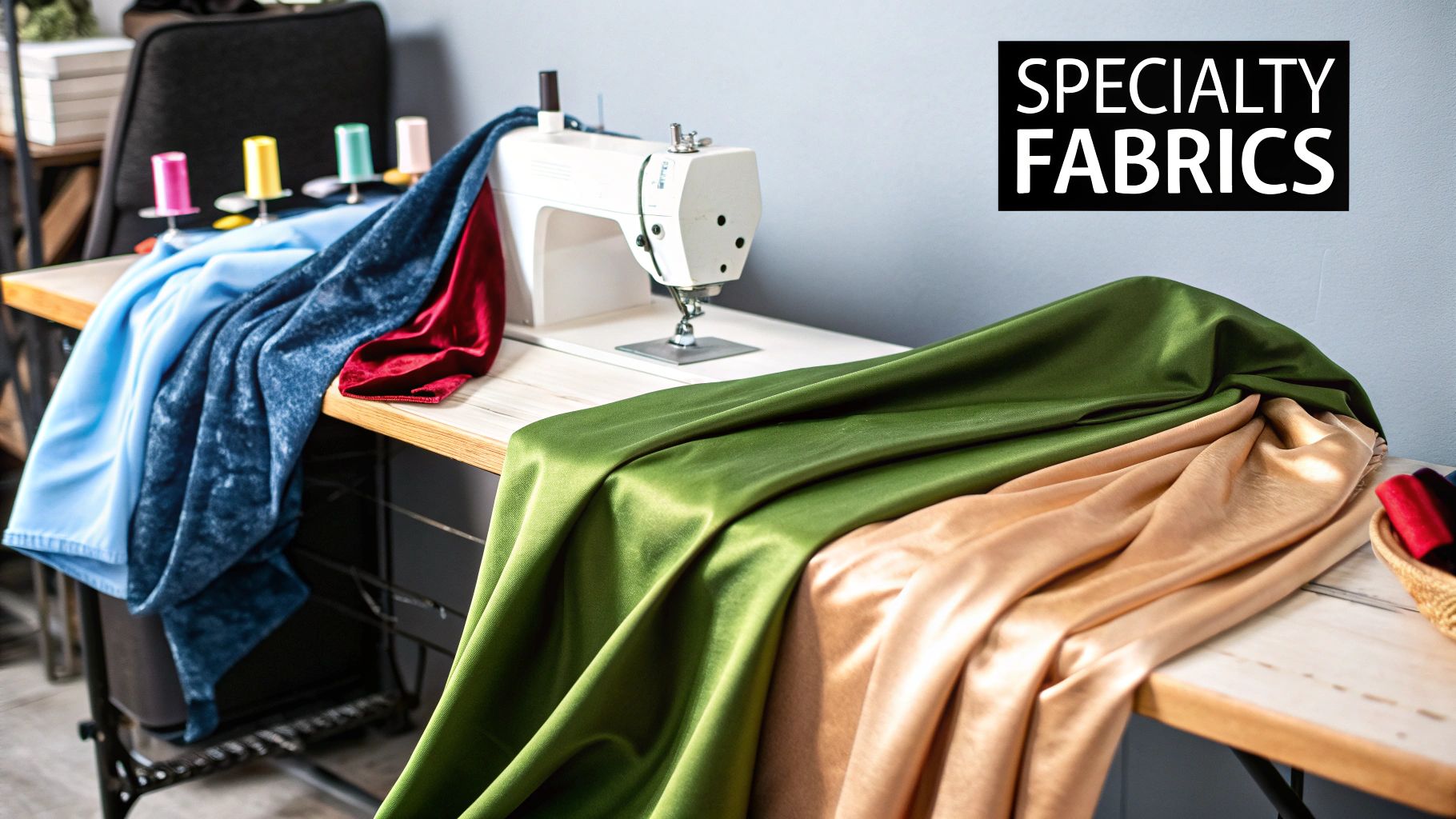
There comes a time when you want to step outside the familiar comfort of quilting cotton. This is where specialty fabrics come in. Materials like silk, wool, and Minky can bring an incredible new dimension to your work, adding texture, luxury, and a completely different personality to your quilts.
Of course, these fabrics don’t behave like cotton. They each have their own quirks, from slick surfaces to frustrating stretchiness. But don't let that intimidate you. With a little patience and the right techniques, you can master these materials and create something truly stunning.
Taming Luxurious Silk
Silk just screams elegance. Its unmatched sheen and delicate drape make it perfect for those extra-special projects, like a wedding quilt or a breathtaking wall hanging. The way its fine fibers catch the light is gorgeous, but that same delicacy is what makes it prone to fraying.
The secret to working with silk is all in the prep work. First off, skip the pre-wash, as it can strip the fabric of its beautiful finish. Instead, focus on these steps:
- Stabilize Before You Cut: Apply a lightweight, fusible interfacing to the back of the silk. This is a game-changer. It gives the fabric just enough body to prevent it from fraying into a mess, all without making it feel stiff.
- Use Your Sharpest Tools: This is the time for a brand-new rotary blade or your sharpest shears. A dull blade will only snag and pull at the threads, making a clean cut impossible.
- Pick the Right Needle: Go for a fine, sharp needle, like a 60/8 or 70/10 Microtex. It will slide through the silk cleanly instead of punching a hole, preventing runs and puckers.
Conquering Dense Wool
If you’re aiming for a quilt that radiates warmth and has a cozy, rustic feel, wool is your answer. It's a natural insulator with a wonderful weight, perfect for fireside throws and tactile art quilts. The main challenge? Its thickness.
Sewing through several layers of wool demands a heavy-duty approach. You'll need a machine with a strong motor and the right setup to get the job done. I recommend lengthening your stitch to 3.0 mm or more so the stitches don't get buried in the fabric’s loft. A walking foot isn't optional here—it's essential for feeding all those bulky layers through evenly.
When you're sewing with wool, your needle and thread become your most critical tools. Choose a strong needle, like a Jeans or Topstitch size 90/14, and pair it with a tough polyester or cotton-wrapped poly thread that can stand up to the friction.
Mastering Stretchy Minky
Ah, Minky. The gold standard for ultra-soft baby quilts and cuddly backings. Its velvety texture is simply irresistible, but its legendary stretch has been known to drive quilters crazy. The trick isn't to fight the stretch, but to control it.
Whatever you do, don't pull or stretch the Minky as you sew. Just guide it gently and let your machine's feed dogs do their job. A walking foot is a must, and don't be shy with your pins—place one every 1-2 inches to keep that fabric from creeping and shifting all over the place.
A popular trick among experienced quilters is to use a temporary spray adhesive like a 505 Spray to baste the Minky to a more stable fabric, like cotton flannel, before quilting. It makes a massive difference in keeping everything exactly where it should be.
For those looking to get even more creative, incorporating elements like custom canvas prints can add a deeply personal and artistic touch to quilts made with these unique fabrics.
Exploring Sustainable Fabrics in Modern Quilting
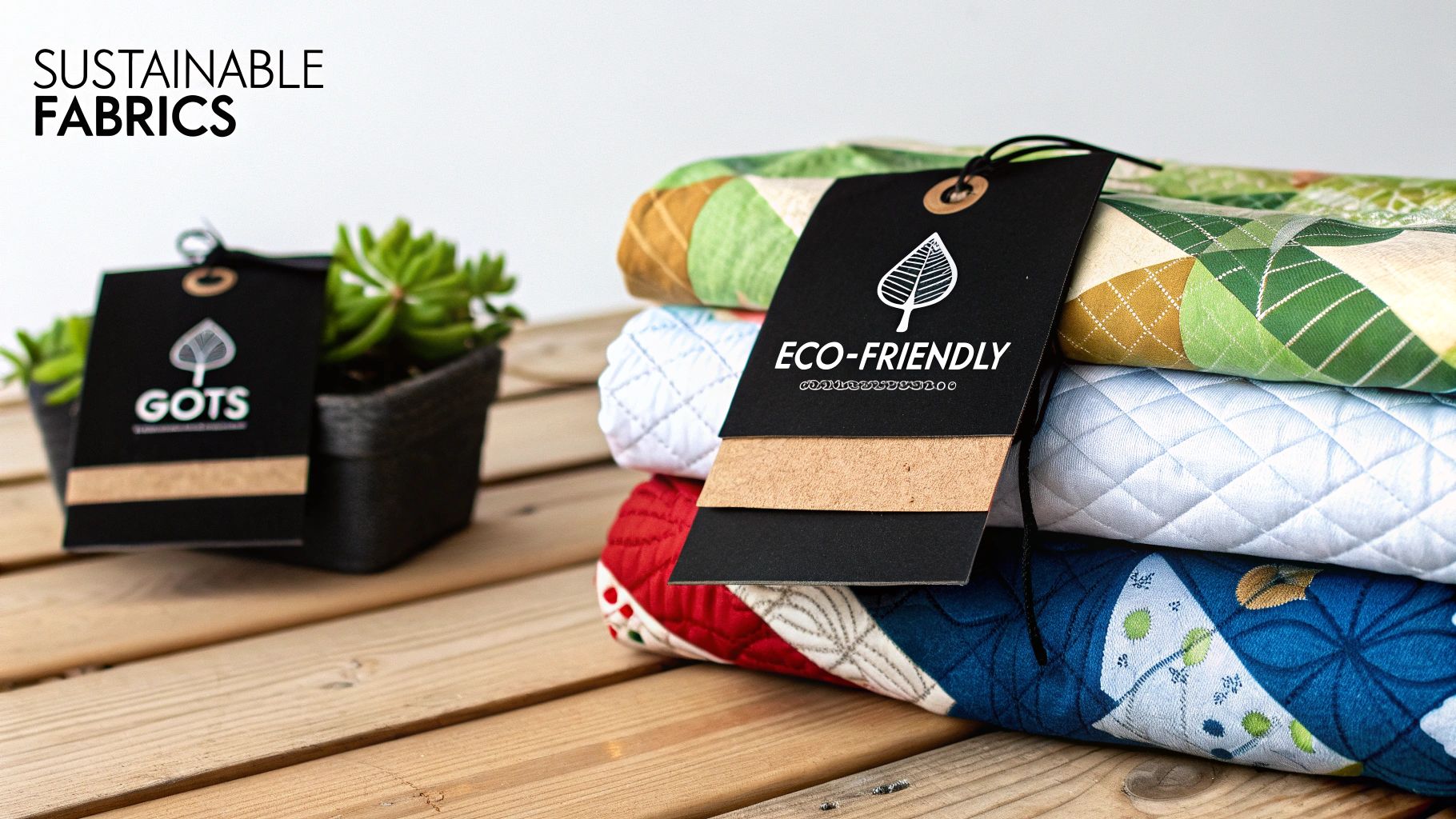
As more and more of us think about our environmental footprint, the conversation about the best fabrics for quilting is naturally turning toward sustainability. This isn't just some passing trend. It's about quilters wanting to align a passion they love with their personal values, and thankfully, fabric companies are starting to listen.
This growing demand for eco-friendly options is genuinely making waves. Right now, about 23% of quilters say they actively seek out sustainable and ethically sourced materials, and that number is climbing fast. It's a shift that's pushing the global quilting fabric market—projected to jump from $1.29 billion in 2025 to $1.81 billion by 2034—to make room for organic and recycled fabrics. If you're curious, you can find more details on the growth of the quilting fabric market and see how big this sustainable movement is becoming.
Understanding Eco-Friendly Labels
When you start shopping for these fabrics, you'll run into a bunch of different labels and certifications. It’s worth taking a minute to understand what they mean, so you can make choices that are genuinely better for the planet and not just cleverly marketed.
Here are the two big ones you'll see most often:
- GOTS (Global Organic Textile Standard): Think of this as the gold standard for organic fabrics. GOTS certification means the material is made from at least 95% certified organic fibers. But it goes deeper than that—it scrutinizes every single step, from harvesting and processing to packaging, to make sure everything is done in an environmentally and socially responsible way.
- OEKO-TEX Standard 100: This one is all about safety. When you see this label, it means the fabric has been tested and is completely free from harmful levels of over 100 substances known to be bad for our health. It’s not an "organic" certification, but it’s your assurance that the finished fabric is safe to have in your home and around your family.
For a quilter, that GOTS label is more than just a buzzword. It's a good sign you're getting a high-quality fabric made with care. This often translates to better colorfastness from low-impact dyes and a sturdier weave that will stand up to all the love and washing your quilt will get.
Working with Sustainable Materials
The good news is that quilting with sustainable fabrics doesn't require a whole new skillset. Organic cotton, for example, handles almost exactly like the premium quilting cotton you're already used to. It presses beautifully, holds its shape for cutting, and glides through your machine.
You might also come across recycled polyester blends, which are often made from plastic bottles. They can feel surprisingly soft and bring a unique texture to a project. These are great for quilts that need to be extra durable, though you might want to switch to a different needle to avoid any snags.
My advice? Treat them like any new fabric you bring into your studio. Always pre-wash and test a small swatch to see how it shrinks or if the colors bleed. It's a simple step that ensures your beautiful, eco-friendly quilt will be something you can cherish for a long, long time.
How to Select the Right Fabric for Your Quilt
Knowing the specs of different fabrics is one thing, but actually picking the best fabrics for quilting a specific project is where the real skill comes in. It’s all about matching the fabric’s personality to the quilt's future life. This simple, practical approach is the key to creating a quilt that not only looks great but also works the way you want it to.
First, think about the life your quilt is going to lead. Is it a baby quilt that needs to survive countless trips through the washing machine? Or is it a piece of art destined for a gallery wall, meant to be admired from a distance? Just answering that one question will point you in the right direction and make your fabric choices much clearer.
Matching Fabric to Your Project
Let's walk through a few common quilting scenarios. Each one has a clear "best fit" when it comes to fabric, and understanding the why behind it will make you a much more confident quilter.
For a Durable Baby Quilt When you’re making a quilt for a baby, washability and durability are everything. Your go-to choices here are a high-quality quilting cotton or a soft, sturdy flannel. These fabrics are made to handle frequent washing without pilling or falling apart. Cotton is breathable and gentle on the skin, while flannel brings that extra bit of cozy warmth.
For a Decorative Wall Hanging If your quilt is more about art than function, you can really start to play with more delicate fabrics. A wall hanging with lots of intricate detail is the perfect place to try out a cotton lawn or even a touch of silk. Their light weight and smooth texture are fantastic for precise piecing and really make detailed stitching pop. Since it won't see any wear and tear, you can prioritize visual effect over toughness.
A quilt's purpose dictates its material. A well-loved bed quilt requires sturdy cotton that can endure years of use, while a commemorative wall quilt can showcase luxurious but fragile fabrics like silk, which would never survive daily wear and tear.
Coordinating Your Quilt Layers
Don't forget that your fabric choice extends beyond the quilt top. Your batting and backing need to work in harmony with your main fabric to create a balanced, cohesive quilt. For instance, pairing a heavy flannel top with a light, silky backing is a recipe for trouble—the layers will shift, stretch unevenly, and wear out in strange ways.
Think of it as building a team. You want all three layers to get along. If you used a standard-weight quilting cotton for your top, stick with a similar cotton for the backing and a medium-loft cotton or cotton-blend batting. That's a classic, foolproof combination that ensures everything shrinks at a similar rate and drapes beautifully together.
This thoughtful approach to materials is part of what fuels a huge global craft. The total global quilt market was valued at $5.32 billion in 2024 and continues to grow, thanks to the amazing variety of materials quilters now have access to—from traditional cotton to linen, silk, and wool. This expansion means there's a perfect option for any project you can dream up. You can find more details on the global quilt market's growth and trends online.
By thinking about the entire quilt sandwich from the start, you're setting yourself up for a beautiful, long-lasting finish.
Your Quilting Fabric Questions, Answered
Once you start exploring the incredible variety of quilting fabrics out there, a few questions always seem to pop up. Getting straight, practical answers can save you a lot of guesswork and help you create quilts you're truly proud of. Let's dig into some of the most common things quilters ask.
Should I Pre-Wash My Fabric?
Ah, the great debate. To wash, or not to wash? Honestly, the best answer comes down to the project you're making and your own workflow. Pre-washing gets rid of any factory finishes and, more importantly, it pre-shrinks the fabric. This is a big deal if you're mixing and matching fabrics from different lines or manufacturers, as they might shrink at slightly different rates. Washing first helps prevent that dreaded puckering after your quilt is finished and washed.
On the other hand, plenty of quilters love the feel of unwashed fabric. It has a certain crispness to it, thanks to the sizing agents used in production, which can make it a dream to cut accurately and piece together. If you go this route, the golden rule is consistency. If you don't pre-wash one fabric, don't pre-wash any of them for that particular quilt. That way, everything shrinks up together in the end.
Can I Mix Different Types of Fabric?
Absolutely! Mixing different fabrics is a fantastic way to introduce unique textures and a ton of visual interest into a quilt. The trick is simply learning how to manage their distinct personalities, especially when it comes to shrinkage and weight.
Imagine pairing a classic quilting cotton with a beautiful cotton-linen blend. The texture difference can be stunning. Just know that linen blends almost always shrink more than 100% cotton, so pre-washing everything becomes essential. The same logic applies if you're mixing a lightweight cotton lawn with a cozy, heavier flannel; you'll need to be mindful of how their different weights behave as you quilt them together to keep everything smooth and flat.
When you're mixing materials, my go-to rule is to prepare every fabric for the "worst-case scenario." If one of your fabrics is known for shrinking a lot or fraying like crazy, treat all the fabrics for that quilt the same way—whether that means pre-washing, using a starch alternative, or finishing your seams carefully.
How Can I Spot High-Quality Cotton?
When you're in a fabric shop surrounded by bolts of color, how do you pick out the really good stuff? High-quality quilting cotton should feel substantial in your hand—soft but strong, never flimsy or papery. A great little test is to hold it up to a light. A dense, tight weave means you shouldn't be able to see through it very easily, which is a key sign of the best fabrics for quilting.
Pay attention to the print, too. The colors should look rich and saturated, not dull or faded, and the pattern should be printed straight on the grain. A premium cotton will have an almost silky-smooth surface and will bounce back with very few wrinkles when you scrunch it up in your fist. Spending a little more on quality fabric really pays off in the longevity and beauty of your finished quilt.
Here at Famcut.com, we know that finding the perfect fabric is the first step to creating a masterpiece. Check out our handpicked collection of top-tier quilting fabrics and get everything you need for your next project at https://famcut.com.